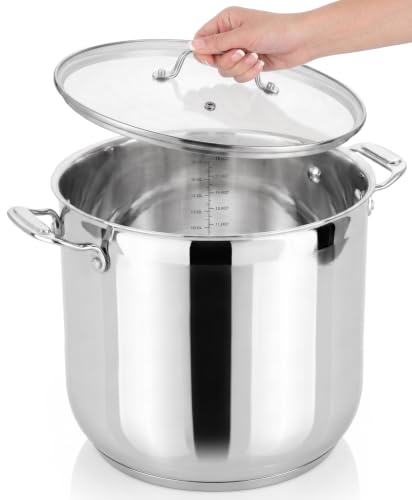
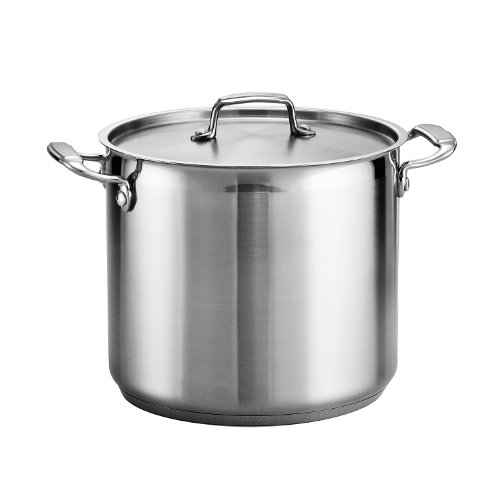


- Best overall: Tramontina Gourmet 12 qt stainless
- Full pho batch: Imusa 16 qt, with the induction caveat
- Biggest on the page: NutriChef 19 qt, induction listed
- Small kitchen or half batch: Cuisinart Chef's Classic 10 qt
- Enameled steel instead of stainless: Le Creuset 12 qt
- Induction cooktop: check the base for a magnet, or the word induction on the page
This is a research-based guide. We did not cook with these pots for this page; we compared maker information and published specifications. Links to Amazon are affiliate links, and NoodleDex earns a commission on qualifying purchases at no cost to you.
What a big stock pot is for
Four jobs send people to a large pot, and they pull in different directions.
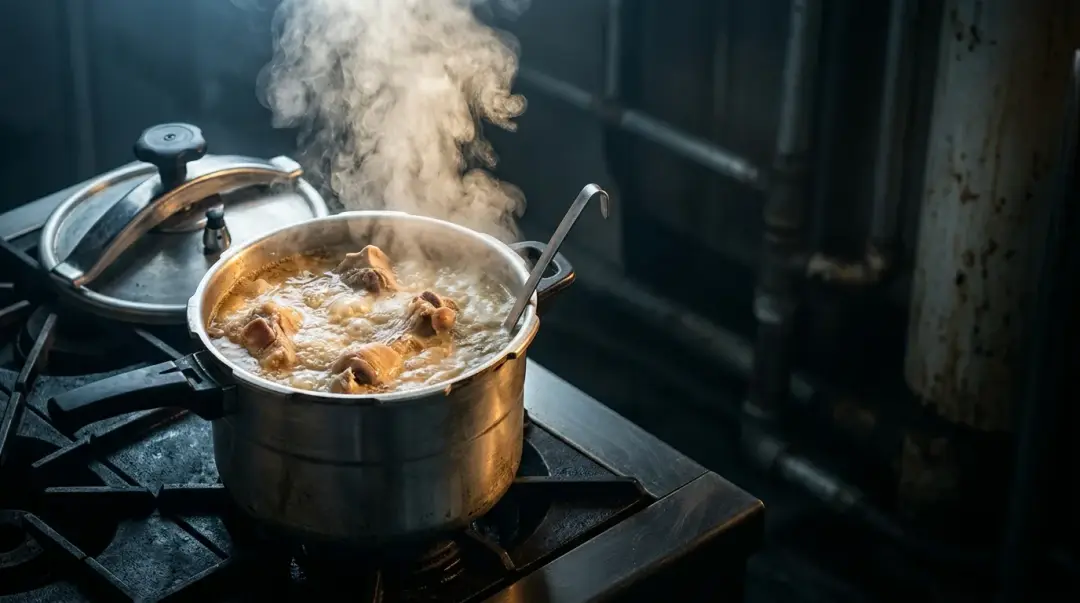
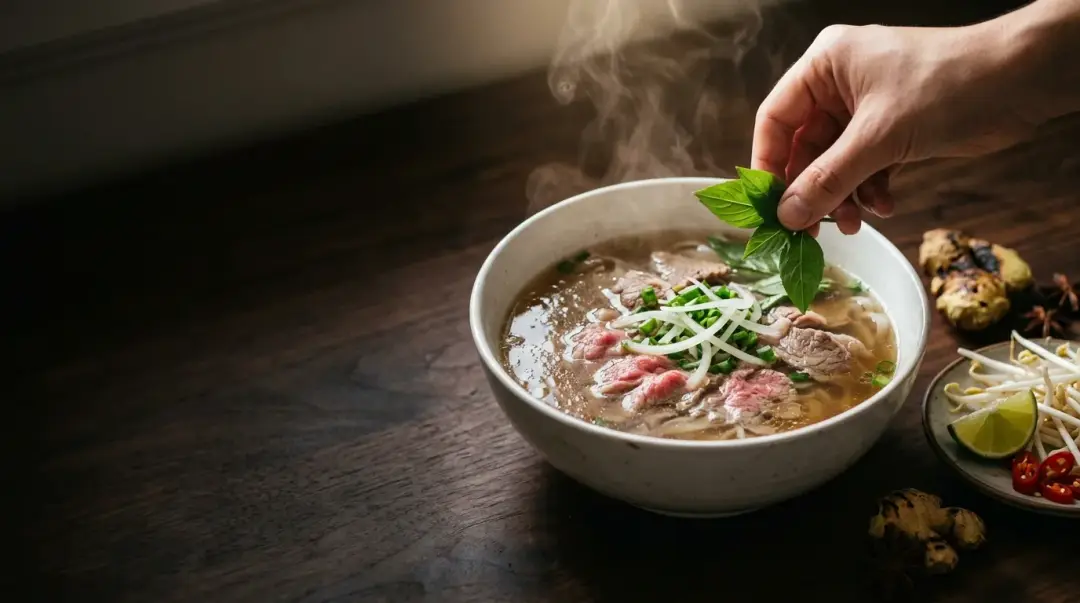
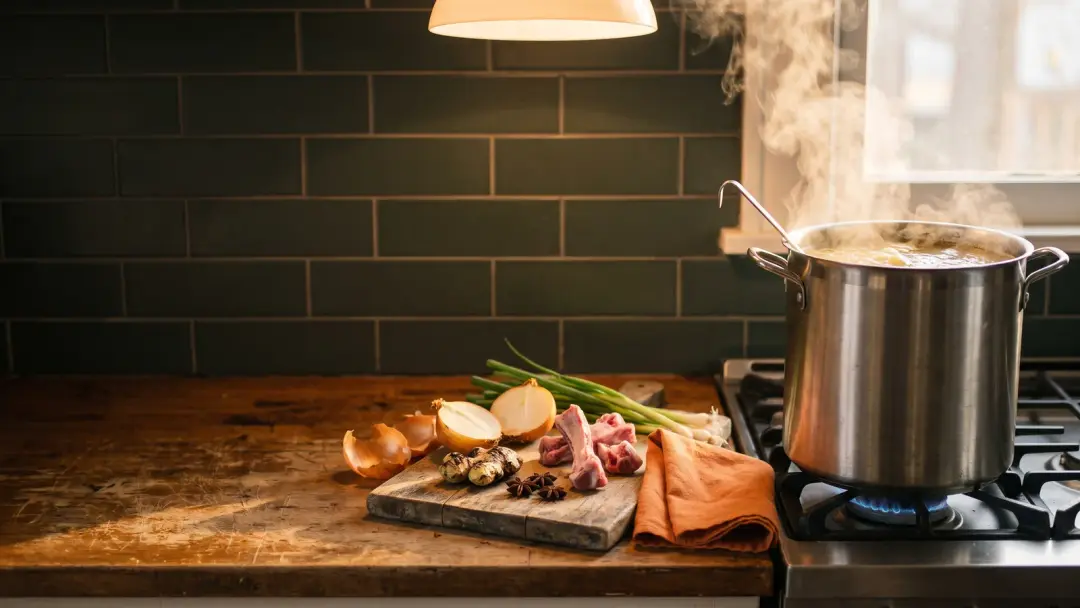
- Pho. Beef bones, charred aromatics and water for 8 to 12 hours, per our pho guide. Our Vietnamese cookware guide sizes it at 12 quarts minimum, and the pho history guide covers where the dish comes from.
- Tonkotsu. Pork bones held at a rolling boil for 12 to 18 hours, per our ramen broth philosophy guide. That guide says an 8 quart pot handles a standard home batch of 3 to 4 liters of finished broth.
- Bone broth and stock. The same sizing logic: bones, water and headroom under a lid.
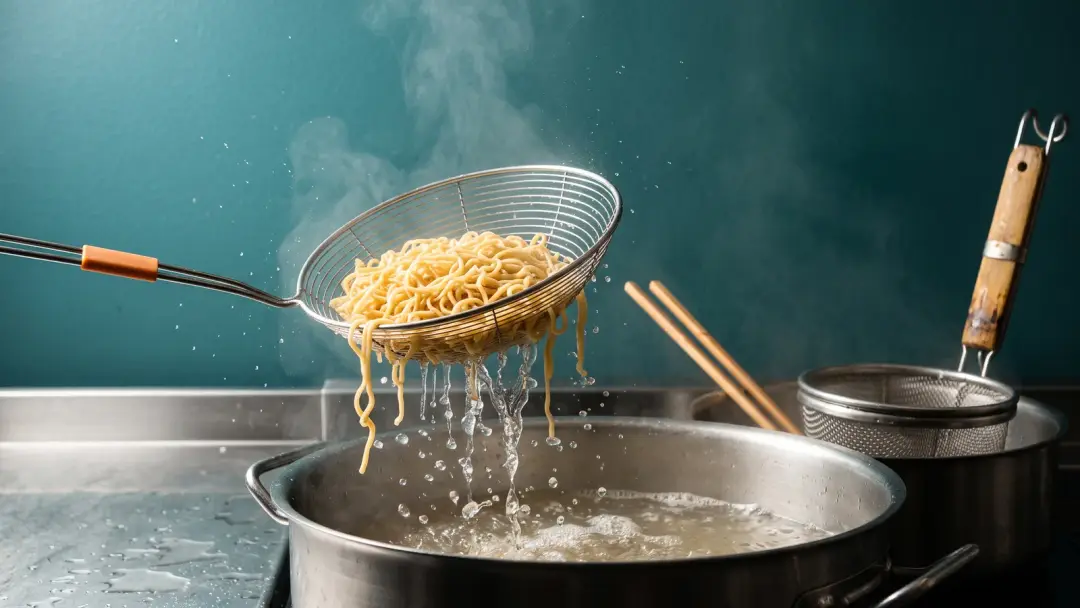
- Noodle water. Not a simmer at all. The pot needs volume, so the water stays boiling when the noodles go in. Sun Noodle's fresh ramen is cooked in a big pot of boiling water, and a crowd of champon bowls takes the same approach.
The Vietnamese cookware guide treats the pot as one piece of a pho kit. This page treats it as the whole question, and pho is one of four uses.
Size by job
A quart is a quarter of a gallon, and water weighs about 8.3 pounds per gallon, so a 12 quart pot holds about 25 pounds of water when full. Fill it only two-thirds for a simmer.
| Job | Pot size | Why |
|---|---|---|
| Half batch of broth, 1 to 2 people | 8 to 10 qt | Matches the 3 to 4 liter home batch in our broth guide |
| Full pho batch for four | 12 qt minimum, 16 qt comfortable | Bones, water and headroom, per our Vietnamese cookware guide |
| Tonkotsu, long boil | 12 to 16 qt | Hard boil needs headroom under the lid |
| One to two pounds of noodles | 8 to 12 qt | 4 quarts of water per pound |
| A crowd, three pounds or more | 16 to 20 qt | A gallon per pound and room to boil over |
Our pasta pot guide uses the same 4 quarts per pound.
Materials
Stainless steel with an aluminum core. This is the standard on this page. Cuisinart describes its 10 quart pot as an aluminum base encapsulated in stainless steel, and Tramontina describes a magnetic tri-ply base on 18/10 stainless. The core spreads heat across the base, and the stainless surface does not react with broth.
Aluminum. Pure aluminum is light and heats fast but will not work on induction. Check that any aluminum pot has a magnetic base if you cook on glass.
Enameled steel. The Le Creuset is a steel body with an enamel coating. Retailers list it for induction. They disagree on whether it is dishwasher safe, so check Le Creuset's care guide before washing.
Salt and stainless. All-Clad advises adding salt after the water boils, since undissolved salt on the base can leave small pits or white spots. That applies to noodle water in any stainless pot.
Cooktop check
Three checks before you buy.
- Induction. The base must be magnetic. Whirlpool's guidance is to hold a magnet to the bottom, and if it sticks firmly the cookware should work. Tramontina and Cuisinart list their pots here for induction. The NutriChef retailer listings and the Sunhouse Amazon listing describe induction compatibility, and we found no maker page for either. Imusa's own page lists gas, electric and glass-top cooktops and does not list induction.
- Base against burner. A base much wider than the burner heats unevenly, and a much narrower one wastes heat. Match the two by eye before buying a 19 quart pot.
- Weight when full. A 12 quart pot holds about 25 pounds of water, a 16 quart pot about 33. Check that you can lift it, or plan to ladle out before you move it.
Lids, handles and baskets
A lid keeps the heat in and the water level steady on a long simmer. The Cuisinart has a tempered glass cover, so you can check the pot without lifting it, and Cuisinart lists Cool Grip riveted handles. Imusa lists riveted side handles.
A basket insert is a different design. A perforated basket lifts a batch of noodles out of the water, so you do not tip the pot. We do not list one as a pick. Winco sells its perforated inserts for its 20 quart commercial pasta cooker sets, so check the fit before pairing one with another pot. Our pasta pot with strainer guide covers insert sets from 5 to 12 quarts. For a large basket pot, browse the chip below and check the basket fits the pot you buy.
Stock pot or pressure cooker for broth
An open pot gives you a big batch and a clear broth. A pressure cooker gives you the same bones in a fraction of the time. Our pressure cooker for ramen broth guide covers the pressure route, and our Vietnamese cookware guide notes that pressure broths come out cloudier because the fat emulsifies instead of skimming off. For company and clear broths, use the pot. For a weeknight tonkotsu, use the pressure cooker.
Stock pot or pasta pot
A pasta pot is a stock pot with a strainer. If you cook noodles more often than broth, buy the pasta pot, because the lid or insert drains the water for you. If you cook broth more often, buy the stock pot, because a plain pot is lighter and simpler. Our pasta pot with strainer guide goes through the strainer designs.
Care and skimming tools
Long-simmered bone broth throws off scum and fat. A fine-mesh skimmer lifts the scum and a spider strainer lifts noodles and bones out of the water. Our spider strainer guide compares both. Stainless steel pots clean up well, and our Vietnamese cookware guide covers cleaning after a 12 hour simmer. The best fresh ramen noodles post names the pots and baskets that suit fresh noodles.
FAQ
What size stock pot do I need for pho?
Our Vietnamese cookware guide puts a pho batch for four at 12 quarts minimum and 16 comfortable, because the bones and the water both need room and a lid. An 8 quart pot suits a half batch. For a bigger family or leftovers, a 16 to 20 quart pot gives headroom so the broth does not boil over.
What is the best stock pot for bone broth?
Choose a lidded stainless steel pot of 12 to 16 quarts with a heavy base, because bone broth runs for many hours. Our broth guide puts tonkotsu at 12 to 18 hours at a rolling boil, so pick a pot you can leave on the burner and a lid that fits. We did not find a sourced simmer time for other bone broths, so follow your own recipe.
Is stainless steel or aluminum better for a stock pot?
For a long simmer, stainless steel with an aluminum core in the base is the usual choice, because it does not react with the broth and the core spreads heat. Cuisinart describes an aluminum base encapsulated in stainless steel, and Tramontina a magnetic tri-ply base. Pure aluminum pots work on gas and electric but will not heat on induction, so check the base if you cook on glass.
Can you use a stock pot on an induction cooktop?
Only if the base is magnetic. Whirlpool's guidance is to hold a magnet to the bottom of the pot, and if it sticks firmly the cookware should work on induction. Tramontina and Cuisinart list their pots on this page for induction. Look for the word induction on the product page, because Imusa's own page lists gas, electric and glass-top cooktops and does not list induction.
What is the difference between a stock pot and a pasta pot?
A stock pot is a tall pot with a lid, made for long simmers. A pasta pot is usually a stock pot with a strainer lid or a lift-out insert that drains the noodles. If you also cook pasta, our pasta pot with strainer guide covers the insert sets, and a 12 quart pot with an insert can do both jobs.
How big a pot do you need to cook noodles for a crowd?
Use about 4 quarts of water per pound, and leave headroom above the water so it does not boil over. Two pounds of noodles needs 8 quarts of water, which makes 12 quarts the practical size. Past three pounds, move to 16 quarts or cook in batches.