


- Best overall: Instant Pot Pro 8QT.
- Best for beginners: Instant Pot Duo 8QT.
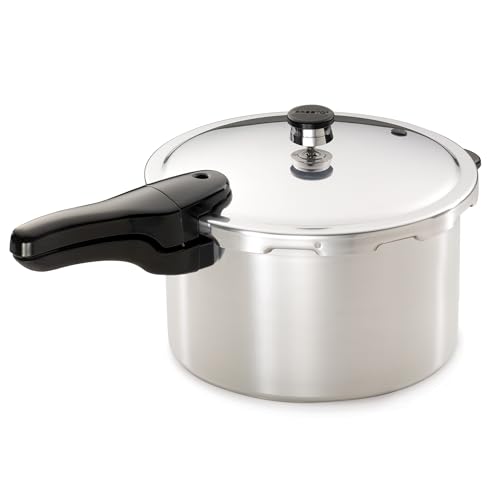
- Best budget: Presto 8-Quart Aluminum stovetop cooker.
- Best stovetop splurge: Fissler Vitavit Premium, 8.5 quarts, induction ready.
- Best for big batches: Presto 16-Quart Pressure Canner and Cooker.
- Best Ninja: Ninja HyperHeat 6.5 qt.
The Clock Math
Start with the stovetop number. Tonkotsu, the milky pork-bone ramen broth, is made by boiling bones hard for a long time. Our ramen broth philosophy guide puts it at 12 or more hours at a rolling boil, and our broth comparison gives a 12-to-18-hour range. That's a full day with the burner roaring.
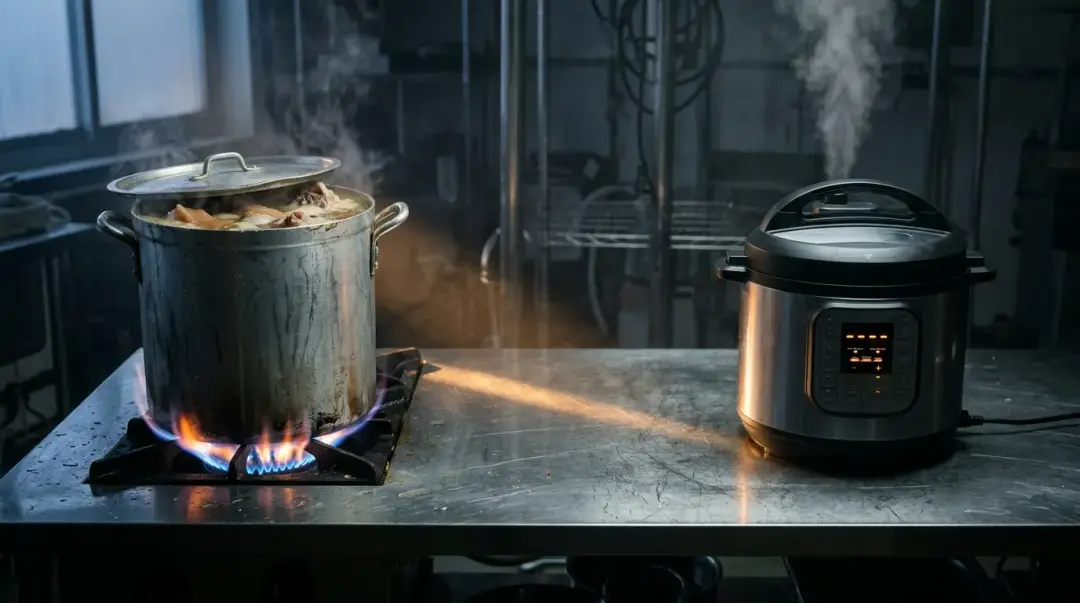
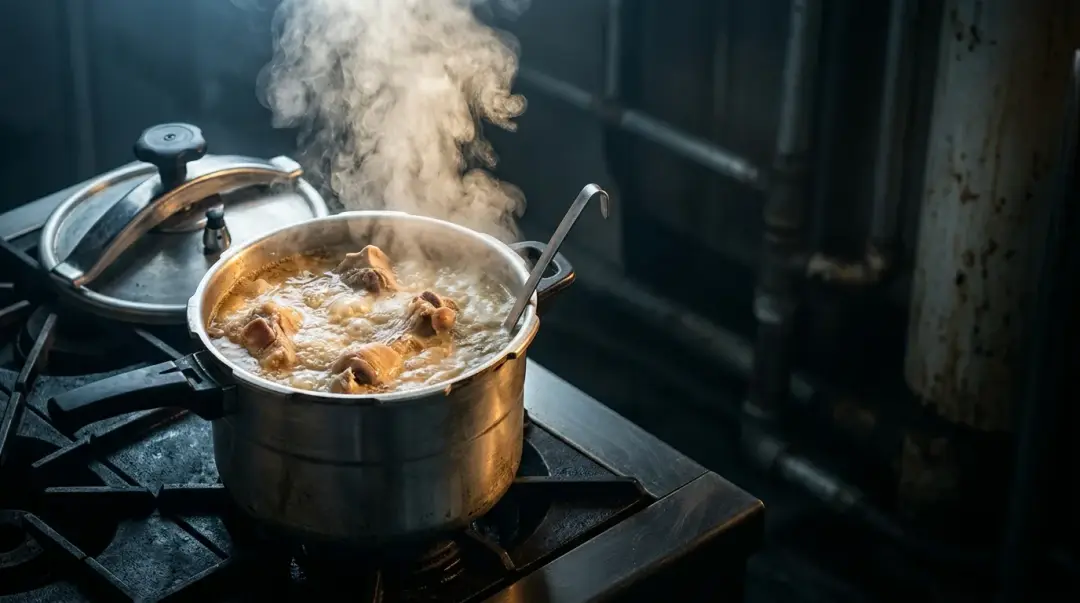
Now the pressure-cooker number. Just One Cookbook's tonkotsu recipe, written for an Instant Pot, takes about 40 minutes to come up to pressure, 60 minutes at high pressure, a quick release, and then about an hour at a rolling boil on Sauté to emulsify the fat. Add it up and the bones get roughly 2 hours and 40 minutes of heat. The recipe's own summary: an hour under pressure pulls from the bones what a long simmer does, "so you get ramen-shop broth in one afternoon instead of 8 to 12 hours."
The physics is simple. A typical pressure cooker runs at 15 psi, the pressure at which water boils at 250°F, according to Wikipedia's pressure-cooking entry, which also says cooking times typically drop to about a third. Presto, the American cookware maker, claims three to ten times faster. For tonkotsu, 2 hours 40 minutes against 12 to 18 hours works out to somewhere between a fifth and a seventh of the stovetop time.
Clear broths save less, because they never needed a full day. The broth comparison guide puts shoyu at 4 to 8 hours and shio at 3 to 6, simmered gently. At Wikipedia's one-third rule of thumb, a 6-hour clear chicken stock becomes about 2 hours, which is still the difference between a weekend project and a weeknight one.
Pressure cookers for ramen broth, as listed by each maker
| Pick | Type | Capacity | Induction? | Notable for broth |
|---|---|---|---|---|
| Instant Pot Pro 8QT | Electric | 8 qt | n/a (electric) | Handled inner pot, gentle steam release |
| Instant Pot Duo 8QT | Electric | 8 qt | n/a (electric) | Stainless tri-ply-bottom pot, the basic 8 qt Instant Pot |
| Presto 8-Quart Aluminum (01282) | Stovetop | 8 qt | Not listed | Budget pick, 12-year warranty |
| Fissler Vitavit Premium | Stovetop | 8.5 qt | Yes | Made in Germany, 15-year warranty |
| Presto 16-Quart Canner and Cooker (01755) | Stovetop | 16 qt | Not listed | Double batches, doubles as a canner |
| Ninja HyperHeat 6.5 qt | Electric | 6.5 qt | n/a (electric) | 9.5 in searing surface |
How We Picked
- This guide is research-based. We didn't make broth in these cookers; we compared capacities, materials, warranties and features published by Instant Pot, Fissler, Presto and Ninja.
- Capacity mattered most. Bones are bulky, and every cooker has a fill limit, so we started at 8 quarts and included one smaller cooker only because it's Ninja's current pressure model.
- We split electric from stovetop. Electric cookers hold pressure on a timer; stovetop models need attention but can move to a bigger burner and, in Fissler's case, run on induction.
The Picks
Best Overall: Instant Pot Pro 8QT
The Pro's advantages are the ones that matter at the end of a broth day. Its stainless inner pot has grab-and-go handles, which matters when you lift out a full pot of near-boiling broth. The steam release is a switch with a diffusing cover that spreads the steam as the pot vents. And the 1,400-watt base, Instant Pot says, preheats 20 percent faster than traditional methods.
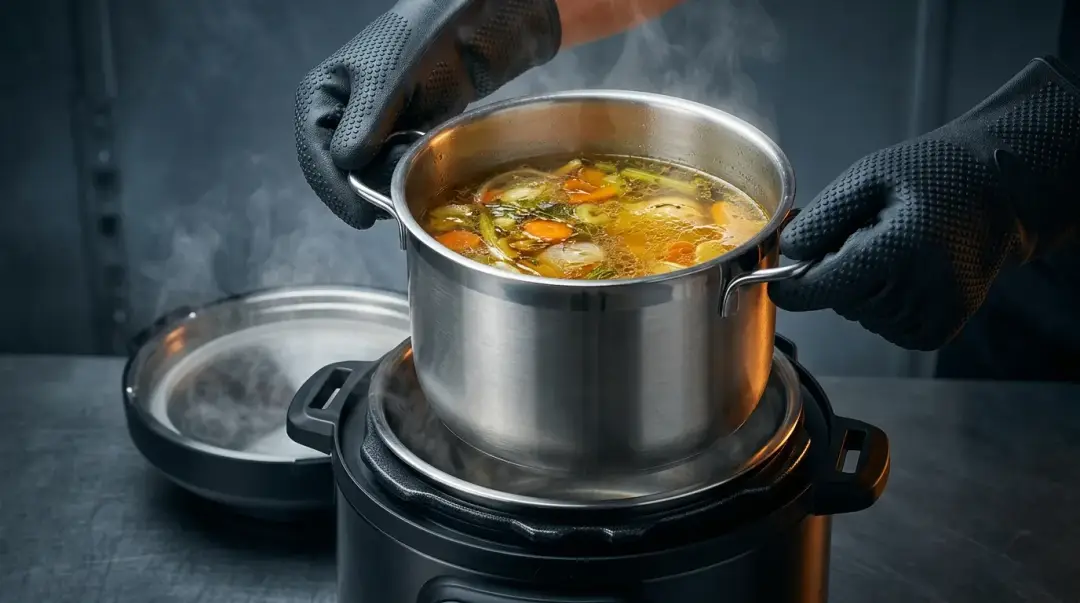
It does everything else you'd expect: 10 cooking functions including pressure cook, sauté, slow cook and sous vide, plus 28 one-touch programs. The Sauté setting handles Just One Cookbook's hour-long rolling boil after the pressure stage.
Cost is the drawback. The Pro 8QT costs more than the Duo 8QT, and the pot stays electric; if you want a harder boil on a big burner, you'll be pouring broth into a stockpot; our best stock pot guide compares sizes.
Instant Pot Pro 8QT Multi-Use Pressure Cooker
8-quart pot with grab-and-go handles for lifting a full load of broth
Best for Beginners: Instant Pot Duo 8QT
The Duo is the plain Instant Pot, and in the 8-quart size it handles a full batch of ramen bones. It has 7 functions (pressure cook, slow cook, sauté, steam, rice, yogurt and warm), 13 one-touch programs and a 1,200-watt heating element. The inner pot is 18/8 stainless with a tri-ply bottom, and the lid and pot are dishwasher safe. Instant Pot lists more than 10 safety mechanisms and an easy-release steam switch.
It measures about 14.8 by 13.3 by 14.2 inches, so check the space under your cabinets. The trade-offs against the Pro: no advertised handles on the inner pot and 200 fewer watts than the Pro. For a first pressure cooker, it's enough.

Instant Pot Duo 8QT Multi-Use Pressure Cooker
The basic Instant Pot in the 8-quart size bones need
Best Budget: Presto 8-Quart Aluminum Pressure Cooker
Presto's 01282 is the cheapest way into pressure-cooked broth. It holds 8 quarts of liquid (7.6 liters), is made of heavy-gauge aluminum, and works on gas, electric coil and smooth-top ranges. A cover lock indicator shows when there's pressure inside, there's an overpressure plug, and Presto backs it with a 12-year limited warranty.
Stovetop cookers ask more of you. You bring the pot up to pressure on high, then lower the burner and hold it there for the full hour, which means staying nearby. Presto doesn't list this model for induction; its 6-quart stainless 01362 with a tri-clad base is the induction-ready alternative, at a smaller size.
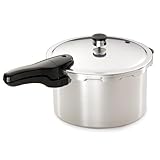
Presto 8-Quart Aluminum Pressure Cooker
The budget stovetop cooker on this list, from Presto
Best Stovetop Splurge: Fissler Vitavit Premium, 8.5 qt
Fissler's Vitavit Premium is a German-made stovetop cooker built from 18/10 stainless steel, sold in sizes from 2.6 to 8.5 quarts. The 8.5-quart is the one for bones. It works on every stovetop, induction included, uses a traffic-light indicator to show pressure, and has four settings including a pressureless steam mode. Fissler covers it with a 15-year warranty and claims it cooks up to 70 percent faster than conventional methods.
It's the most expensive cooker here, and like the Presto it needs someone at the stove. It's the right buy if you cook on induction, want a pot that will outlast several electric bases, or already use a powerful burner for the finishing boil.

Fissler Vitavit Premium Pressure Cooker
Made in Germany from 18/10 stainless, induction compatible
Best for Big Batches: Presto 16-Quart Pressure Canner and Cooker
When one batch of tonkotsu isn't enough, the jump in size is to a canner. Presto's 01755 holds 16 quarts of liquid (15.1 liters), works as a pressure cooker, pressure canner and boiling-water canner, and has a gauge that reads the full range of processing pressures. It's aluminum, carries a 12-year limited warranty, and Presto designs it for household burners of 12,000 BTU or less.
That last spec matters: check your range before buying. The pot is also big and heavy to store, and Presto doesn't list it for induction. Its 23-quart 01784 canner has an induction-compatible stainless-clad base if that's your stove.

Presto 16-Quart Pressure Canner and Cooker
16-quart capacity for double batches of bones
Best Ninja: Ninja HyperHeat 6.5 qt
Ninja's current pressure cooker on its US site is the HyperHeat, a 6.5-quart, 1,200-watt model with nine functions, including pressure cook, slow cook, sear/sauté, steam and sous vide. Its 9.5-inch cooking surface is wide enough to brown bones and aromatics before pressure cooking, and Ninja says it holds up to a 4-pound chicken or a 5-pound roast.
The pot is aluminum with a PFAS-free ceramic nonstick coating, which is easy to clean but less suited to scraping heavy pork bones around than stainless. And at 6.5 quarts it's a single-batch cooker.

Ninja HyperHeat 6.5 qt Pressure Cooker
Nine functions including pressure cook, sear/sauté and slow cook
What to Look For
- At least 8 quarts. Wikipedia's guidance is to fill a pressure cooker no more than two-thirds full for solids and half full for liquids that foam. In an 8-quart pot that's roughly 4 to 5.3 quarts of space for bones and water.
- A stainless inner pot. Stainless handles the scraping and the long hard boil; nonstick coatings scuff.
- A Sauté or browning mode on electric models, for the rolling boil that emulsifies tonkotsu after the pressure stage.
- Induction compatibility on stovetop models, if that's your range. Fissler's Vitavit and Presto's stainless 01362 list it; Presto's aluminum cookers don't.
- A real pressure function. Ninja's MultiPot XL, a 14-quart multicooker, has 12 functions including hot pot and slow cook, and no pressure cooking at all.
Common Mistakes
- Filling past the max line. Just One Cookbook says to keep the water at or below the maximum line and to move the broth to a large stockpot if it gets close to full during the boiling stage.
- Stopping when the timer beeps. The pressure stage extracts; the open rolling boil afterward is what turns tonkotsu milky. Skip it and you get a thinner, clearer pork stock.
- Boiling a clear broth hard. Shoyu and shio broths stay clear because they're simmered gently, as our broth comparison explains. After pressure, keep those at a bare simmer.
- Buying a 6-quart for double batches. Doubling Just One Cookbook's recipe means 4 quarts of water, which already reaches the two-thirds line of a 6-quart pot before a single bone goes in.
Once the broth is done, it still needs seasoning. Our guide to tare, the concentrated sauce at the bottom of every ramen bowl, covers that step, and the chashu guide covers the pork. For noodles to put in it, see our best ramen noodles.
Capacity Cheat Sheet
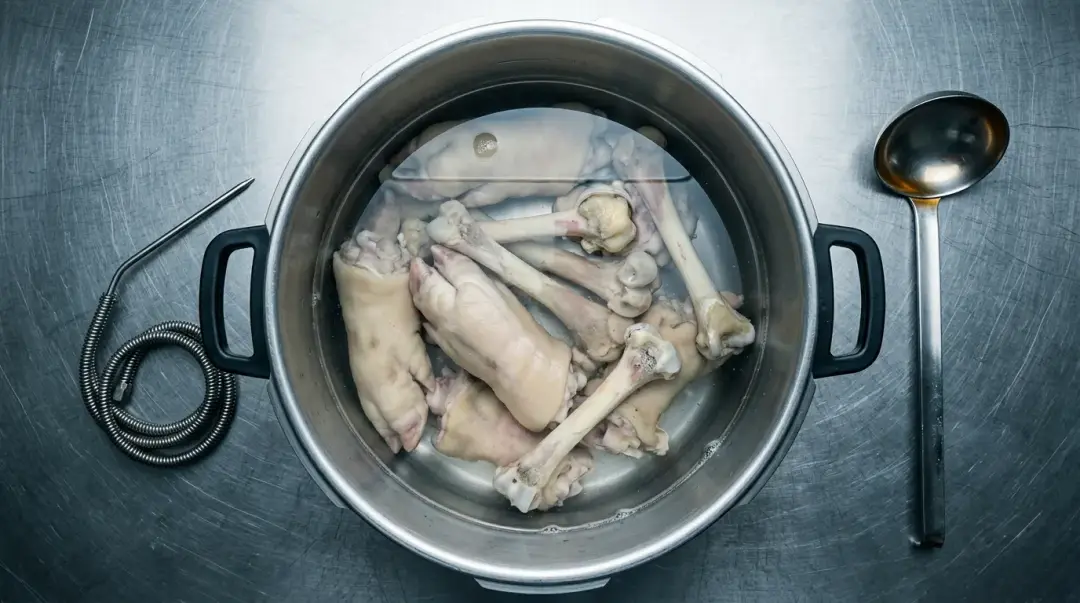
Pot size decides batch size more than any other spec. This table applies Wikipedia's two fill rules to each cooker on this list. Just One Cookbook's tonkotsu, for reference, uses 2 quarts of water with about 4¾ pounds of bones and hock and yields four servings of about 350 ml each.
| Cooker | Rated size | Two-thirds line (solids) | Half line (foaming liquids) | Rough batch size |
|---|---|---|---|---|
| Ninja HyperHeat | 6.5 qt | about 4.3 qt | about 3.25 qt | One four-serving tonkotsu batch |
| Instant Pot Duo or Pro | 8 qt | about 5.3 qt | 4 qt | One batch with room to spare |
| Fissler Vitavit Premium | 8.5 qt | about 5.7 qt | about 4.25 qt | One generous batch |
| Presto 8-Quart Aluminum | 8 qt | about 5.3 qt | 4 qt | One batch with room to spare |
| Presto 16-Quart Canner and Cooker | 16 qt | about 10.7 qt | 8 qt | A double batch, around eight servings |
Bones foam as they cook, so the half line is the safer one to plan around until you know how your pot behaves.
FAQ
Can you make ramen broth in an Instant Pot?
Yes. Just One Cookbook's tonkotsu recipe uses an Instant Pot: about 40 minutes to reach pressure, 60 minutes at high pressure, a quick release, then roughly an hour at a rolling boil on Sauté to finish. The recipe says that gives you ramen-shop broth in one afternoon instead of the 8 to 12 hours a long simmer takes.
What size pressure cooker do I need for ramen broth?
Eight quarts is the practical minimum for bone broth. Wikipedia's fill guidance is two-thirds full for solid foods and half full for liquids that foam, which leaves about 4 to 5.3 quarts of working space in an 8-quart pot. A 6-quart pot works for a single four-serving batch. For double batches, use a 16-quart stovetop canner or cook in two rounds.
Is a stovetop or electric pressure cooker better for broth?
Electric is easier because it holds pressure on a timer and has a Sauté mode for the finishing boil. Stovetop cookers like Fissler and Presto need someone at the stove but can move to a big burner for a hard boil. Wikipedia gives 15 psi as the typical cooking pressure and lists the Instant Pot Max as the brand's 15 psi model, which suggests other Instant Pots run lower.
Does pressure-cooked tonkotsu taste like the 12-hour version?
Close, but not identical. Just One Cookbook says an hour under pressure pulls from the bones what a long simmer does. Our broth guide notes the flavor development from a long boil won't be exactly the same. The hard boil after pressure matters, because that's what emulsifies fat and collagen into the cloudy, creamy body.
Should I use natural or quick release for ramen broth?
Follow your recipe. Just One Cookbook's tonkotsu uses a quick release, then goes straight into an hour of hard boiling. With a full pot, release slowly and keep your face and hands clear of the valve. Instant Pot's Pro model has a gentle steam release switch with a diffusing cover, which helps when venting a pot of hot broth.