Vietnamese Herb Plate: 9 Herbs Identified
· 6 min read · NoodleDex Editorial
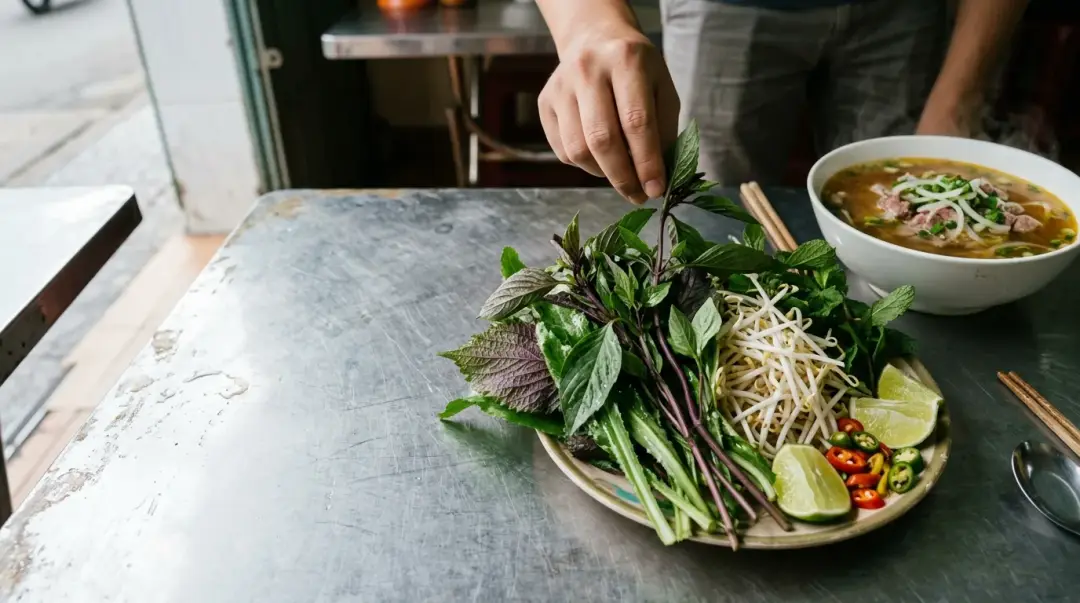
Know every herb on your pho side plate — Thai basil, perilla, rau ram, culantro and more. 9 herbs identified by sight, with grocery sources and subs.
This page contains affiliate links. We may earn a commission at no extra cost to you. Disclosure
On this page(12 sections)
- The Headline Difference
- The Standard Vietnamese Herb Plate
- Identifying Each Herb on Sight
- Use Order Matters
- The Hard-to-Find Ones
- Growing Vietnamese Herbs at Home
- Which Herbs Go With Which Bowl
- How Vietnamese Diners Actually Use the Plate
- The Herb Plate as a Cultural Marker
- If You Only Remember One Thing
- FAQ
- Products mentioned in this guide
A bowl of phở arrives half-built. The second half is on the side plate — a pile of fresh herbs, bean sprouts, lime wedges, and chilies that the diner adds in their own order and quantity. Most Westerners pick a few familiar leaves and ignore the rest. Each herb on that plate does specific work. This guide identifies every leaf, names its job, and tells you where to find it in grocery stores.
The Headline Difference
Vietnamese cooking is the only major Asian cuisine that treats raw aromatics as a course component rather than a garnish. Thai cooks bruise lemongrass and steep it into the broth. Chinese cooks fold scallion and cilantro into the wok. Japanese cooks place toppings on the bowl in a precise pattern that's not meant to be rearranged. Vietnamese cooks send you herbs raw and whole on a separate plate, and they expect you to be the one who deploys them. The herb plate is not decoration — it's the diner's half of the recipe.
The Standard Vietnamese Herb Plate
Vietnamese Herb Plate — What Each Item Does
| Herb | Vietnamese Name | Use | Substitute |
|---|---|---|---|
| Thai basil | Húng quế | Anise-sweet brightness | Italian basil (close enough) |
| Cilantro | Ngò rí | Citrus-grassy lift | None — use parsley reluctantly |
| Mint (spearmint) | Bạc hà | Cool, sweet, palate cleanse | Regular mint |
| Perilla | Tía tô | Earthy, slightly bitter, anise notes | None — skip if unavailable |
| Vietnamese coriander | Rau răm | Peppery, sharp, often in chicken phở | None — distinct flavor |
| Culantro / sawtooth herb | Ngò gai | Stronger version of cilantro | Cilantro + bay leaf |
| Bean sprouts | Giá đỗ | Cold crunch, texture contrast | None |
| Lime wedges | Chanh | Acid to brighten broth | Lemon, but worse |
| Thai chili | Ớt | Heat | Jalapeño or serrano |
Identifying Each Herb on Sight
A working visual decoder if you're staring at an unmarked herb plate at a Vietnamese restaurant:
- Thai basil (húng quế) — leaves are darker green than Italian basil, with purple-tinted stems and pointed, slightly serrated leaves. Smells anise-licorice on first crush. Italian basil's stems are green; that's the fastest visual tell.
- Cilantro (ngò rí) — flat-parsley-shaped leaves on thin pale stems. Bright citrusy aroma. Universally recognized.
- Spearmint (bạc hà) — round, slightly puckered leaves on square stems. Familiar mint smell — closer to spearmint gum than peppermint.
- Perilla (tía tô) — large flat oval leaves, one side green and the other side purple-red. The two-toned leaf is the dead giveaway. Smells of anise and basil with a slight medicinal note.
- Vietnamese coriander (rau răm) — long, narrow leaves with a distinct dark V-shape mark down the middle. Pepper-spice flavor closer to a mild horseradish than to cilantro.
- Culantro (ngò gai) — long serrated saw-tooth-edged leaves; flat and grassy. Stronger than cilantro by a factor of three.
- Bean sprouts (giá đỗ) — white short curly sprouts with yellow seed heads still attached.
Once you can identify these on sight, you can build the right plate at any Vietnamese grocery without asking for English labels.
Use Order Matters
The traditional Vietnamese order for adding herbs to phở:
- Squeeze lime into the broth first
- Pinch in bean sprouts (they're stiff at first, soften as they sit in broth)
- Tear basil leaves and drop in
- Mint and cilantro at the end, so their delicate oils don't fade
- Chilies last, gradually, to tune heat to taste
Don't add everything at once. Each herb has a different cooking time in the broth, and timing the additions changes the bowl significantly.
The Hard-to-Find Ones
Some herbs are mainstream in Vietnam but rare in Western supermarkets. Where to find them:
- Thai basil: H Mart, 99 Ranch, Whole Foods (in some metros), Trader Joe's seasonally
- Perilla (tía tô): Vietnamese groceries only; rarely seen elsewhere
- Vietnamese coriander (rau răm): Vietnamese groceries; sometimes labeled "Vietnamese mint" (confusingly)
- Culantro (ngò gai): Asian groceries; sometimes labeled "long coriander"
If you can only find Western mainstream herbs, Thai basil + cilantro + mint + lime gets you 80% of the way to a Vietnamese-grade plate.
Growing Vietnamese Herbs at Home
Most Vietnamese herbs grow well at home. Thai basil, mint, perilla, and Vietnamese coriander all do fine in containers on a sunny windowsill or balcony. Many Vietnamese-American households grow their own — and once you do, you stop noticing the difference between restaurant phở and homemade.
Whatever the source, wash the leaves and dry them well before they go on the plate; a salad spinner does this for basil, mint and perilla, and a mortar and pestle can pound the garlic and chili for nước chấm. A wide bowl gives you room to tear herbs in at the table. Our Vietnamese cookware guide covers the bowls and pots behind a full phở setup.
Seed sources:
- Kitazawa Seed Co. — specializes in Asian vegetables; ships throughout the US
- Baker Creek Heirloom Seeds — carries Thai basil and mint varieties
- Local Vietnamese groceries — sometimes sell starter plants in spring
Which Herbs Go With Which Bowl
The same plate doesn't appear with every Vietnamese dish. Each noodle has its expected herb companions:
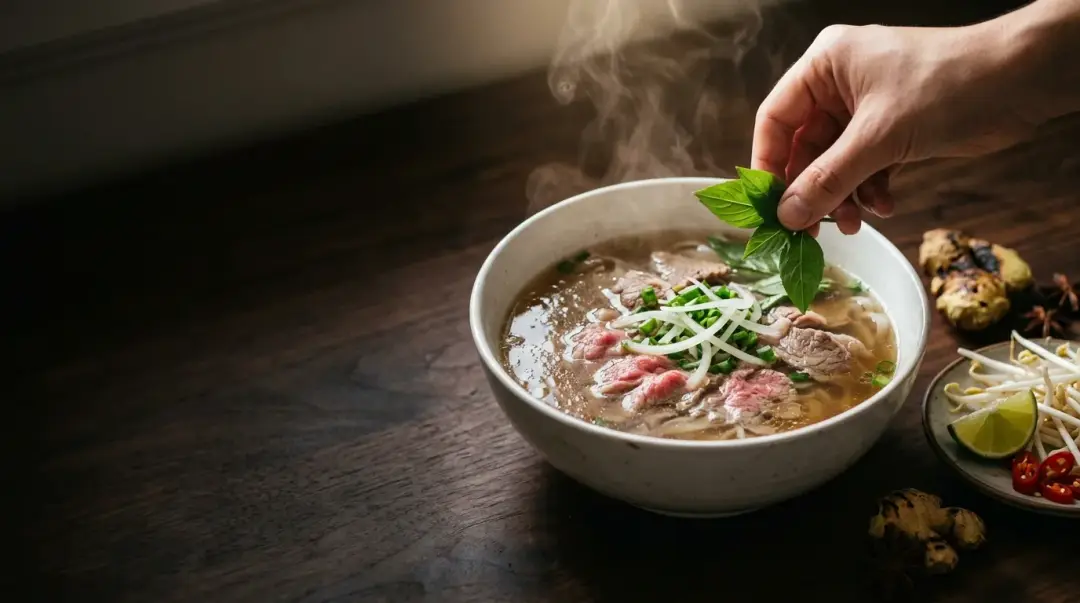
- Phở bò (beef phở) — Thai basil, cilantro, bean sprouts, sliced jalapeño or Thai chili, lime. The classical plate.
- Phở gà (chicken phở) — adds rau răm (Vietnamese coriander) to the standard plate. The peppery sharpness is the chicken-broth signature.
- Bún bò Huế — Thai basil, bean sprouts, banana blossom (chuối hột) if available, lime. Banana blossom is the central Vietnam signature — H Mart and Vietnamese groceries carry it in plastic bags.
- Bún chả — perilla, lettuce, mint, Thai basil, often a small mountain of all four. The grilled-pork-and-vermicelli combo is the most herb-heavy Vietnamese noodle dish on the menu.
- Bún riêu — basil, perilla, water spinach (rau muống), shredded banana blossom. Tomato-crab broth needs the herbal counter.
- Hủ tiếu — chives, cilantro, bean sprouts, lime. Lighter southern plate.
- Cold spring rolls (gỏi cuốn) — herbs go inside the roll: lettuce, perilla, mint, chives. Plate is mostly the rolls themselves with peanut sauce.
If a restaurant sends the same generic Thai-basil-and-sprouts plate with every bowl regardless of dish, the kitchen is cutting corners.
How Vietnamese Diners Actually Use the Plate
Watch a Vietnamese family at a phở shop and the herb plate disappears fast. The technique:
- Squeeze lime into the broth before tasting — most diners do this on reflex.
- Pinch bean sprouts directly into the bowl by the handful, not one at a time. They soften progressively.
- Tear basil and perilla rather than chopping — bruising releases more oil than a clean cut.
- Don't pre-mix everything at once. Add aromatics across the meal so the bowl tastes different at the start than at the end.
- Hoisin and sriracha go into a side bowl for dipping meat, not onto the phở itself — adding hoisin directly to the broth is considered novice technique by most Vietnamese diners over 50.
The shape of a properly eaten phở: clear at the start, brightening with lime and herbs at the middle, hot and aromatic at the end as the chili enters.
The Herb Plate as a Cultural Marker
The presence of an herb plate is the diagnostic sign of a real Vietnamese restaurant. Cheap pan-Asian restaurants skip it (or send a sad scoop of bean sprouts and lime). Real Vietnamese restaurants send a generous plate that's bigger than it needs to be.
If your bowl of phở comes without a side plate, you're at a Vietnamese-themed restaurant, not a Vietnamese restaurant. Take note.
If You Only Remember One Thing
The herb plate is not a garnish — it's the second half of the dish. Lime first, bean sprouts next, Thai basil torn in, mint and cilantro at the end, chili to taste. The bowl arrives at half-finished; you finish it at the table. That hand-off is the Vietnamese cooking philosophy in miniature.
FAQ
What herbs come on a pho plate?
A standard plate holds Thai basil, cilantro, mint, perilla, Vietnamese coriander (rau răm), culantro (ngò gai), bean sprouts, lime wedges and Thai chili. Chicken phở adds rau răm for peppery sharpness.
In what order do you add herbs to pho?
Squeeze lime into the broth first, then add bean sprouts, torn basil, and mint and cilantro last. Chilies go in gradually at the end to tune the heat.
Where can you buy Thai basil and perilla?
Thai basil is stocked at H Mart, 99 Ranch and some Whole Foods. Perilla (tía tô) is mostly found at Vietnamese groceries.
What can replace Vietnamese herbs if you cannot find them?
Italian basil stands in for Thai basil and regular mint for spearmint. Perilla and rau răm have no close substitute, so skip them if unavailable.
Read Next
- Pho Type Guide — the canonical recipient of the herb plate
- Vietnamese Pantry Essentials — what to stock at home
- Vietnamese vs Thai vs Chinese Noodles — herb practices compared
Products mentioned in this guide
This section contains affiliate links. We may earn a commission at no extra cost to you.
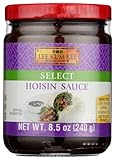
Lee Kum Kee Hoisin Sauce, 20 oz
For the side dish of hoisin that phở regulars use to dip meat, kept out of the broth itself.
View on Amazon
Huy Fong Sriracha Hot Chili Sauce, 28 oz
The other half of the dipping dish next to the herb plate. A squeeze beside the hoisin, not into the bowl.
View on Amazon
Red Boat 40°N Fish Sauce, 8.45 oz
Phú Quốc nước mắm for the nước chấm that goes with bún chả, the most herb-heavy bowl on this page.
View on Amazon
Thai Granite Mortar and Pestle, 8 inch
The garlic and chili in nước chấm can be pounded to a paste instead of minced, and a rough stone interior does that work. This is a solid granite Thai-style mortar with a deep bowl and a large pestle.
View on Amazon
OXO Good Grips 6.22 Qt Salad Spinner
Washed herbs should be dry before they go on the plate, and a spinner dries basil, mint and perilla without rubbing them in a towel. This one has a one-handed pump, a bowl and a strainer basket.
View on Amazon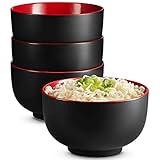
KooK Ceramic Japanese Noodle Bowl Set, 34 oz, Set of 4
A wide bowl gives herbs, sprouts and lime room to be torn in without crowding the broth. The listing is four ceramic 34 oz bowls, about 8 inches across, sold for ramen, udon, soba and pho.
View on Amazon
Browse more related items
Opens Amazon · affiliate links