In 1789, Michele Garofalo received a royal concession from Ferdinand IV, King of Naples, to produce pasta in Gragnano, and the town's authorities endorsed his pasta as exceptionally fine. Garofalo dates its founding to that license, which makes it one of the oldest pasta brands in Italy.
The paperwork says something about the town as well. In 18th-century Gragnano, making pasta was regulated work you needed permission for. Today the town's name is regulated too, under an EU designation, and that shapes what you get in the bag.
The Company Today
Pastificio Lucio Garofalo S.p.A. is still based in Gragnano, a hill town southeast of Naples. The Menna family took shares in 1952 and full control in 1997, and under them the business grew from €30 million in revenue in 2002 to €134 million in 2013.
In June 2014, Spanish food group Ebro Foods bought 52% of the company for €62.5 million. Ebro still controls Garofalo; its 2024 management report lists put options over the remaining minority shares and calls Garofalo the lead brand of its premium pasta business. In Italy's dry pasta aisle, Garofalo's volume share rose to 6.8% in 2024. Garofalo now sells in more than 60 countries.
The family name is said gah-ROH-fah-loh. At the time of the Ebro deal the company also owned two smaller Italian pasta labels, Santa Lucia and Russo di Cicciano, which you are unlikely to see on shelves abroad.
Gragnano, Briefly
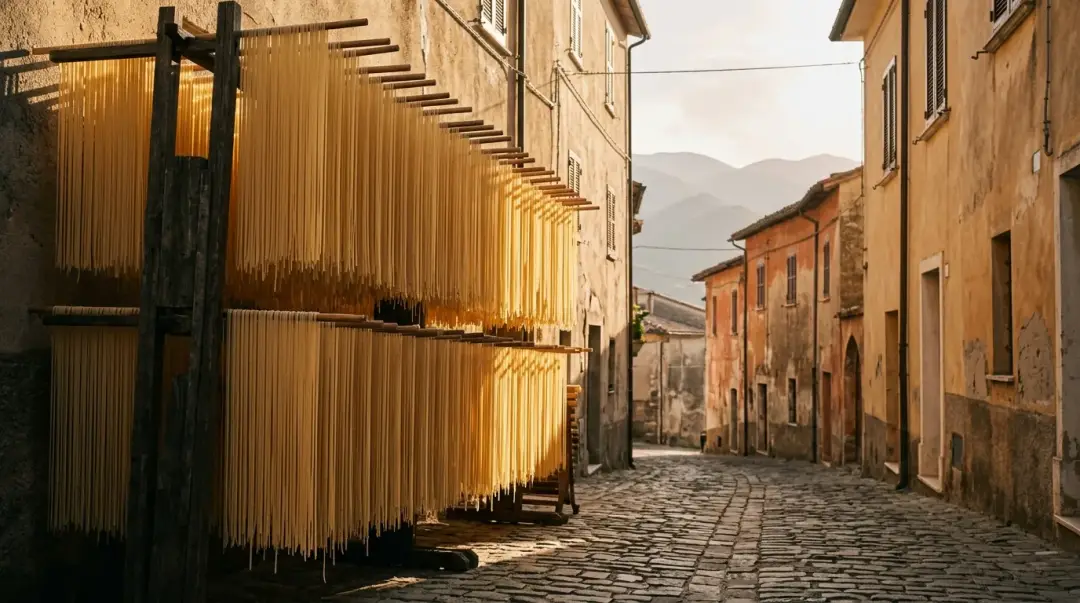
Gragnano sits between the mountains and the sea, and it has made dried pasta for about five centuries. That position mattered before mechanical dryers existed, because the mix of mountain wind and sea air was considered ideal for drying pasta outdoors. Ebro's 2014 deal announcement called the town the cradle of pasta for exactly that climate.
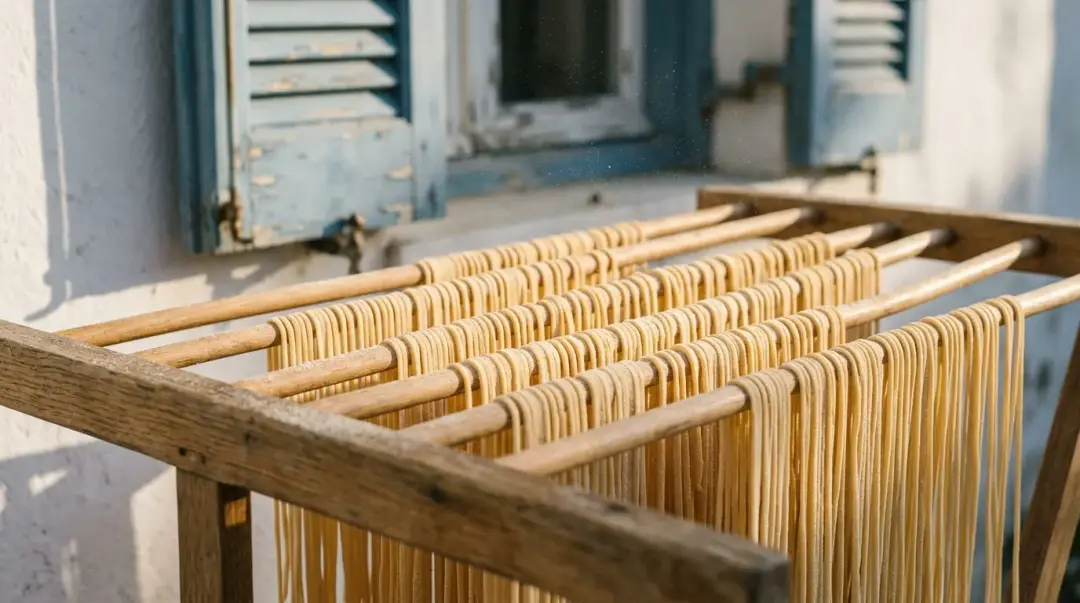
By the 19th century, by one count, seventy percent of Gragnano's residents worked in pasta. The main street was laid out so the wind could run along it, and pasta hung on long lines in the open air to dry. Garofalo grew with the town. By the early 1920s it ran two plants, one for long pasta and one for short, turning out about 400 quintals a day (roughly 40 metric tons), which made it one of the largest pasta factories of its time. The modern company was incorporated in 1935.
Drying now happens indoors, with controlled heat and cycles of ventilated air. The local rules that govern it are what the IGP seal enforces.
What the Pasta di Gragnano IGP Seal Requires
IGP stands for Indicazione Geografica Protetta (een-dee-kah-TSYOH-neh jeh-oh-GRAH-fee-kah proh-TET-tah), the Italian name for the EU's Protected Geographical Indication. Ten Gragnano producers applied for it in 2004, and the EU registered Pasta di Gragnano IGP in 2013. A consortium of 16 producers now polices it, and Garofalo is the largest of them.
Pasta di Gragnano IGP rules vs ordinary dry pasta
| Rule | Pasta di Gragnano IGP | Typical supermarket pasta |
|---|---|---|
| Where it is made | Only inside the municipality of Gragnano, mixing to packing | Any factory, any country |
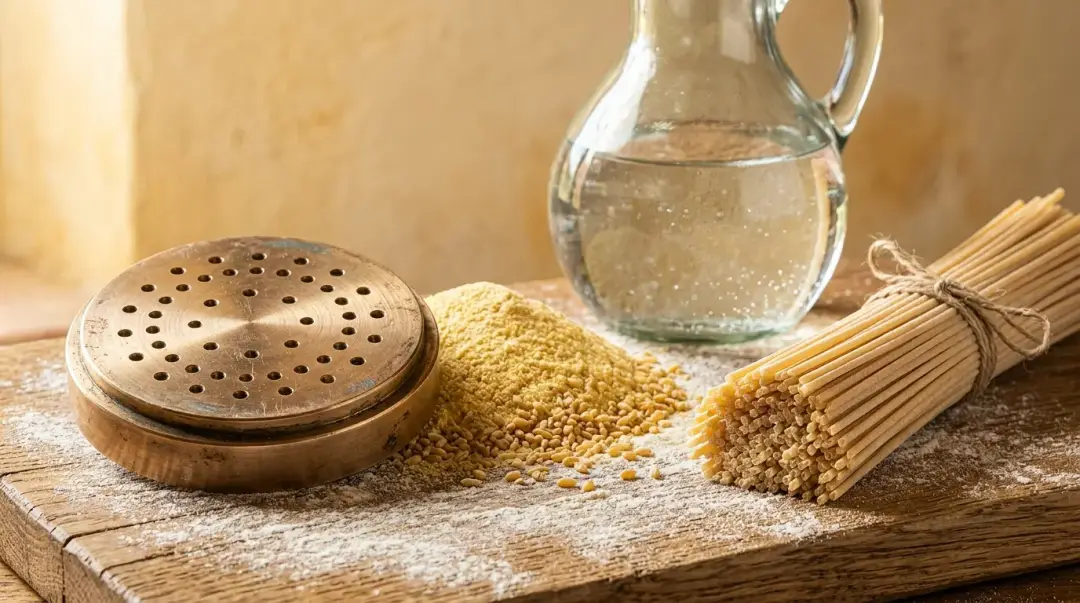
| Water | From the local aquifer | Any potable water |
| Die | Bronze only | Usually Teflon |
| Drying | 40 to 85°C for 4 to 60 hours, depending on shape | Often high heat, a few hours |
| Packing | Within 24 hours, at the same site | No rule |
| Wheat origin | Not restricted to Gragnano; durum semolina and water only | Varies by brand |
The last row is the one people get wrong. The IGP protects the place and the process, not the farm. Garofalo has said its semolina comes from durum grown in Italy, Australia and Arizona. What the seal guarantees is that the dough was mixed, extruded through bronze, dried and bagged in Gragnano.
The seal tells you where the pasta was made and how, not where the wheat grew.
Garofalo on US Shelves
Most of what US stores carry falls into four groups. Garofalo uses shape numbers the way De Cecco and Rummo do, so fusilli is No. 63 and mezze penne rigate No. 60.
Garofalo lines sold in the US
| Line | What it is | Common sizes | Where you will see it |
|---|---|---|---|
| IGP classics | Durum semolina, bronze die, Pasta di Gragnano IGP | 16 oz, some 500 g / 17.6 oz imports | Whole Foods, specialty grocers, Amazon |
| Organic | Certified-organic durum semolina, made in Italy | 17.6 oz bags in multipacks | Costco (variety box and spaghetti) |
| Gluten free | Corn, brown rice and rice flours, potato starch, quinoa; bronze die | 12 oz | Whole Foods, Eataly, Amazon |
| Nests and specialty | Tagliatelle nests, lasagna, short cuts like fusilli bucati corti | 250 g to 500 g | Whole Foods, Italian grocers |
Bronze dies carry over to the gluten-free range, so penne rigate and casarecce have a rough surface, and Garofalo lists the spaghetti at 11 minutes. Eataly sells the 12 oz spaghetti. Garofalo has also added a high-protein spaghetti in the US.
What to Buy First
Start with the spaghetti. It is the shape that shows off a bronze-die surface best, and spaghetti aglio e olio (AH-lyoh eh OH-lyoh, garlic and olive oil) is the cleanest test: if the oil and pasta water come together into a light coating instead of pooling, the pasta is doing its job. Pull it a minute before the bag time and finish it in the pan.
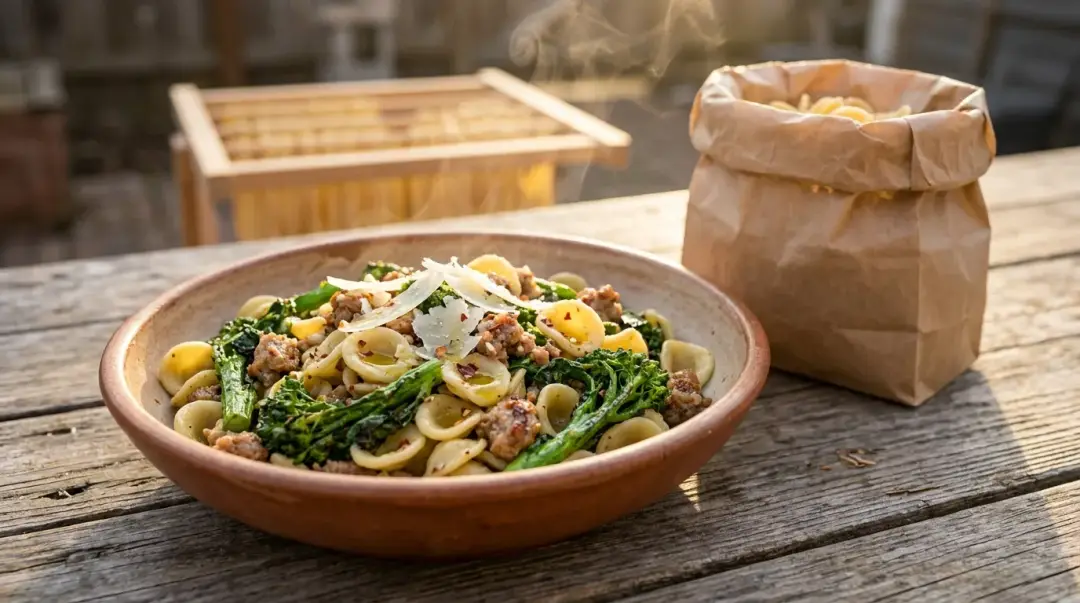
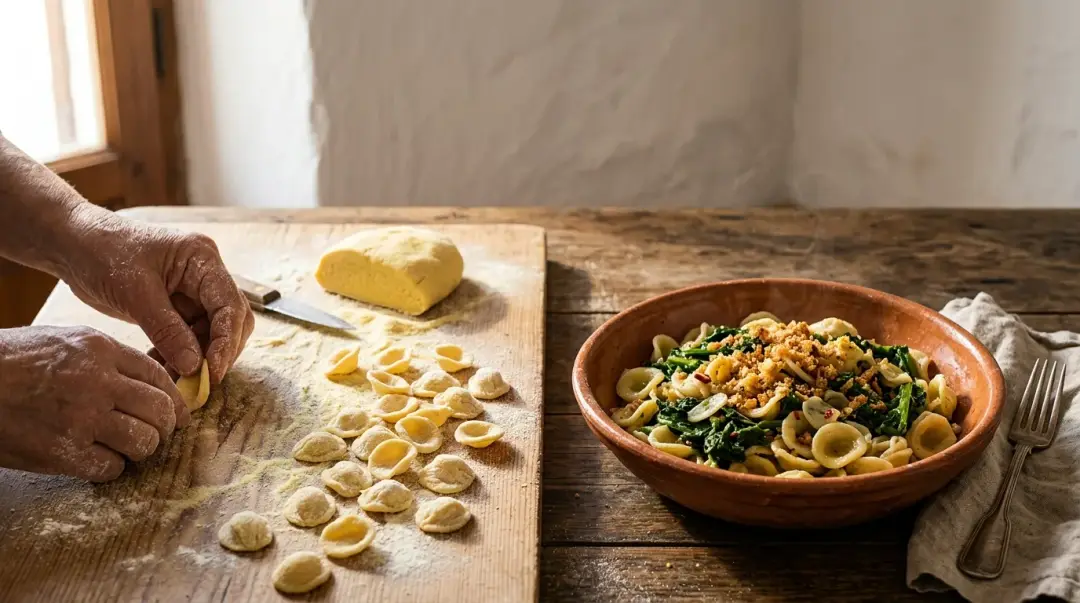
Then try the orecchiette (oh-rek-KYET-teh, "little ears"). The cupped disks come from Puglia, not Campania, and a machine-made bag has shallower cups than the hand-rolled version from Bari. They still catch crumbled sausage and chopped broccoli rabe better than any long pasta. Our orecchiette guide explains the hand-rolled tradition and how the industrial shape differs. If you cook for anyone avoiding gluten, the corn-rice-quinoa penne rigate keeps a bronze-die surface and ridges, which few gluten-free pastas have; our best gluten-free pasta roundup ranks the alternatives.
For shape-by-sauce matching beyond these three, the Italian pasta shape guide is the fastest reference.
Garofalo vs De Cecco
De Cecco is the rival most shoppers can compare against, since it sits on far more supermarket shelves. Both brands extrude through bronze and dry slowly. The differences are about place and ownership more than about cooking.
Garofalo vs De Cecco
| Garofalo | De Cecco | |
|---|---|---|
| Founded | 1789, Gragnano (Campania) | 1886, Fara San Martino (Abruzzo) |
| Owner | Ebro Foods (majority since 2014) | De Cecco family |
| Legal designation | Pasta di Gragnano IGP | None; brand standard only |
| Die | Bronze | Bronze |
| Wheat | Italy, Australia, Arizona | Italy, California, Arizona |
| Gluten-free line | Corn, rice, quinoa | Corn, rice, potato starch |
| Starter shape | Spaghetti | Spaghetti No. 12 |
Both cook to a firm bite with a rough surface, so the choice comes down to other things. Garofalo's case is the IGP: a legal guarantee of process that De Cecco's own brand standard doesn't carry. De Cecco's case is that you can buy it almost anywhere. Our De Cecco brand page covers its mill and wheat, and the best Italian pasta guide ranks picks from De Cecco, Rummo, Garofalo and Barilla.
Where to Buy Garofalo in the US
Whole Foods is the most reliable chain. Its online catalog lists Garofalo mezze penne rigate No. 60, orecchiette, tagliatelle nests, lasagna and the gluten-free penne, linguine and casarecce. Eataly sells the brand online, and Italian specialty grocers usually carry the IGP classics in 16 oz bags.
Costco is a different story. It has sold Garofalo's organic range in bulk, including a 6-bag variety box that The Kitchn found in 2022 and an 8-bag spaghetti pack, though availability changes by warehouse and season. Regional chains such as Rouses carry Garofalo too, and Walmart's site has listed the No. 63 fusilli.
Before you pay a premium, check the bag. The durum wheat classics carry the Pasta di Gragnano IGP mark and say where they were made. The gluten-free range cannot carry it, because the IGP covers semolina pasta only, so compare it against other gluten-free brands rather than against the IGP spaghetti beside it.
FAQ
Is Garofalo pasta made in Gragnano?
Yes. Pastificio Lucio Garofalo makes its pasta in Gragnano, a hill town southeast of Naples, and its wheat pasta carries the Pasta di Gragnano IGP designation. The wheat itself is a blend; Garofalo has said it buys durum from Italy, Australia and Arizona. The IGP rules govern where and how the pasta is made, not where the grain grows.
Who owns Garofalo?
Spanish food group Ebro Foods bought a 52 percent stake in June 2014 for 62.5 million euros from the Menna family, who had held shares since 1952 and controlled the company from 1997. Ebro still consolidates Garofalo in its 2024 accounts and holds put options over the remaining minority interests, so Garofalo is Ebro-controlled with family partners.
What does Pasta di Gragnano IGP mean?
IGP stands for Indicazione Geografica Protetta, the Italian form of the EU's Protected Geographical Indication. Pasta di Gragnano IGP must be made inside the municipality of Gragnano with water from the local aquifer, extruded through bronze dies, dried at 40 to 85 degrees Celsius for 4 to 60 hours depending on the shape, and packed within 24 hours on site.
Is Garofalo better than De Cecco?
For most cooks the gap is small. Both use bronze dies and slow drying. Garofalo adds the IGP guarantee of where and how the pasta is made. De Cecco is easier to find in supermarkets and usually cheaper per pound. For oil and cheese sauces, either one is a clear step up from Teflon-die pasta.
Does Garofalo make gluten-free pasta?
Yes. The US gluten-free line includes spaghetti, penne rigate, casarecce and linguine in 12 oz bags, made from corn flour, brown rice flour, rice flour, potato starch and quinoa, and still extruded through bronze dies. Garofalo says the line is certified gluten-free and Non-GMO Project Verified. Check each bag's label for the current certification.
Is the Garofalo organic pasta at Costco the same as the regular line?
It is the same brand, made in Italy from durum wheat semolina, but it is a separate certified-organic range. Costco has sold it in multipacks, including a 6-bag variety box of casarecce, penne ziti rigate and gemelli. Chowhound reports the organic bags carry the Gragnano PGI seal as well, but check the bag in your warehouse to confirm.