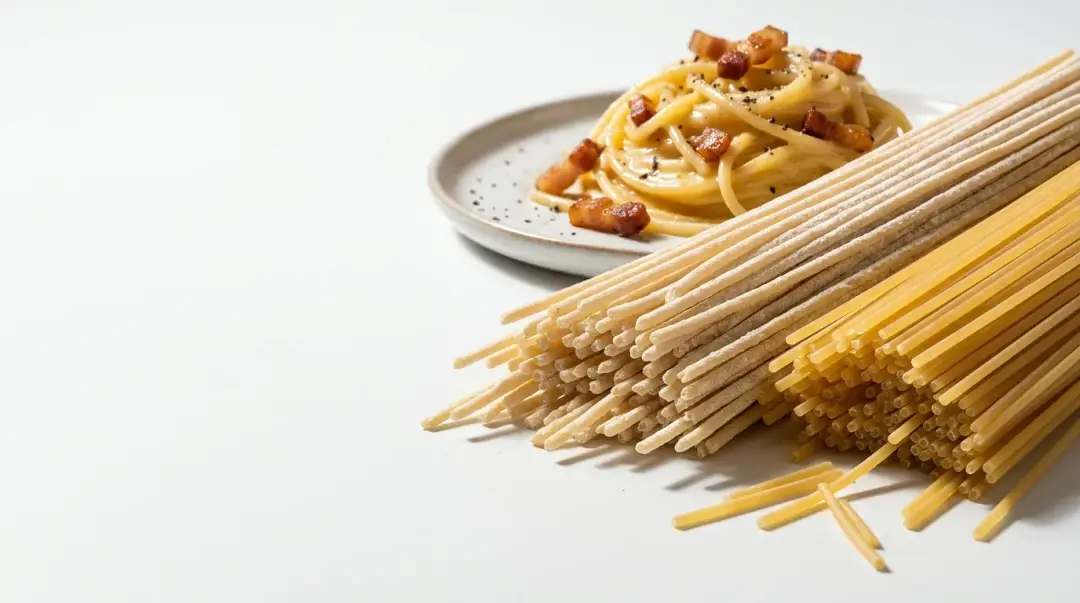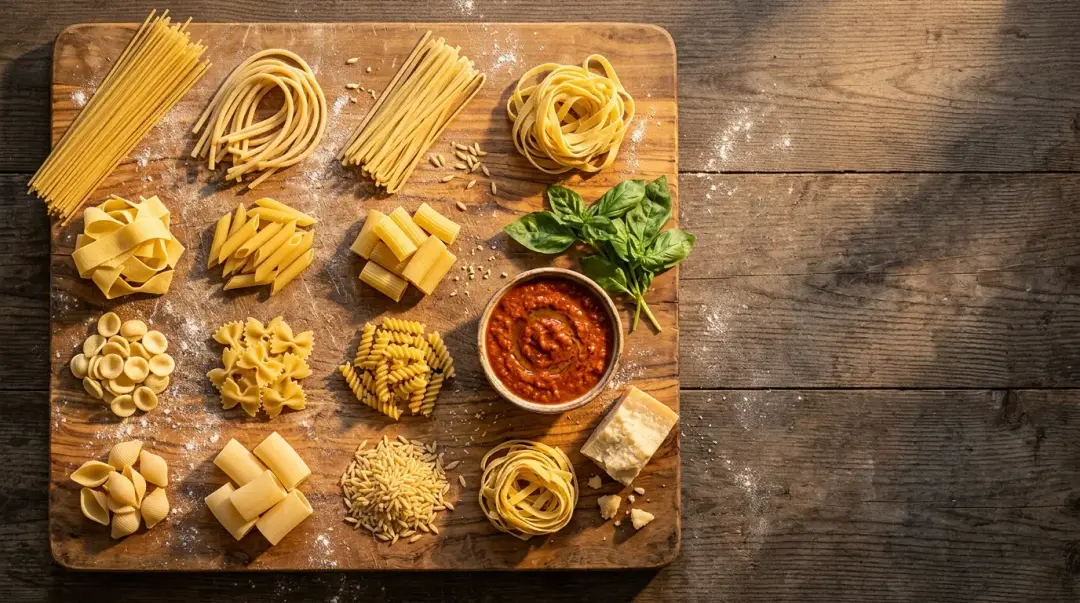
De Cecco's mill in Fara San Martino could pull about 80 kg of semolina out of every 100 kg of durum wheat. It takes about 65. The company publishes that number on its own method page, and it explains more about the brand than any advertising line does: De Cecco grinds coarse, throws away yield on purpose, and charges you a little more for the result. Everything else on this page, from the bronze dies to the 36-hour drying runs, follows from that choice.
Who Makes De Cecco
The company's legal name is F.lli De Cecco di Filippo – Fara San Martino S.p.A. (F.lli is short for fratelli, "brothers"). It is still owned by the family, which Wikipedia describes as 24 shareholders spread across the third to fifth generations and three family branches. There is no parent company and no stock listing.
The numbers are mid-sized by global standards. De Cecco reported €652 million in revenue for 2024, up 8.5% on 2023, with net profit of €15 million, according to ESM Magazine's report on the results. In Italy's dry pasta aisle it holds about 12.6% of sales by value, behind Barilla at 19.8%. Wikipedia cites a 2013 description of De Cecco as the third-largest pasta manufacturer in the world. The company has also committed €20 million to two new production lines, due to run from the second half of 2026.
The US business runs through De Cecco USA, led by CEO Marco Rindone, per Italianfood.net's July 2026 coverage of the brand's protein pasta launch. In its coverage of the 2024 results, Italianfoodtoday quoted the company describing the US as "almost a domestic market."
Four Dates That Explain the Brand
1831. Nicola Antonio De Cecco runs a stone mill in Fara San Martino, a town of about 1,600 people at 440 meters on the edge of the Majella National Park. The family were millers before they were pasta makers, and De Cecco still grinds its own wheat.
1886. His son, Filippo Giovanni De Cecco, adds a pasta factory next to the mill. This is the date on every bag. Filippo also built a low-temperature drying device that let pasta dry indoors regardless of weather. Before that, drying depended on the sun.
1908. The company adopts its trademark: a country girl from Abruzzo carrying sheaves of wheat. She is still the brand's trademark.
After 1945. German bombing destroyed the factory during World War II. The rebuild came with an export push: a Pescara plant in the 1950s, a modernized Fara San Martino plant in 1980 that doubled capacity, the company's own sales network in 1985, a mill handling 1,100 metric tons of wheat a day in the 1990s, and the Ortona plant in 1997. In 1986 De Cecco started selling olive oil, the first move beyond pasta and flour.
What "Made in Italy" Means on a De Cecco Bag
De Cecco's durum wheat pasta is made at its own plants in Abruzzo, from semolina ground at its own mill. The wheat is a blend. De Cecco says it selects durum from Italy, California and Arizona: Italian wheat for flavor, the American Southwest wheat for "quantity and quality of the proteins." Shoppers who assume a 100% Italian-grown grain are reading more into the label than the company claims.
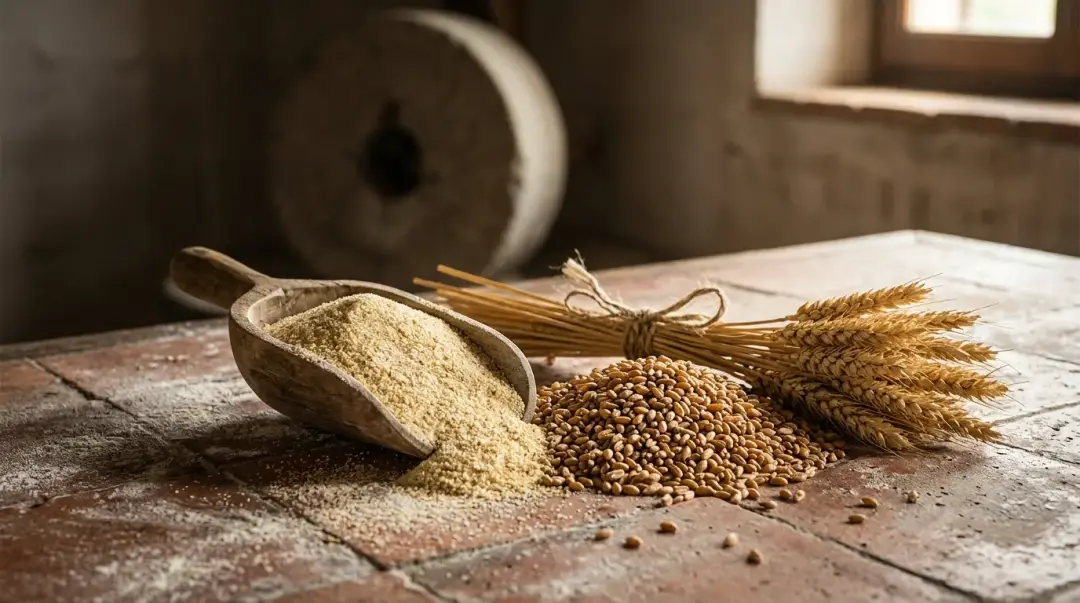
The process, per De Cecco's method page, runs like this:
- Coarse-ground semola (durum wheat semolina) from the company's own mill.
- Kneading with cold water from the De Cecco spring under the factory, kept below 15°C (59°F).
- Extrusion through bronze dies (trafile al bronzo), which leave a rough, porous surface.
- Slow drying at low temperature. De Cecco says some shapes take 36 hours to dry.
That 36-hour figure is the company's ceiling, for its slowest shapes. What bronze extrusion and slow drying do in the pan, including a carbonara test, is covered in our comparison with Barilla linked below; this page sticks to the company.
The gluten-free range is the exception to the shared-plant setup. De Cecco says all its gluten-free pasta is produced in a completely separate factory.
The US Lineup
De Cecco's US site lists eleven categories, from durum pasta to olive oil and sauces. Five of them matter to someone standing in a pasta aisle.
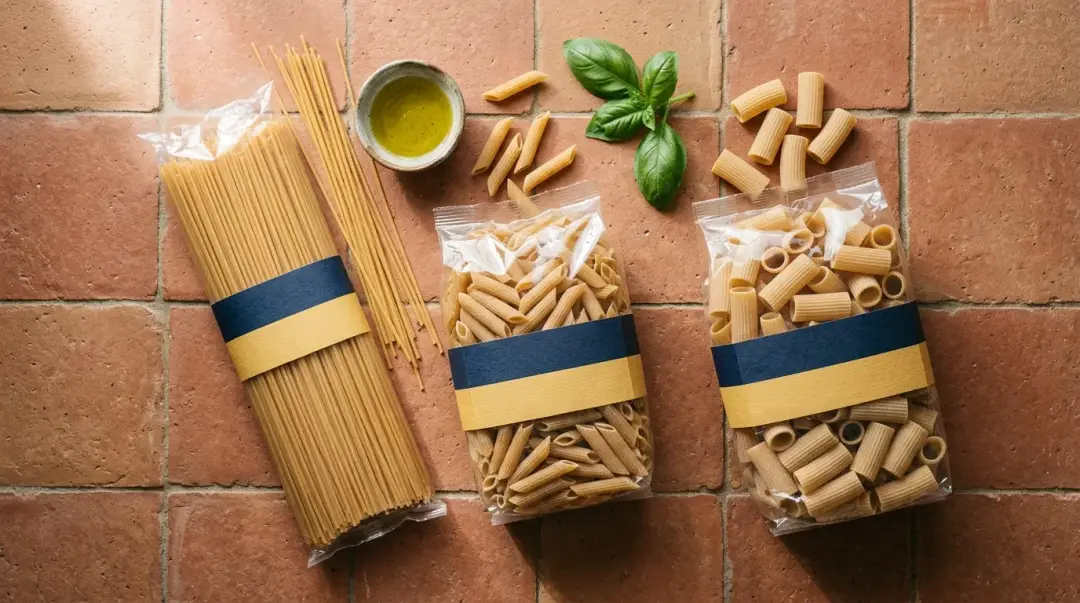
De Cecco's US pasta lines, as listed on dececco.com/us_us
| Line | What it is | Shapes to know | Who it suits |
|---|---|---|---|
| Durum wheat pasta | Semolina and water, bronze die, slow dry | Spaghetti No. 12, Penne Rigate No. 41, Rigatoni No. 24 | Everyone; the core line |
| Gluten-free | Yellow corn, rice and white corn flours, whole-grain rice flour, potato starch; separate factory | Spaghetti No. 12, Linguine No. 7, Penne Rigate No. 41, Mezzi Rigatoni No. 26, Fusilli No. 34 | Celiac and gluten-free households |
| Protein Boost | Durum semolina plus lentil, broad bean and pea flours and wheat gluten | Spaghetti No. 12, Fusilli No. 34, Mezzi Rigatoni No. 26, Penne | High-protein eaters who want wheat pasta texture |
| Whole wheat and organic | 100% whole wheat cuts and an organic range | Spaghetti No. 12 100% Whole Wheat | Fiber-first and organic shoppers |
| Egg pasta and gnocchi | Egg-enriched durum pasta; potato gnocchi, including a gluten-free version | Varies by store | Cream and butter sauces; quick gnocchi dinners |
The shape numbers are De Cecco's catalog codes, printed on every bag. They make substitutions easy: if a recipe calls for De Cecco No. 12, any store selling the brand has the same cut. Spaghetti No. 12 is labeled for 12 minutes, or 10 for al dente (Italian for "to the tooth," cooked with a firm center).
Protein Boost is the newest line in the US. De Cecco showed it at the Summer Fancy Food Show in New York in 2026 and is rolling it out nationally this fall. The Whole Foods listing claims 28 g of plant protein per serving. Serving sizes differ between brands, so compare grams per 100 g on the label before you assume it beats another protein pasta. Our highest-protein noodles page puts those numbers side by side.
What to Buy First
Three bags cover almost every weeknight.
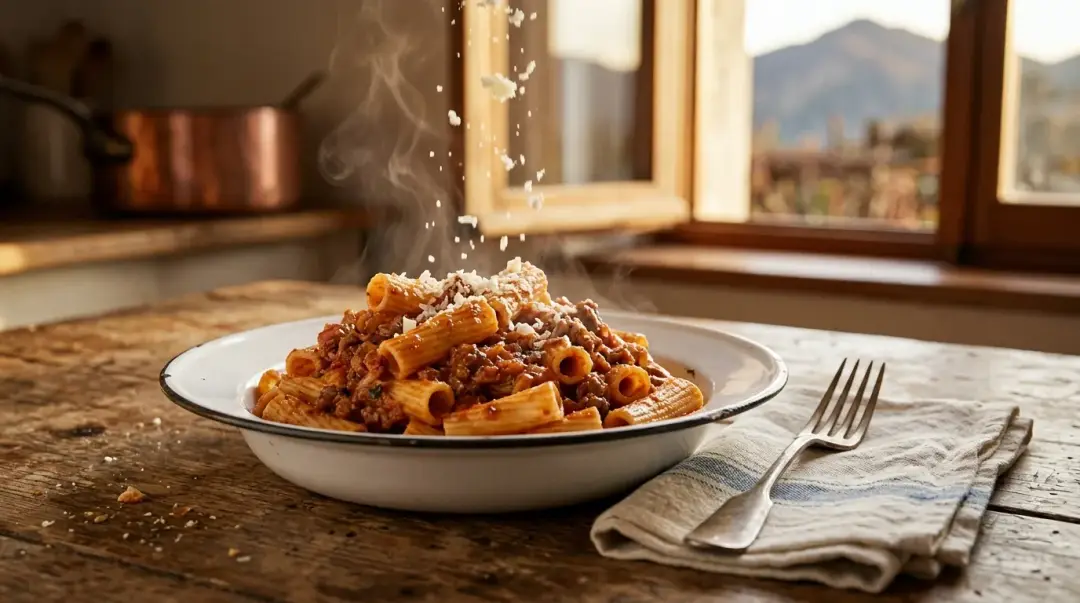
Spaghetti No. 12 is the obvious start. Use it for aglio e olio (garlic and oil), cacio e pepe (pecorino and black pepper), carbonara and tomato sauces. If you only buy one De Cecco product, this is the one most US stores carry, and our best Italian pasta guide ranks it as the top supermarket pick.
Rigatoni No. 24 is the second bag. The tubes are wide and ridged (rigati means "ridged"), so a meat ragù or a sausage-and-tomato sauce gets inside them. It also holds up in baked pasta better than thinner cuts. Our rigatoni guide has the sauce pairings.
The third depends on the household. Pick Penne Rigate No. 41 for vodka sauce and pasta salads, gluten-free Spaghetti No. 12 if someone at the table avoids gluten, or Protein Boost if you track protein. Skip the whole-wheat cuts unless you already like whole-wheat pasta, which tastes nuttier and more of bran than the semolina line.
Is De Cecco Good?
Yes, within its price band. It is the most widely stocked bronze-die pasta in American supermarkets, the drying is slow, and the mill math above shows a company spending money on semolina quality. Those are checkable process claims, which is more than most pasta marketing offers.
Two caveats. The wheat is partly American, so if Italian-grown grain matters to you, look for a bag that states it, or at specialty brands. And De Cecco sits in a crowded upper-middle tier: Rummo and Garofalo use bronze dies too and cost more, while Barilla's own bronze-cut Al Bronzo line now competes on the same shelf.
Against Barilla's standard blue box, the difference is the surface: bronze die versus Barilla's smoother standard extrusion. The full head-to-head is in De Cecco vs Barilla, and the Barilla brand page covers where Barilla's US pasta is made.
Where to Buy De Cecco in the US
Mainstream US grocers stock De Cecco as well as Italian shops. Here is where each part of the range shows up, based on retailer listings:
| Store | What is listed |
|---|---|
| Kroger | Penne Rigate No. 41, 1 lb |
| Mariano's | Gluten-free spaghetti, 12 oz |
| Walmart | Spaghetti No. 12 and Penne Rigate No. 41, single bags and multipacks |
| Whole Foods | Spaghetti No. 12; Protein Boost spaghetti and fusilli |
| Albertsons | Protein Boost fusilli, 14 oz |
| Giant | Gluten-free spaghetti and mezzi rigatoni, 12 oz boxes |
| Fairway, The Fresh Grocer | Spaghetti No. 12, 1 lb |
A neighborhood Italian grocer is also worth checking before you stock up. For olive oil, canned tomatoes and the rest of the shelf around the pasta, see our Italian pantry essentials.
FAQ
Is De Cecco pasta made in Italy?
Yes. De Cecco mills its own semolina and makes its durum wheat pasta at its plants in Abruzzo, including Fara San Martino and Ortona. The wheat is a blend, though. De Cecco says it buys durum from Italy, California and Arizona, so made in Italy does not mean every grain was grown there.
Is De Cecco good pasta?
For a supermarket brand, yes. Bronze dies give it a rough surface that holds sauce, it dries slowly at low temperature, and it keeps a firm bite if you pull it at the al dente time on the bag. It costs more than Barilla's blue box, and specialty brands such as Rummo and Garofalo compete with it at a higher price.
When was De Cecco founded and by whom?
The family started as millers in 1831, when Nicola Antonio De Cecco ran a stone mill in Fara San Martino. His son Filippo Giovanni De Cecco added a pasta factory in 1886, which is the founding date on the packaging. Filippo is also credited with a low-temperature drying device that let the factory dry pasta regardless of weather.
What do the numbers on De Cecco pasta mean?
Each shape has a catalog number printed on the bag, so spaghetti is No. 12, penne rigate No. 41, rigatoni No. 24, mezzi rigatoni No. 26, fusilli No. 34 and linguine No. 7. The number identifies the cut. It is useful when a recipe or a restaurant names a specific De Cecco shape and you want the same one.
Does De Cecco make gluten-free pasta?
Yes. The US range includes gluten-free spaghetti, linguine, penne rigate, mezzi rigatoni and fusilli, made from corn and rice flours with potato starch. De Cecco says the gluten-free line is produced in a separate factory. Check the label on each box for the current gluten-free statement if you have celiac disease.
Who owns De Cecco?
The De Cecco family. The company, F.lli De Cecco di Filippo, is privately held by descendants across several generations and family branches. It reported 652 million euros in revenue for 2024, up 8.5 percent, which makes it far smaller than Barilla but one of the largest pasta makers in Italy.