Vermicelli Noodles Explained: Rice, Glass & Pasta
· 10 min read · NoodleDex Editorial
Vermicelli noodles can be rice, mung bean, sweet potato or durum wheat. How to tell the four apart, cook times from real packs, the dishes, and a swap guide.
This page contains affiliate links. We may earn a commission at no extra cost to you. Disclosure
Four Packets, One Word
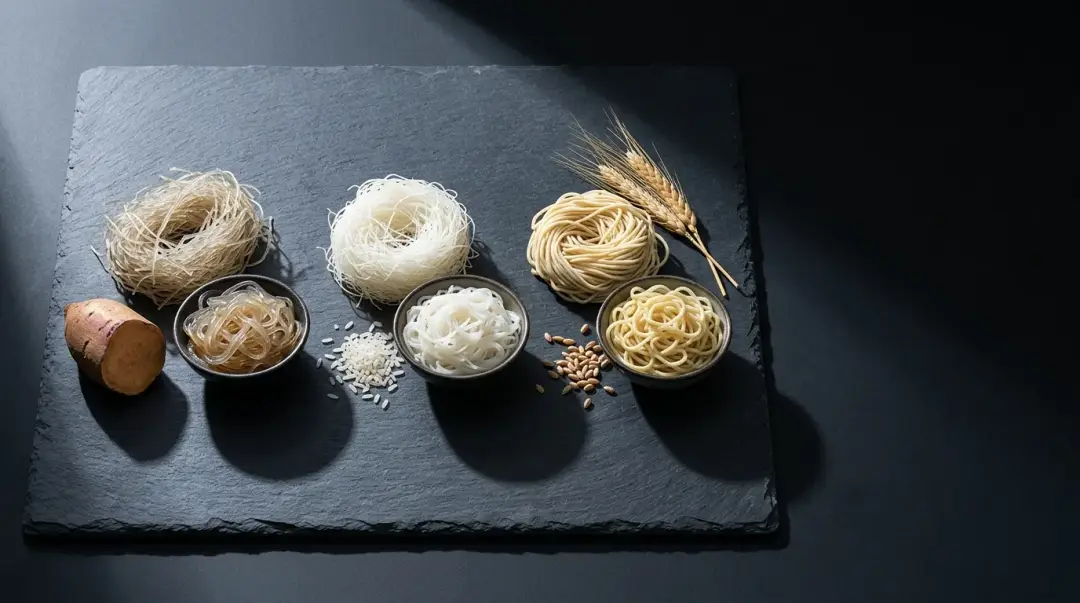
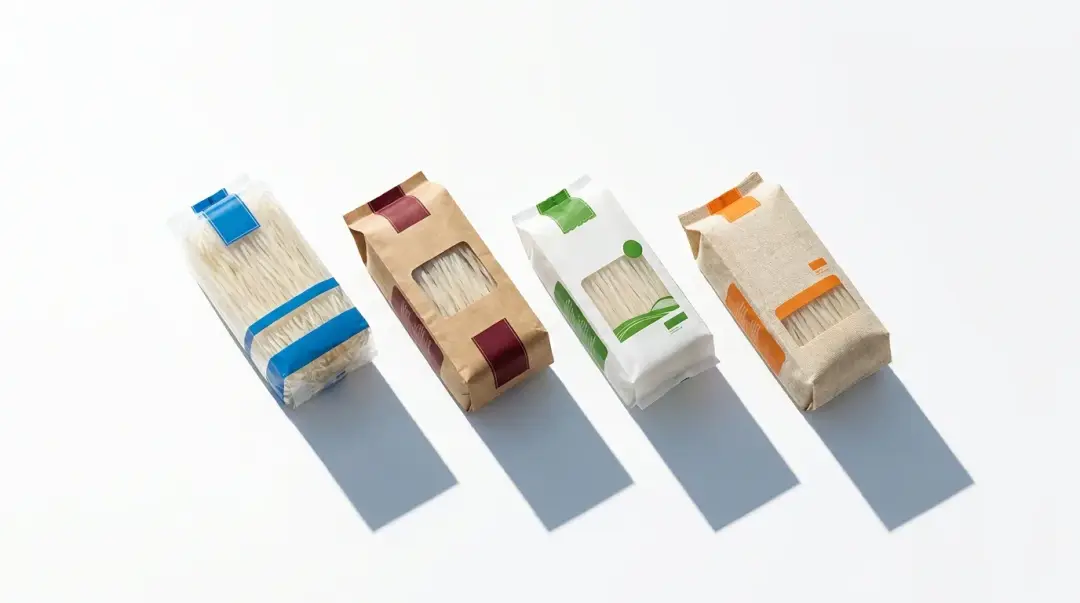
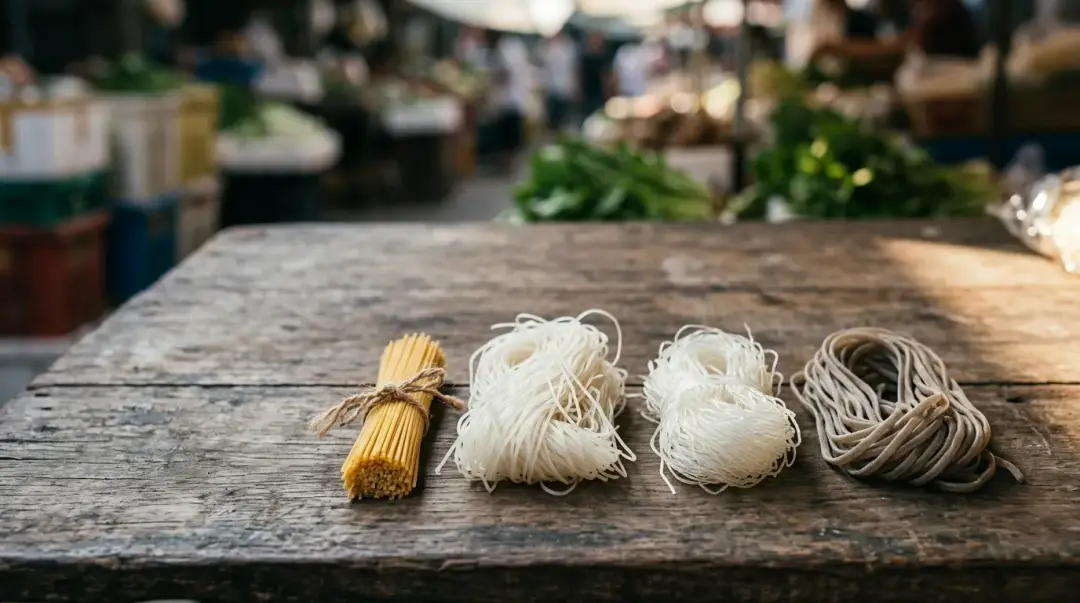
Put four bags labeled "vermicelli" side by side, the way a large Asian grocery and an Italian deli will happily sell them to you, and they share almost nothing except a skinny strand. The word comes from the Italian vermicello, "little worm," and English adopted it as a catch-all for any thin noodle. Importers then printed it on packets from Vietnam, Thailand, China and Korea, whatever the noodle inside was made from.
Packet one: Italian vermicelli
The back of the box reads durum wheat semolina and nothing else. This is pasta, and in Italy it is a thick strand. Italian vermicelli measures 2.08 to 2.14 mm across, slightly fatter than Italian spaghetti at 1.92 to 2.00 mm. US federal standards flip the order: an American box labeled vermicelli must be under 0.06 inch (1.5 mm), and spaghetti runs 0.06 to 0.11 inch. So an imported bag and a domestic one with the same name can differ by more than half a millimeter. Garofalo's Vermicelli No. 10, a bronze-drawn pasta from a maker that traces the shape back to at least the 1300s, takes 14 minutes in boiling water.
Packet two: rice vermicelli
Ingredients: rice and water, sometimes salt. Bamboo Tree's Vietnamese bún tươi lists rice, water and salt; Wai Wai's Thai version lists only rice and water. The same noodle goes by bún (boon) in Vietnam, bee hoon in Singapore, bihun in Malaysia and Indonesia, bihon in the Philippines, sen mee (sen-MEE) in Thailand, and mai fun or mei fun on Cantonese takeout menus. Taiwan regulates the name strictly: since July 2014, a product sold there as rice vermicelli must be 100% rice, and one with at least 50% rice plus added starch must say "blended rice vermicelli." Dry, the strands are opaque white. Cooked, they stay white, soft and slightly elastic.
Packet three: glass vermicelli
Mung bean starch and water. These are sold as bean threads, cellophane noodles or glass noodles, and called fensi (FUN-suh) in Chinese, wun sen in Thai, miến (mee-EN) or bún tàu in Vietnamese, and "long rice" in Hawaii. Some makers use potato, tapioca or canna starch instead. In the bag they are thin translucent-white bundles that look nearly identical to rice vermicelli. In the pot they turn completely clear, slippery and chewy.
Packet four: Korean dangmyeon
Dangmyeon (dahng-MYUN) is sweet potato starch noodle, the base of japchae. It is noticeably gray-brown when dry, then turns clear and glossy when cooked, with a bounce closer to a gummy candy than a starchy noodle. H Mart stocks it from Assi, Ottogi and Wang Korea in the dry noodle aisle. English packaging often calls it "sweet potato vermicelli" or "glass noodles," which is how it ends up on the same shelf as the mung bean bundles.
Four vermicelli at a glance
| Italian vermicelli | Rice vermicelli | Mung bean glass | Dangmyeon | |
|---|---|---|---|---|
| Made from | Durum wheat semolina | Rice, water (salt) | Mung bean starch | Sweet potato starch |
| Dry | Stiff straight rods | Opaque white | Translucent white | Gray-brown |
| Cooked | Firm pasta | White, soft | Clear, slippery | Clear, bouncy |
| Usual method | Boil 14 min (Garofalo) | Warm soak or boil, 2-8 min | Boiling-water soak, 2-3 min | Boil about 8 min |
| Wheat in recipe | Yes | No | No | No |
How to Tell Them Apart in the Store
The ingredient panel settles it every time. Rice vermicelli lists rice. Glass noodles list a starch: mung bean, potato, tapioca or sweet potato. Italian vermicelli lists semolina or durum wheat. If the front of an imported bag says only "vermicelli" and the English sticker on the back is vague, look for the original-language name: bún or bee hoon means rice, miến or fensi means bean thread, 당면 (dangmyeon) means sweet potato starch.
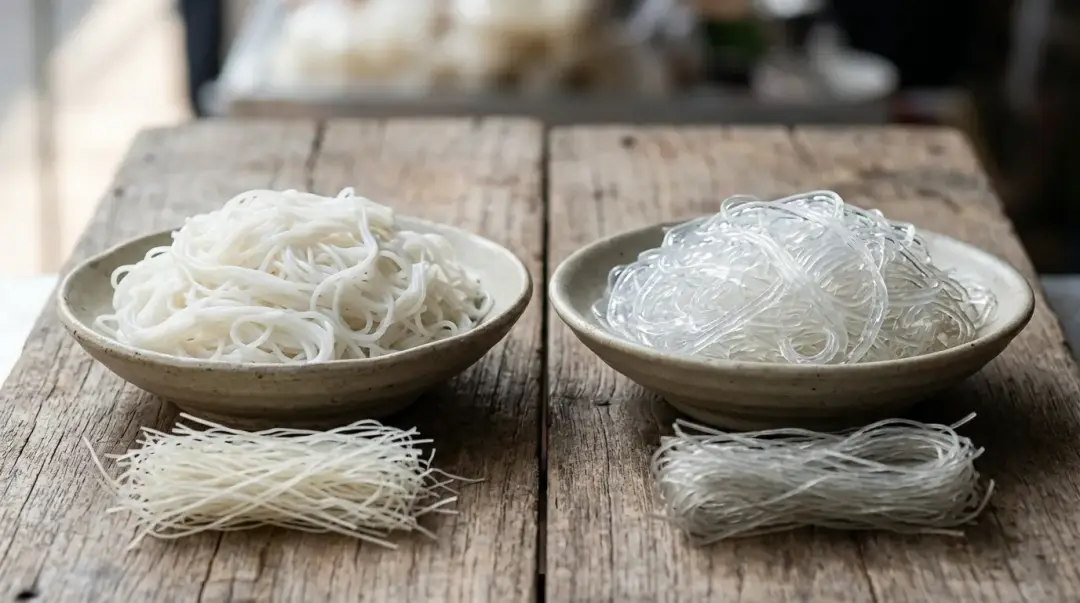
Color is the second check, and it works better after cooking than before. Rice vermicelli and mung bean noodles look almost the same dry. Nagi Maehashi of RecipeTin Eats describes both as "white, very thin noodles" and says people mix them up all the time. Once they hit hot water the difference is obvious: rice stays white and opaque, mung bean goes glass-clear. Dangmyeon is the easy one, since its gray-brown color in the bag gives it away. Italian vermicelli is pale gold and snaps like spaghetti.
Packaging shape helps too. Mung bean noodles usually come in small portioned bundles; Lungkow, a common Chinese brand, sells them as 50 g skeins in a multipack. Rice vermicelli tends to come in larger compressed blocks or folded skeins. Dangmyeon usually comes in 500 g bags. Pailin Chongchitnant of Hot Thai Kitchen points out that glass noodles are often mistaken for a kind of rice noodle, and the confusion runs the other way at the register too.
For a gluten-free kitchen, the split is simple. The three Asian types have no wheat in their basic recipes, and Italian vermicelli is wheat. Factories and recipes vary, so check the allergen statement on the bag you buy.
Cooking Each One: Soak, Boil, or Both
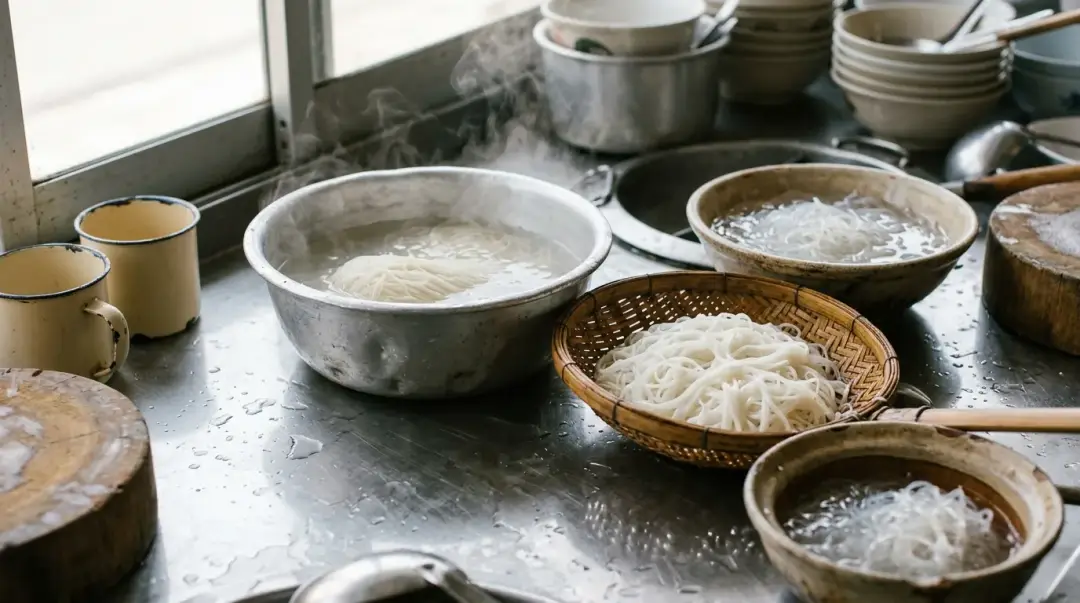
The cook times on these packets range from 2 minutes to 14, and two brands of the same rice vermicelli can disagree by 6 minutes. That gap is mostly strand thickness. A Thai sen mee is hair-thin; a Vietnamese bún for noodle salads is rounder and denser, and the extra-large bún used in bún bò Huế is thicker again.
| Noodle | Method | Time | Source |
|---|---|---|---|
| Italian vermicelli (Garofalo No. 10) | Rolling boil, salted water | 14 min | Garofalo |
| Angel hair (Barilla) | Rolling boil | 4-5 min | Barilla |
| Thai rice vermicelli (Wai Wai sen mee) | Warm-water cook or soak | 2 min | Wai Wai via ImportFood |
| Vietnamese bún (Bamboo Tree) | Boil, then rinse in cool water | 8 min (7 for stir-fry) | Bamboo Tree |
| Thin rice vermicelli, soak method | Room-temperature soak, 3-second blanch for soup | 5-15 min | Hot Thai Kitchen |
| Mung bean glass noodles | Soak in just-boiled water, rinse | 2-3 min | RecipeTin Eats |
| Dangmyeon | Boil, stir after 1 min | About 8 min | Maangchi |
Rice vermicelli is the one people get wrong. Bamboo Tree tells you to boil its bún for 8 minutes and specifically not to pre-soak it in cool water, because the soak changes the final texture. Pailin, working with thinner Thai brands, does the opposite: a room-temperature soak of about 5 minutes for Wai Wai and up to 15 for Erawan, then a 3-second dip in boiling water before the noodles go into soup. Both are right for their noodle. Our own default for 1 mm dried vermicelli is a hot soak of 3 to 5 minutes off the heat, covered step by step in how to cook rice noodles. Whichever route you take, rinse under cold water and drain hard; a fine-mesh strainer catches the thinnest strands, and a roomy bowl suits the soak method. The rinse washes off surface starch, which is what glues cooled strands into a brick.
Glass noodles punish inattention. RecipeTin Eats soaks them in boiling water for 2 to 3 minutes and warns against packets that suggest cold water, which takes far longer. They go from underdone to mushy in about 30 seconds, so pull a strand at the 2-minute mark. Rinse them cold, too.
Dangmyeon behaves differently from both. Maangchi boils 4 ounces for her japchae, covered, stirring once after the first minute and cooking about 7 minutes more until soft and chewy. She then cuts the noodles with kitchen scissors, which keeps the strands from forming a single tangle in the serving bowl, and dresses them with sesame oil and soy sauce while still warm. That dressing step keeps them from sticking and seasons each strand.
Italian vermicelli is plain pasta technique: plenty of salted water at a rolling boil, stir in the first minute, taste a minute before the box time.
What Each Vermicelli Is For
Rice vermicelli: the Vietnamese noodle bowl and beyond
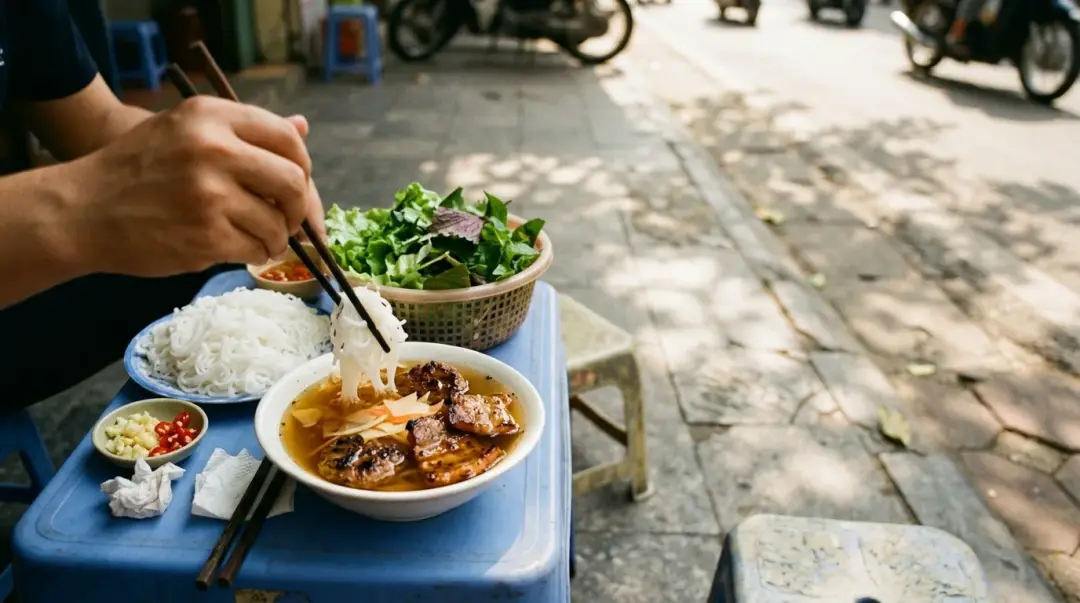
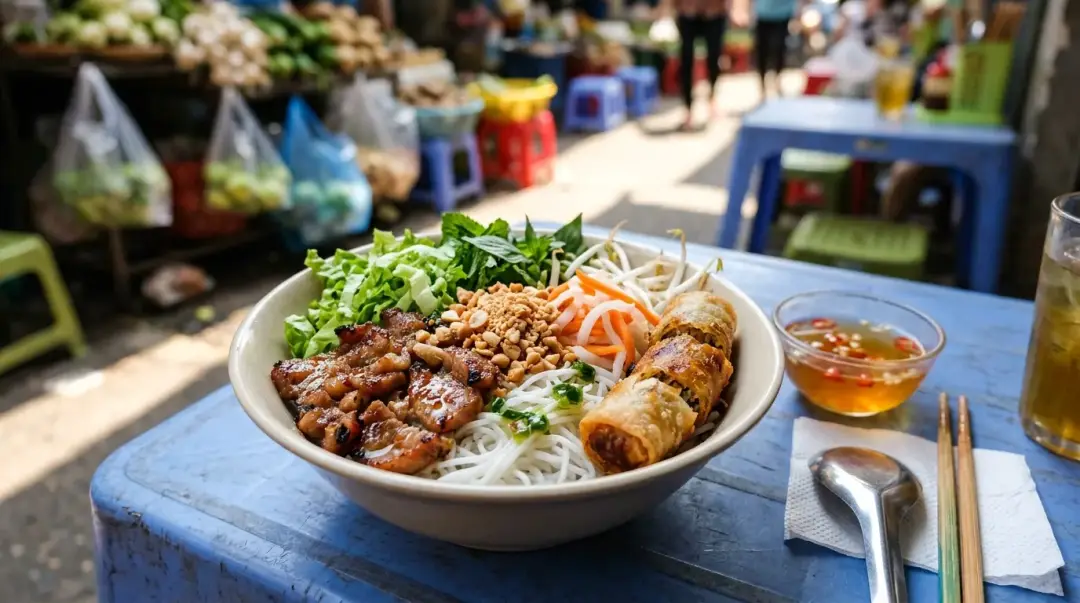
Bún is the everyday noodle of Vietnamese cooking, served at room temperature far more often than in hot soup. Bún chả (boon CHAH) is Hanoi's lunch: cold bún, smoky grilled pork patties and pork belly in a warm bowl of nước chấm (fish-sauce dipping sauce), plus a plate of herbs you add bite by bite. It reached a global audience in May 2016 when Barack Obama and Anthony Bourdain ate it at Bún Chả Hương Liên in Hanoi; our bún chả guide covers how to order and build it. Bún thịt nướng (boon tit NUNG) is the southern counterpart, with everything in one bowl: cold vermicelli, grilled pork, basil and mint, lettuce, bean sprouts, roasted peanuts, pickled carrot and nước chấm poured over the top, often with a sliced fried spring roll.
The same noodle fills fresh spring rolls. Gỏi cuốn (goy koo-UN) in the south, nem cuốn in the north, wrap cooked bún in rice paper with herbs and shrimp or pork. Drain the noodles thoroughly before rolling; water left in the strands softens and tears the wrapper.
Outside Vietnam, rice vermicelli turns up as Filipino pancit bihon, in laksa Sarawak from Malaysian Borneo, and in Thai mee krob, where Wai Wai's sen mee is deep-fried straight from dry and puffs up in seconds. It is also the base of Singapore noodles, a Hong Kong Cantonese stir-fry that soaks thin mei fun for 8 to 10 minutes, then tosses it with Madras-style curry powder, char siu pork, shrimp and egg. If you are stocking up for any of these, our best rice noodles guide names the brands worth buying, from Vietnamese bún to Thai sen mee.
Mung bean glass noodles: salads, braises and fillings
Glass noodles carry sauce on the surface and stay springy in liquid. Thai yam wun sen is a hot-sour salad of glass noodles with pork and shrimp. Sichuan "ants climbing a tree" stews them with a ground-pork sauce; the name describes the specks of meat clinging to the strands. Hawaii's chicken long rice serves them in chicken broth. In Vietnam, miến goes into chicken noodle soup, miến gà, and into the filling of fried chả giò spring rolls, though plenty of cooks use rice vermicelli there instead.
Dangmyeon: japchae
Japchae (JAHP-chay) is the reason most shoppers buy dangmyeon. The noodles are boiled, dressed in sesame oil and soy, then tossed with separately stir-fried spinach, carrot, onion, shiitake and beef. The sweet potato starch is what holds the dish together: it stays glossy and bouncy through all that mixing and still reads right at room temperature, which is how japchae is usually served at Korean holiday tables.
Italian vermicelli: sauces and seafood
Garofalo recommends its vermicelli with sauces and seafood, the same jobs you would give spaghetti. In the US, where federal standards make vermicelli thinner than spaghetti, the domestic boxes sit closer to angel hair, which Barilla pairs with light tomato sauces, broths and soups.
For the bigger picture on how starch, rice and wheat behave across all noodle families, see glass vs rice vs wheat noodles.
Swap Guide: The Recipe Says One, the Pantry Has Another
Most recipes name a vermicelli and assume you have it. When you don't, the right substitute depends on what the noodle is doing in the dish: holding up to a long toss, staying clear in a soup, or soaking up a dressing.
Vermicelli substitutions: what works and what to change
| Recipe calls for | You have | Does it work? | Adjust |
|---|---|---|---|
| Rice vermicelli (bún bowls, spring rolls) | Mung bean glass noodles | Yes | Soak 2-3 min in just-boiled water; strands go clear and slippery |
| Mung bean glass noodles (yam wun sen, soups) | Rice vermicelli | Yes | Noodles stay white and break more easily; toss gently |
| Dangmyeon (japchae) | Mung bean glass noodles | Mostly | Thinner and less bouncy; cook 2-3 min instead of 8, dress with sesame oil at once |
| Dangmyeon (japchae) | Rice vermicelli | Poorly | Shreds during the long toss; mix lightly and serve right away |
| Thin rice vermicelli (Singapore noodles) | Thicker Vietnamese bún | Yes | Cook longer per pack, then dry well before the wok |
| Extra-large bún (bún bò Huế) | Thin rice vermicelli | Weakly | Thin strands get lost in the heavy broth; use the largest size you can find |
| Flat rice sticks (pad thai, pho) | Any vermicelli | No | Wrong width; buy sen lek for pad thai and bánh phở for pho |
| Rice vermicelli (gluten-free dish) | Angel hair | Texture only | Contains wheat; boil 4-5 min and rinse for cold bowls |
| Italian vermicelli (imported) | Spaghetti | Yes | Within 0.1-0.2 mm in Italy; same sauce, check box time |
| Angel hair | US-made vermicelli | Yes | Thicker strand; cook to the box time, not the angel hair time |
The two swaps to avoid are the ones where width or structure is the point. A pad thai made with vermicelli turns into a soft clump in the wok, and a japchae made with rice vermicelli loses its glossy chew. Everything else on the list will still taste like the dish, just with a different texture.
FAQ
What are vermicelli noodles?
Vermicelli is a name for thin, round noodles, and it covers four different products. Rice vermicelli (bún, bee hoon, sen mee) is rice and water. Glass vermicelli is mung bean starch and turns clear when cooked. Korean dangmyeon is sweet potato starch. Italian vermicelli is durum wheat pasta. The ingredient list on the bag tells you which one you are holding.
Is rice vermicelli the same as glass noodles?
No. Rice vermicelli is made from rice grains and cooks up white and opaque, soft, and a little fragile. Glass noodles are made from a starch, usually mung bean, and turn transparent, slippery and chewy. Dry, the two look almost identical: thin white strands. RecipeTin Eats notes they can usually stand in for each other because both taste neutral.
How do you cook rice vermicelli?
Follow the thickness, then the pack. Very thin Thai sen mee from Wai Wai needs about 2 minutes in warm water. Vietnamese bún from Bamboo Tree boils for 8 minutes. Pailin Chongchitnant soaks thin rice vermicelli in room-temperature water for 5 to 15 minutes, depending on the brand. Whatever the method, rinse the cooked noodles in cold water and drain them hard.
What is the difference between vermicelli and angel hair?
Angel hair (capellini) is the thinnest Italian long pasta, about 0.8 to 0.9 mm across, and Barilla's cooks in 4 to 5 minutes. Italian vermicelli is thicker than spaghetti in Italy, about 2.1 mm, and Garofalo's boils for 14 minutes. US rules define vermicelli as under 1.5 mm, so American boxes run thinner. Rice vermicelli is a different food altogether.
Are vermicelli noodles gluten-free?
Rice vermicelli, mung bean glass noodles and sweet potato dangmyeon contain no wheat in their basic recipes, so they suit most gluten-free diets. Italian vermicelli and angel hair are durum wheat pasta and contain gluten. Some Asian noodles add other starches or are made in shared factories, so check the ingredient list and any allergen statement on the specific bag.
Can I use rice vermicelli for japchae?
You can, but the dish changes. Japchae is built on dangmyeon, sweet potato starch noodles that stay springy and glossy after a long toss with vegetables and sesame oil. Rice vermicelli is softer and breaks more easily, so it shreds when mixed hard. Mung bean glass noodles are the closer stand-in. Toss gently and season right before serving.
Which vermicelli goes in Vietnamese spring rolls?
Fresh rolls, called gỏi cuốn in the south and nem cuốn in the north, wrap bún (rice vermicelli) in rice paper with herbs and shrimp or pork. Fried chả giò rolls use either glass noodles or rice vermicelli in the filling, depending on the cook. Cook bún, rinse it cold and let it drain fully before rolling, or the wet noodles tear the rice paper.
Read Next
Products mentioned in this guide
This section contains affiliate links. We may earn a commission at no extra cost to you.
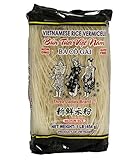
Three Ladies Brand Rice Vermicelli (Bún)
Vietnamese bún for bún chả, bún thịt nướng and fresh spring rolls. Rinse cold and drain hard before rolling.
View on Amazon
Wai Wai Rice Vermicelli
The hair-thin Thai sen mee this page times at about 2 minutes. It also deep-fries straight from dry for mee krob.
View on Amazon
Lungkow Bean Thread Vermicelli
Mung bean glass noodles sold in small portioned skeins. Soak 2 to 3 minutes in just-boiled water for yam wun sen or soups.
View on Amazon
Ottogi Korean Vermicelli Glass Noodles, 17.63 oz
Sweet potato dangmyeon for japchae, the one vermicelli that stays glossy and bouncy through a long toss.
View on Amazon
OXO Good Grips 3-Piece Fine Mesh Strainer Set (3, 6 and 8 inch)
Hair-thin vermicelli slips through a wide colander, and this page insists on a cold rinse and a hard drain. This set nests three fine-mesh sizes, from a 3-inch mini to an 8-inch strainer.
View on Amazon- P
Parmedu Stainless Steel Nesting Mixing Bowls with Lids (5 sizes, 1.5 to 5 qt)
The soak method for rice and glass vermicelli needs a bowl big enough for the strands to lie flat under just-boiled water. This is a five-bowl stainless set with matching lids that nests for storage.
View on Amazon
Browse more related items
Opens Amazon · affiliate links
Buying guides for this topic
- Buying guideBest Rice Noodles for Pho, Pad Thai, and MoreThe best rice noodles on Amazon: Three Ladies bánh phở, A Taste of Thai, Annie Chun's and Lotus Foods, ranked for pho, pad thai and more.
- Buying guideBest Pho Noodle Brands: Rice Sticks Worth BuyingBest pho noodle brands compared: Three Ladies, Bamboo Tree, A Taste of Thai and Sailing Boat rice sticks by width, ingredients and origin, plus pho kits.
- Buying guideVietnamese Pantry Essentials in 2026The 8 items that get a home pantry from zero to making real Vietnamese noodle dishes — fish sauce, shrimp paste, hoisin, and more, ranked.
- Buying guideBest SE Asian Pantry Essentials in 2026The 10 Southeast Asian pantry items needed to cook pad thai, laksa, mì goreng, and more. Fish sauce, kecap manis, sambal, curry pastes, ranked.