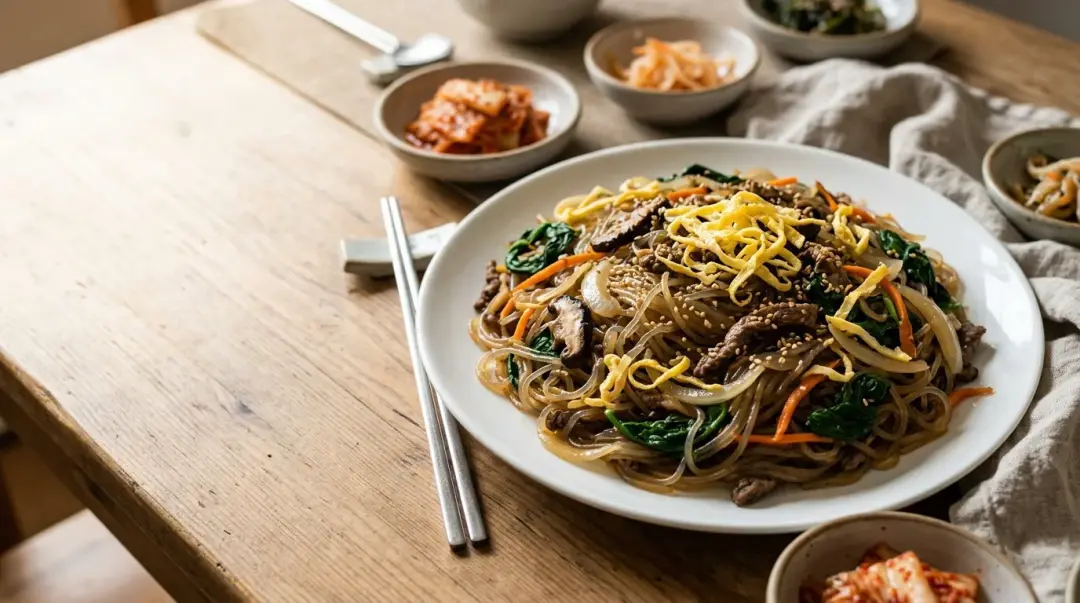


Cook a strand of dangmyeon and pull it between two fingers. Carving a Journey's dangmyeon explainer describes what should happen: "you can pull on these noodles and they will not break or tear easily." Then bite through it. Taste Korean Food says a properly cooked noodle is "fully translucent and springy with no chalky center," and Kimchimari's recipe developer cooks hers "until the noodles become clear and is soft all the way to the center." That test, stretch first and then check the middle, separates a sweet potato glass noodle from everything else in the aisle. Rice vermicelli snaps when you pull it. Mung bean glass noodles go limp. Dangmyeon (DAHNG-myun, 당면) stretches, springs back, and stays chewy under a dressing of soy and sesame oil.
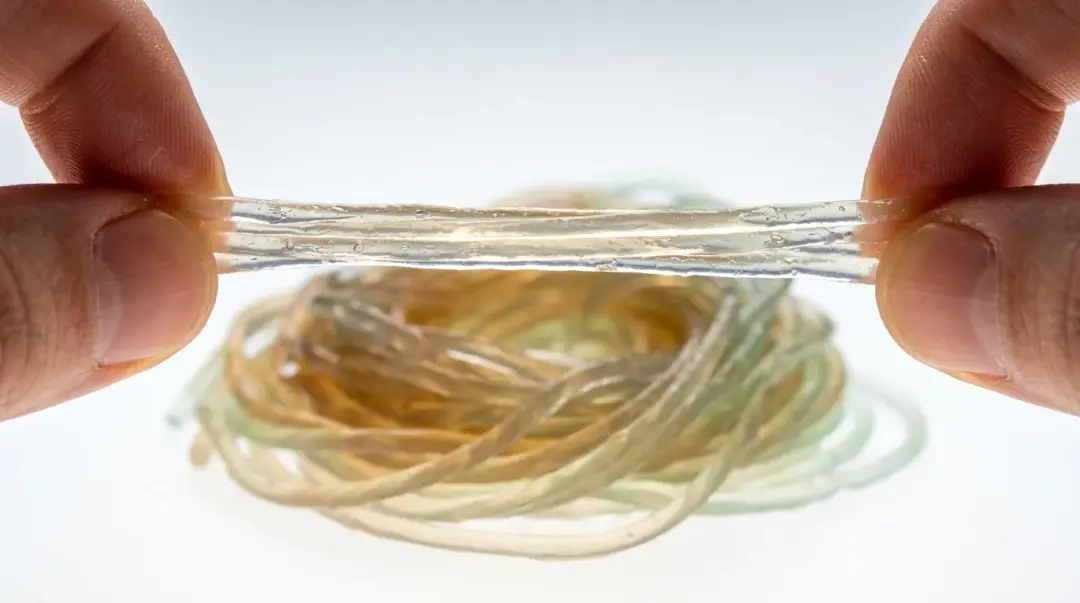
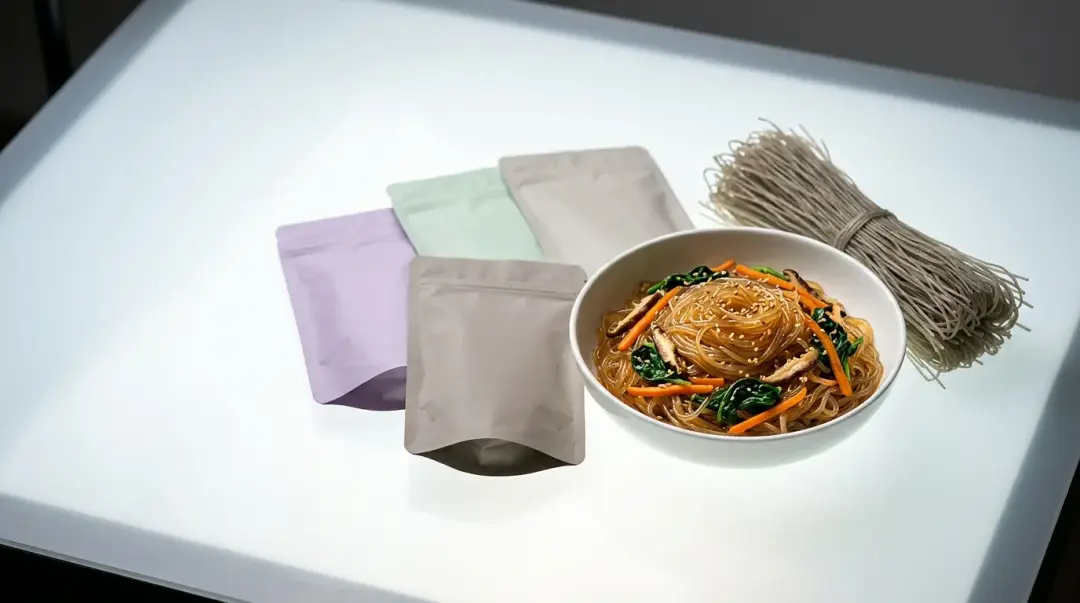
Every brand below passes that test as long as the bag says 100% sweet potato starch. The differences are in size, strand shape, and how easy each one is to buy where you live.
- Best overall: Ottogi Korean Vermicelli Premium Glass Noodle, 500 g.
- Equal alternative: CJ Beksul Sweet Potato Glass Noodle, 500 g.
- Best for beginners: Chung Jung One Korean Sweet Potato Glass Noodle, 3.5 oz bundles.
- Best portion packs: Assi Glass Noodles, 12 oz bag or 0.85 oz bundles.
- Best big bag: Wang Glass Noodles for Japchae, 1.5 lb.
- Best wide noodle: Ottogi Wide Sweet Potato Glass Noodles, 400 g.
Dangmyeon picks compared, October 2026
| Pick | Maker | Size | Strand | Best for | Where to buy |
|---|---|---|---|---|---|
| Ottogi Korean Vermicelli | Ottogi (Korea) | 500 g; 1 kg at Walmart | Regular round | Japchae, everyday | H Mart, Walmart.com, Amazon |
| CJ Beksul Sweet Potato Glass Noodle | CJ Beksul (Korea) | 500 g; 1 kg | Regular, U-shaped uncut | Japchae | Amazon, Walmart.com (third-party), H Mart |
| Chung Jung One Sweet Potato Glass Noodle | Chung Jung One, incl. O'Food line | 3.5 oz; 1 kg at H Mart | Regular, small bundles | First japchae, small households | Amazon, Walmart, H Mart, Erewhon (organic) |
| Assi Glass Noodles | Rhee Bros (Maryland importer) | 12 oz; 1.5 lb; 0.85 oz portions | Regular | Portion control | Korean grocers, Walmart.com, Amazon |
| Wang Glass Noodles for Japchae | Wang Globalnet (California importer) | 1.5 lb | Regular | Holiday batches | Korean grocers, Amazon |
| Ottogi Wide Sweet Potato Glass Noodles | Ottogi (Korea) | 400 g | Wide, flat | Jjimdak, hot pot, stews | Amazon, Korean grocers |
How We Picked
This list is research-based. We did not cook side-by-side batches for this guide. We read manufacturer and retailer listings, Korean-cooking references (Maangchi, Kimchimari, Taste Korean Food, Just One Cookbook), and US store pages from H Mart, Walmart.com and Erewhon.
- Every pick lists 100% sweet potato starch, or sweet potato starch as its single starch, on a retailer or brand page we opened.
- Every pick is in stock right now, through H Mart, Walmart.com, Amazon or another national retailer.
- We favored brands that Korean recipe writers name, and we gave the beginner slot to the format that a recipe writer called easier to handle.
Kimchimari's recipe developer says plainly that she has "not found a lot of difference between the brands." We agree with the spirit of that. Starch, size and availability decide the ranking more than flavor does.
The Picks
Ottogi Korean Vermicelli Premium Glass Noodle (Best Overall)
Ottogi is the dangmyeon most likely to be on the shelf wherever you shop. Kimchimari calls it "probably the easiest to buy," Taste Korean Food names it as a reliable brand, and Walmart.com lists both a 1 kg bag and Ottogi's vermicelli line. Ottogi's own retail copy at Sijang Mart sums up the pitch: "Glass noodles made of sweet potato starch, which means more chewy!"
The 1 kg Walmart listing describes a "light and chewy texture, that are translucent when cooked," sold in a zipper bag with a japchae recipe on the pack. The 500 g bag is the better first purchase for most households. It's enough for several batches of japchae, the sesame-soy stir-fry that dangmyeon is best known for.
Who it's for: anyone cooking japchae, mandu filling or soups from a Korean recipe, since recipe writers test against noodles like this one.
The catch: the strands are long, uncut loops. Maangchi and Kimchimari both cut the cooked noodles a few times with kitchen scissors, and you should too. Our Ottogi brand guide covers the company's other pantry staples.
OTTOGI Korean Vermicelli Premium Glass Noodle
100% sweet potato starch, the standard dangmyeon recipe
CJ Beksul Sweet Potato Glass Noodle
CJ's Beksul label makes the closest rival to Ottogi: 100% sweet potato starch, sold in 500 g and 1 kg bags. The Walmart.com listing for the 1 kg bag notes U-shaped, uncut noodles in a resealable bag, which fold into a standard pot more easily than a straight bundle.
Beksul also makes a flat glass noodle, which Walmart lists in a 300 g bag, for stews and hot pot.
Who it's for: anyone whose store carries Beksul instead of Ottogi. Treat the two as interchangeable.
The catch: the 1 kg bag on Walmart.com is sold by a third-party seller, so check shipping and the seller's rating before ordering.

CJ Beksul Sweet Potato Glass Noodle 500g
100% sweet potato starch, the same base as Ottogi
Chung Jung One Korean Sweet Potato Glass Noodle (Best for Beginners)
Chung Jung One sells its glass noodles under its own name and through its O'Food line, which Walmart lists as "Chung Jung One O'Food." Kimchimari points out that Chung Jung One sells organic options "in smaller bundles" that are "easier to handle." That's the reason it gets the beginner slot. A 500 g bag of dangmyeon is a stiff, tangled mass that's hard to portion without snapping strands all over the counter. A 3.5 oz pack is one recipe's worth. Maangchi's japchae, for example, uses 4 ounces.
Walmart lists the O'Food Korean Sweet Potato Glass Noodle in a four-pack of 3.5 oz bags, along with a 12-pack of the organic version. Erewhon in Los Angeles carries the organic O'Food bag, and H Mart sells Chung Jung One's 1 kg bag once you're cooking japchae every holiday.
Who it's for: a first-time japchae cook, or a one- or two-person kitchen that doesn't want a half-used bag in the pantry.
The catch: a party-size batch takes several packs, and organic and conventional bags look alike, so read the front label.

Chung Jung One Korean Sweet Potato Glass Noodle
Small pre-portioned bundles that are easier to handle than a 500 g tangle
Assi Glass Noodles
Assi is a trademark of Rhee Bros, an Asian-food wholesaler that Syng Man Rhee and his three brothers started in 1976 in a Silver Spring, Maryland, warehouse. The company also ran Assi Plaza supermarkets, with more than 40 in Maryland, New York, California and Georgia by 2004, though most have since closed. Its 12 oz bag lists sweet potato starch as the starch, and Walmart.com sells two other formats: a 1.5 lb japchae bag and a pack of 12 single-serving bundles at 0.85 oz each.
Those small bundles are handy if you add a few glass noodles to soups, stews or dumpling filling and don't want to break pieces off a big block.
Who it's for: shoppers who already see Assi on their Korean grocer's shelf, and anyone who wants single-serving portions.
The catch: Assi sells several similar bags under different names (dangmyun, jabchae, jangteo), so match the size and title before you order.

Assi Glass Noodles
Rhee Bros, the Maryland importer that owns the Assi trademark, has been in business since 1976
Wang Glass Noodles for Japchae
Wang is the label of Wang Globalnet, a Korean food importer in Vernon, California, with operations in 10 US metros, from Los Angeles and Seattle to New York, Houston and Honolulu. That distribution is why Wang shows up in independent Korean markets across the country. The 1.5 lb bag lists 100% sweet potato starch.
Wang also sells a bottled japchae sauce and a wide sweet potato glass noodle, so it's possible to build the whole dish from one brand.
Who it's for: households that make japchae in quantity for Seollal, Chuseok or birthdays.
The catch: 1.5 lb is a lot of dried noodle for a small kitchen. Taste Korean Food says dried dangmyeon keeps one to two years sealed in a cool, dry pantry, so it won't go to waste, but it will take up room.

Wang Glass Noodles for Japchae
1.5 lb bag sized for big holiday batches
Ottogi Wide Sweet Potato Glass Noodles
Regular dangmyeon is the right noodle for japchae. Braises and hot pots need something sturdier. Ottogi's wide noodle uses the same sweet potato starch in a flat, broad strand, sold in a 400 g bag that Amazon lists as gluten-free and meant for japchae, stir-fry and hot pot. Wikipedia lists jjimdak (JIM-dahk, soy-braised chicken) as a classic dangmyeon dish, and a wider strand survives the long simmer without dissolving into the sauce.
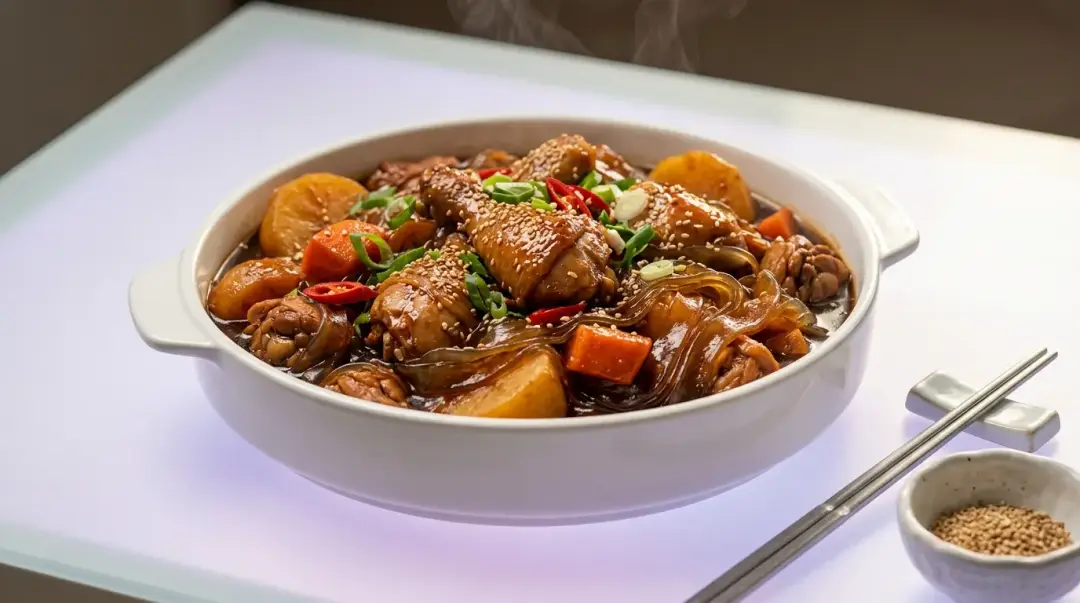
Who it's for: anyone cooking jjimdak, Korean hot pot or a noodle-thickened stew.
The catch: it's too thick for classic japchae. Keep it as a second bag, not a replacement.

Ottogi Wide Sweet Potato Glass Noodles
Wide, flat strands for jjimdak, hot pot and stews
What to Look For
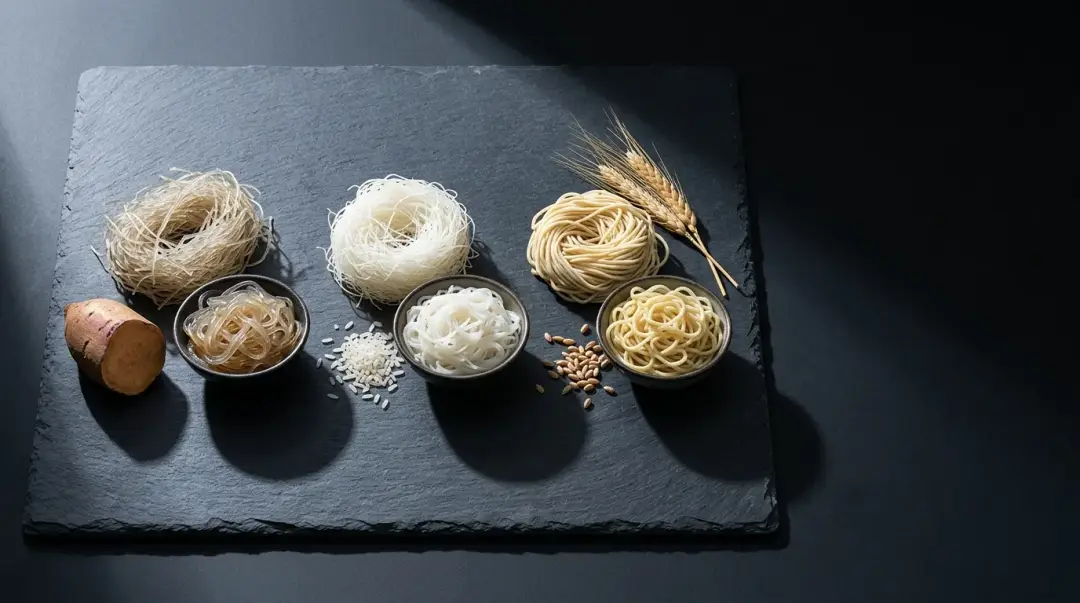
- Sweet potato starch on the ingredient line. That's what makes dangmyeon chewy and springy. Taste Korean Food says the base is goguma jeonbun (고구마 전분, sweet potato starch), water and a little salt. Mung bean starch, sold as cellophane noodles, fensi or Vietnamese miến, is a different noodle. Our glass vs rice vs wheat noodles guide explains the starch families.
- A grayish, hard, dried strand. Wikipedia and Taste Korean Food both describe uncooked dangmyeon as brownish-gray. Pure white, thread-thin noodles are rice vermicelli, which Kimchimari notes is "thinner and not as chewy."
- Country of origin, if it matters to you. A Korean brand name doesn't guarantee a Korean factory. H Mart's listing for Sempio's 900 g sweet potato glass noodle gives China as the origin. Read the back of the bag.
- A strand width that fits the dish. Regular for japchae, mandu filling and soups. Wide for braises and hot pot.
- A bag size you'll use. Dried dangmyeon keeps one to two years sealed, but a half-crushed 1 kg bag in a drawer breaks into short pieces. Small bundles or a zipper bag keep strands long.
- Gluten-free labeling if you need it. Ottogi and Wang list their noodles as gluten-free, but if you have celiac disease, check each bag for shared-facility warnings and see our gluten-free noodles by cuisine guide.
Common Mistakes, and What Probably Went Wrong
The noodles have a white dot in the middle. They're undercooked. Most recipes call for 6 to 8 minutes in boiling water. Maangchi cooks hers 8 minutes, stirring after the first minute so they don't stick. Bite a strand and keep going until it's clear all the way through.
The noodles clumped into one block. They sat after draining. Taste Korean Food's fix is to rinse under cold water and toss right away with sesame oil. Kimchimari seasons the noodles with soy, sugar and sesame oil while they're still warm.
The japchae tasted great at 6 p.m. and bland at 8. Glass noodles keep absorbing seasoning. Kimchimari warns they can "taste bland after some time" and recommends tasting several times before serving. Hold back a spoonful of soy and sesame oil for a last-minute top-up.
The strands are three feet long and impossible to eat. Nobody cut them. Snip the cooked noodles a few times with kitchen scissors, as Maangchi and Kimchimari both do.
The noodles turned soft and broke apart. They were probably mung bean glass noodles, or they were boiled far too long. Mung bean noodles work as a substitute, Maangchi says, but they're thinner and need less time. Check the ingredient line before blaming the recipe.
Leftovers went stiff in the fridge. Starch firms up as it cools. Cooked dangmyeon keeps two to three days refrigerated, per Taste Korean Food. Warm leftovers in a pan with a splash of water and a little sesame oil to loosen them. The soy sauce, sesame oil and other Korean basics that finish the dish are in our Korean pantry essentials guide.
FAQ
What is dangmyeon made of?
Dangmyeon is made from sweet potato starch and water, sometimes with a little salt. Dried, the noodles are hard and grayish-brown. Cooked, they turn translucent, glossy and springy. Most Chinese and Southeast Asian glass noodles use mung bean starch instead, which gives a thinner, more delicate noodle with less bounce. Check the ingredient line for sweet potato starch before you buy.
What is the best brand of Korean glass noodles?
Ottogi is our top pick because it is 100% sweet potato starch and the easiest brand to find, from H Mart to Walmart.com. CJ Beksul is an equally good noodle. Chung Jung One's small bundles are the easiest for a first batch. Kimchimari's recipe developer says she has found little difference between reputable brands, so buy what your store stocks.
Where can I buy dangmyeon?
H Mart and other Korean grocers carry the widest range, including Ottogi, Chung Jung One, Sempio, Assi and Wang. Walmart.com lists Ottogi, Assi, O'Food and Beksul, some sold by Walmart and some by third-party sellers. Amazon carries every brand on this page. Erewhon stocks the organic O'Food version.
How long do you cook dangmyeon?
Most recipes boil dangmyeon for 6 to 8 minutes. Maangchi cooks hers 8 minutes in total, and Just One Cookbook suggests 4 to 5 for a softer bag. Follow the package, then test a strand. It should be clear all the way through, with no chalky white center, and stretch without snapping. Rinse in cold water and toss with sesame oil.
Are Korean glass noodles gluten-free?
Pure sweet potato starch contains no gluten, and Ottogi and Wang both list their dangmyeon as gluten-free. Packaging and factory practices vary by brand and batch, so check the label for wheat and for shared-facility warnings if you have celiac disease. The sauce matters too, because regular soy sauce contains wheat.
Can I use mung bean glass noodles instead of dangmyeon?
In a pinch, yes. Maangchi lists mung bean cellophane noodles as a substitute for japchae. Expect a thinner, softer noodle that absorbs sauce faster and loses its bounce sooner. Cook mung bean noodles for less time than dangmyeon and dress them just before serving.