Shio Ramen
塩
Hakodate, Hokkaido, Japan
- Delicate
- Clean
- Mineral
- Precise
- Origin
- Hakodate, Hokkaido, Japan
- Broth base
- Chicken and seafood with salt tare
- Cook time
- 3–6 hours (broth)
- Difficulty
- Advanced
This page contains affiliate links. We may earn a commission at no extra cost to you. Disclosure
What is Shio Ramen?
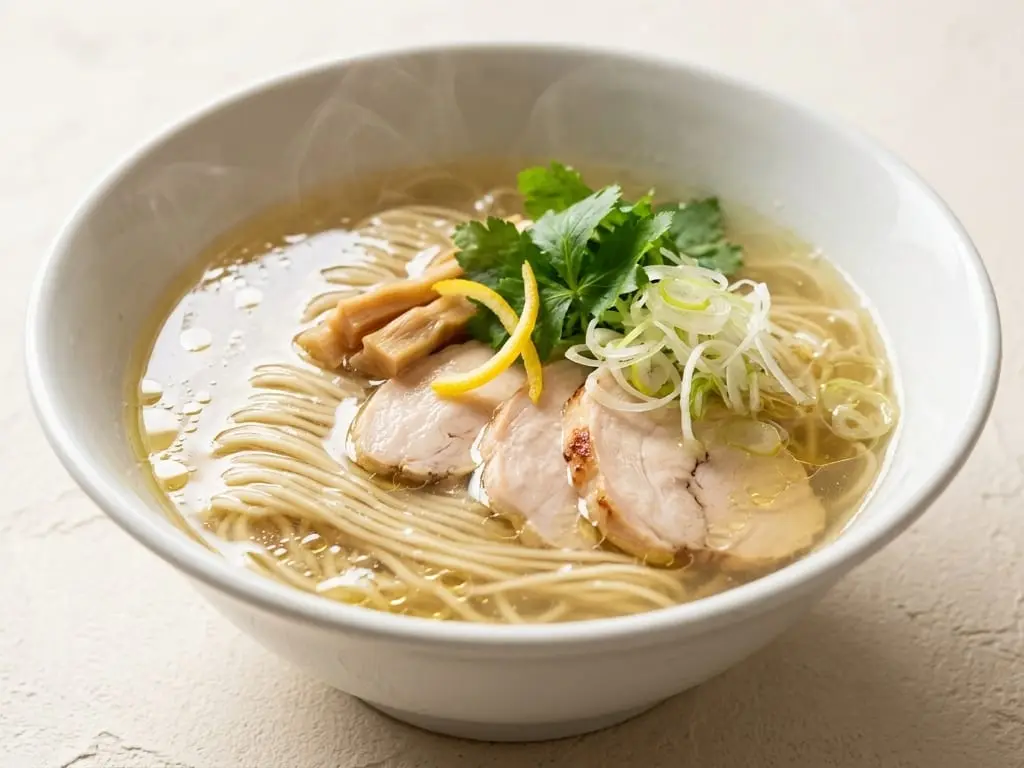
Shio ramen may be the oldest style of all. Hakodate, a port city in southern Hokkaido, holds the strongest historical claim: an 1884 newspaper advertisement for "Nankin soba" (noodles from Nanjing) is one of the earliest records of ramen in Japan, and some accounts trace Chinese-influenced clear noodle soups in the city to 1877 via Cantonese immigrants. Hakodate was one of the first Japanese cities opened to international commerce in 1859, which brought Chinese culinary influence early and directly. The bowl that developed stayed close to those roots: a clear salt-seasoned soup, the closest of the four styles to the original Chinese noodle soups that arrived by trade.
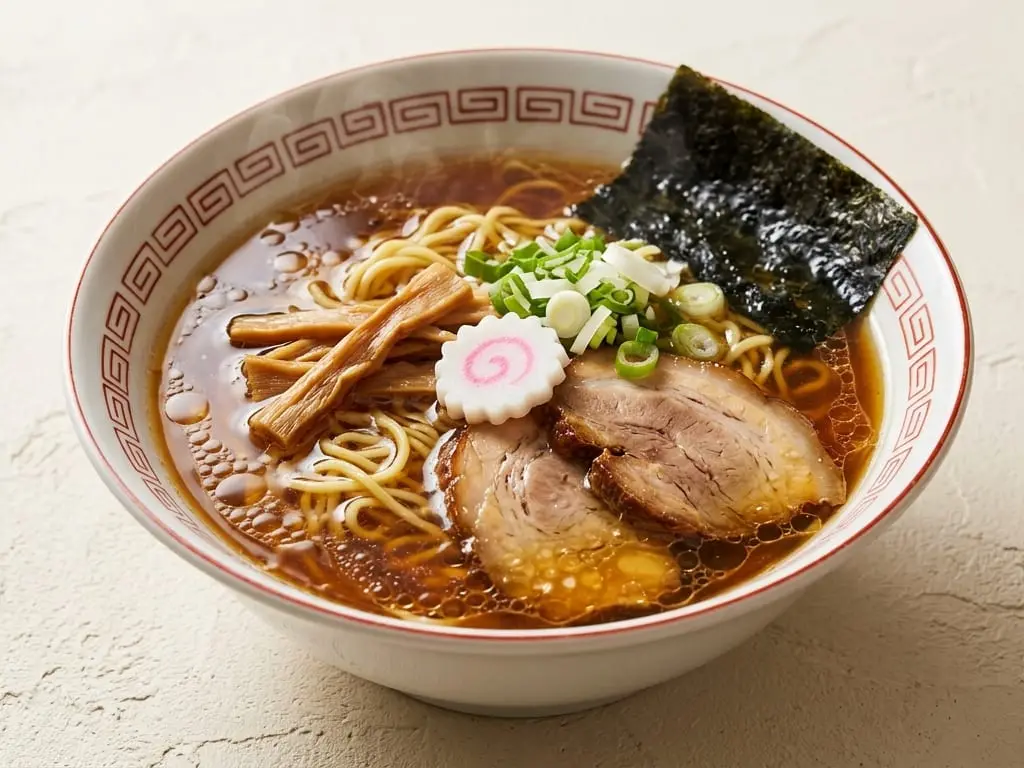
Shio means "salt" in Japanese. The tare is made from high-quality sea salt dissolved with sake and mirin, sometimes with a small amount of light soy sauce (usukuchi) — at low enough concentration that it never colors the broth. The stock base is most commonly chicken, seafood (kombu, dried scallops, niboshi, katsuobushi), or a combination of both. Temperature discipline matters: the stock must stay below a rolling boil — around 176°F — to prevent fat emulsification and keep the liquid transparent. That clarity is not aesthetic preference; it is a direct readout of technique. Every flaw in the stock — improperly blanched bones, thin dashi, off salt balance — is visible and tastes unmediated in the bowl. There is no miso paste to soften the edges, no caramelized soy to add depth. The broth is the broth.
Hakodate shio ramen uses medium-thin straight noodles and spare toppings: chashu or poached chicken, menma, green onion, nori, and sometimes narutomaki or spinach. The pale golden surface of the bowl is a consequence of technique, not a decorative choice. Heavy toppings would bury both the color and the flavor. In the US, shio draws cooks who want a benchmark — the style where you find out exactly how good your fundamentals are.
Flavor Profile
How to Make Shio Ramen
- 1
Build a Double Stock (Chicken + Dashi)
Blanch chicken backs or carcasses in boiling water for 5 minutes; rinse clean. Separately, cold-steep kombu, dried scallops, niboshi (dried anchovies), and dried shiitake in cold water for at least 12 hours to make dashi. Simmer the chicken stock gently at around 176°F for 3 hours, skimming constantly — never let it boil. Combine the strained chicken stock and strained dashi in a 1:1 ratio. Animal-fat richness from the chicken stock and seafood umami from the dashi work differently and layer better than either alone.
- 2
Make Shio Tare
Combine 75g high-quality sea salt, 75 ml mirin, and 75 ml sake in a small saucepan. Add a piece of kombu and heat gently to 140°F — pull the kombu before the liquid boils or it turns bitter. Let cool. Stir in 5 ml rice vinegar for brightness and a small amount of usukuchi (light) soy sauce for body without color. The tare should be intensely salty on its own; 20 ml tare per 250 ml stock is the starting ratio.
- 3
Make an Aromatic Oil
Render chicken skin (from your chashu chicken breast) in a small saucepan with sliced Tokyo negi (long green onion) over low heat for 20 minutes. Strain. One tablespoon per bowl adds a round fat layer and fragrance that the broth itself cannot carry.
- 4
Assemble Precisely
Add 20 ml shio tare and 1 tablespoon aromatic oil to a pre-warmed bowl. Ladle 300 ml hot double stock over both. Add thin straight noodles cooked al dente (about 90 seconds). Top with thinly sliced chashu or poached chicken, menma, chopped green onion, and nori. Taste before serving — there is no way to confirm salt balance in shio except by tasting the assembled bowl.
Where to Buy in the US
- Asian Grocery Stores
- H Mart and Mitsuwa stock kombu, niboshi, dried scallops and katsuobushi for dashi. Tokyo Central (formerly Marukai) in California carries Japanese salt ramen and thin straight noodles.H MartMitsuwaTokyo Central
- On Amazon
- Nissin RAOH air-dried ramen is the closest mass-market instant noodle to a shop bowl, and Sun Noodle fresh noodles work for a scratch shio bowl.
- Whole Foods / Specialty
- Maine Coast Sea Vegetables and Eden Foods kombu are sold nationally for scratch shio tare. Use flaky sea salt rather than iodized salt, which tastes harsh in a clear broth.Whole Foods
- Specialty Retailers
- Korin and Japan Centre sell usukuchi (light) soy sauce, dried scallops and other shio tare ingredients online.KorinJapan Centre
Shio ramen to buy
This section contains affiliate links. We may earn a commission at no extra cost to you.

Nissin RAOH
Nissin RAOH air-dried ramen is the closest mass-market instant noodle to a shop bowl.
View on Amazon