Instant Ramen
Ikeda, Osaka, Japan (1958)
- Convenient
- Savory
- Versatile
- Iconic
- Origin
- Ikeda, Osaka, Japan (1958)
- Broth base
- Dehydrated seasoning packet (flash-fried or air-dried noodles)
- Cook time
- 3–5 minutes
- Difficulty
- Beginner
This page contains affiliate links. We may earn a commission at no extra cost to you. Disclosure
What is Instant Ramen?
Instant ramen was invented by Momofuku Ando and introduced by his company Nissin Foods on August 25, 1958, under the name Chikin Ramen (Chicken Ramen). Ando developed the product alone in a small shed behind his house in Ikeda, Osaka, working roughly a year without a day off. The core innovation was flash-frying: noodles cooked in chicken broth were submerged in palm oil at 140–150°C. The rapid evaporation of moisture created microscopic pores throughout the noodle structure. When boiling water was added later, it rushed into those pores and rehydrated the noodles in about 2 minutes. Chikin Ramen also came pre-seasoned — the chicken broth powder was incorporated into the noodles during manufacturing, so no separate packet was needed. Cup Noodles followed in 1971 after Ando observed American supermarket managers breaking Chikin Ramen blocks into cups and eating them with forks. He saw that the cup format was the key to mass adoption. Today instant noodles are produced in over 100 countries and consumed at approximately 120 billion servings per year worldwide.
The kansui-based noodle chemistry that defines fresh ramen — alkaline salts (sodium carbonate and potassium carbonate) that produce yellow color and springy chew — applies equally to instant noodles. The ingredient lists of Shin Ramyun, Nissin Raoh, and most premium Japanese and Korean instant brands include sodium carbonate or potassium carbonate alongside wheat flour. The drying method affects texture: flash-fried noodles rehydrate faster and carry a slightly richer mouthfeel from residual oil; air-dried noodles, used by Nissin Raoh and Lotus Foods, have a cleaner flavor and firmer bite.
The US instant ramen market divided into two tiers during the 2010s. The budget tier — Maruchan, Top Ramen, Nissin Cup Noodles — remains one of the cheapest calorie sources in American supermarkets. The premium tier was built primarily by Korean brands: Nongshim Shin Ramyun (1986) set the spicy beef standard; Samyang Buldak (2012) created the fire-noodle category via YouTube challenge videos. Packet-upgrade culture — adding butter, soft-boiled egg, sesame oil, and miso to standard instant ramen — became its own culinary genre, associated most publicly with chef Roy Choi, who argued that American cheese, butter, and egg was the definitive upgrade.
Flavor Profile
How to Make Instant Ramen
- 1
Cook the Noodles Precisely
Bring 2 cups of water to a full rolling boil — not a simmer. Add the noodle block and cook for 2–3 minutes, stirring once to separate. Pull the noodles from heat 15–20 seconds before they reach target texture; residual heat continues cooking them in the bowl. Instant noodles go mushy quickly when overcooked, and that is the one thing better ingredients cannot fix.
- 2
Build a Better Broth
Use half the seasoning packet, which cuts sodium by roughly 40%. Fill the gap with 1 teaspoon white miso paste, 1 teaspoon soy sauce, and a splash of sesame oil — whisked into the bowl before adding hot broth. Miso adds fermented depth; soy sauce adds umami; sesame oil adds fragrance. The result is noticeably more rounded than the full packet alone.
- 3
Add Fat, Protein, and Aromatics
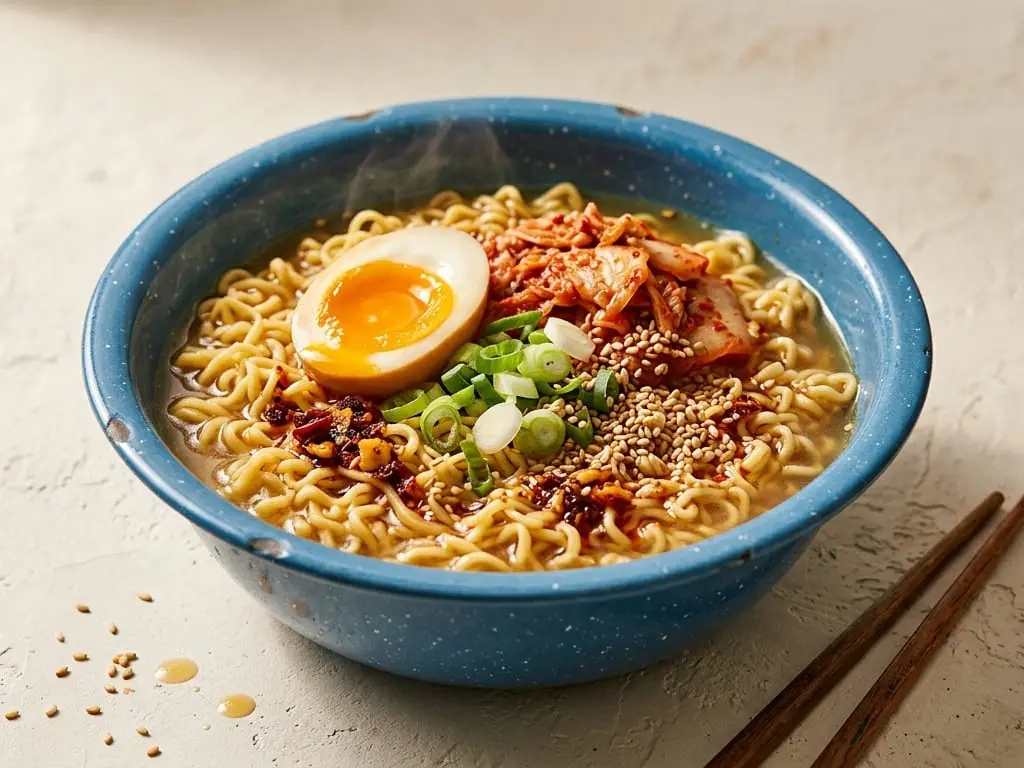
Stir 1 tablespoon unsalted butter into the hot broth — it emulsifies with starchy cooking water and coats every noodle strand. Add a soft-boiled egg (7 minutes at a rolling boil, shocked in ice water, halved). Finish with sliced scallion, a few drops of chili crisp, and a sheet of nori. Total additional prep time: under 8 minutes from a cold start.
- 4
Or: Drain and Stir-Fry
Stop cooking the noodles 30 seconds early and drain well — they finish in the pan. Stir-fry in a hot skillet with oil, garlic, sliced vegetables, and a protein. Use the dry seasoning packet mixed with soy sauce and sesame oil as a marinade rather than a broth base. High-heat stir-fry produces caramelization that no broth version can match. This converts any instant ramen into a dry noodle dish close to yakisoba.
Where to Buy in the US
- Supermarkets
- Maruchan, Top Ramen and Nissin Cup Noodles are at virtually every US grocery chain, usually well under a dollar a pack. Chicken and soy sauce flavors are the most neutral bases for upgrading.Our Top Ramen review
- Asian Grocery Stores
- H Mart, 99 Ranch and Mitsuwa carry dozens of varieties, including Shin Ramyun, Shin Black, Buldak in several heat levels, Nissin RAOH and Japanese regional styles that mainstream stores skip.H Mart99 Ranch MarketMitsuwa
- On Amazon
- Amazon sells bulk cases and variety packs of Korean and Japanese instant ramen, which is the cheapest way to compare brands.
- Whole Foods / Health-Oriented
- Lotus Foods Millet & Brown Rice Ramen (gluten-free, air-dried) is the most widely stocked health-oriented option, with a short ingredient list.Whole Foods
Instant ramen to buy
This section contains affiliate links. We may earn a commission at no extra cost to you.

Maruchan chicken
Maruchan, Top Ramen and Nissin Cup Noodles are at virtually every US grocery chain, usually well under a dollar a pack.
View on Amazon
Top Ramen chicken
View on Amazon
Shin Ramyun 20-pack
View on Amazon
Buldak Original 10-pack
View on Amazon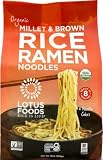
Lotus Foods millet ramen
Lotus Foods Millet & Brown Rice Ramen (gluten-free, air-dried) is the most widely stocked health-oriented option, with a short ingredient list.
View on Amazon