

- Top pick: Indomie Mi Goreng Original, MUI-certified across the whole brand.
- Best spicy and best Korean: Samyang Buldak, halal-certified run only.
- Best Indonesian alternative: Mi Sedaap Korean Style Spicy Chicken, MUI-certified.
- Best for beginners: Indomie Mi Goreng BBQ Chicken.
The Date on Your Noodle Packet Worth Knowing This Month
October 17, 2026 is the last day Indonesian manufacturers may use packaging pre-printed with the old MUI halal logo. Since March 1, 2022, Indonesia's government agency BPJPH (Badan Penyelenggara Jaminan Produk Halal, the Halal Product Assurance Organizing Agency) has issued the certificates, after a fatwa (religious ruling) from MUI. Its replacement mark is the national "Halal Indonesia" label.
For a US shopper, the practical effect is simple. A 30-pack of Indomie bought this fall may contain packets with the round green MUI seal, packets with the newer Halal Indonesia label, or a mix of both. Either one confirms certification. A packet with neither is the one to question.
Indonesia's rules also explain why the best halal ramen on US shelves comes mostly from there. Indonesian makers certify whole product lines because their home market requires it. Korean makers like Samyang and Nongshim run separate halal batches for export, and the uncertified versions of the same flavors share the shelf. Our halal noodles guide covers which halal ramen brands are certified and which aren't, including the ones we leave off this list.
How We Pick
- Every pick has a halal certification we could trace to the manufacturer, the certifying body, or a dated news report. The certifier is named in each section.
- Every pick is sold in the US in a multipack, through Asian grocers, Walmart.com or Amazon, with "Halal Certified" in the product name where the listing allows it.
- We favored brands that certify the whole line over brands that certify one production run, because a whole-line certification removes the guesswork at the shelf.
Halal instant noodle picks by certifier
| Pick | Maker | Certifier | Whole line or one run? | Format | Heat |
|---|---|---|---|---|---|
| Indomie Mi Goreng Original | Indofood (Indonesia) | MUI; Halal Indonesia label on newer packs | Whole line | Drained fried noodle | Mild |
| Samyang Buldak Halal Certified 30-pack | Samyang Foods (Korea) | KMF; MUI for Indonesian-market packs | Dedicated halal runs only | Drained stir-fry noodle | Hot, 4,404 SHU |
| Mi Sedaap Korean Style Spicy Chicken | Wings Food (Indonesia) | MUI | Whole line | Drained fried noodle | Mild to medium |
| Indomie Mi Goreng BBQ Chicken | Indofood (Indonesia) | MUI; Halal Indonesia label on newer packs | Whole line | Drained fried noodle | Mild |
The Top Pick: Indomie Mi Goreng Original
Indomie's FAQ puts it in one line: "All Indomie products are Halal certified by the Indonesian Ulama Council." That is the reason it wins. There is no uncertified Indomie Mi Goreng to confuse with the certified one, so the 30-pack you order and the single packet you grab at an Indonesian grocery fall under the same brand-wide certification. Indofood also picked up a Global Halal Brand award at the 2024 Top Halal Award in Indonesia.
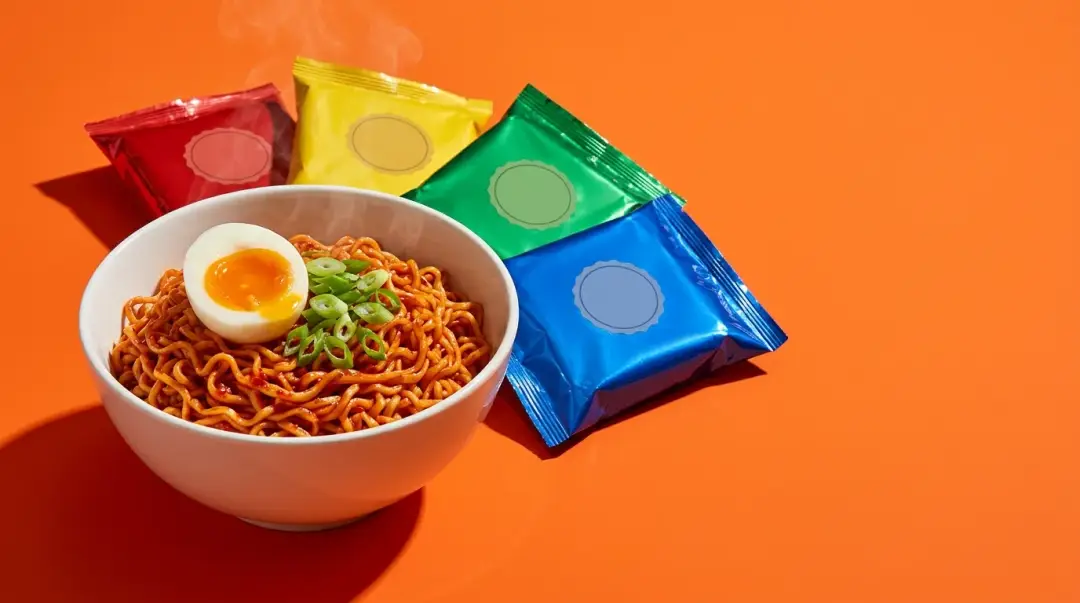
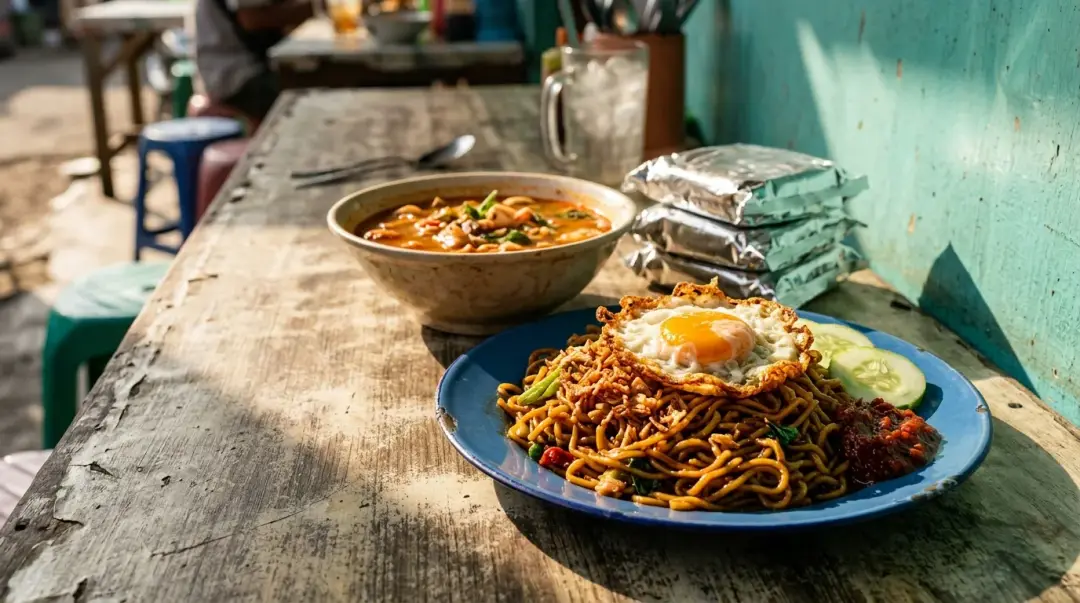
Mi goreng (MEE GOH-reng) means fried noodles in Indonesian, and the packet behaves that way. You boil the noodle block for about 3 minutes, drain it, then toss it with five sachets: a savory seasoning powder, chili powder, seasoning oil, kecap manis (sweet Indonesian soy sauce) and crisp fried shallots. The result is sweet, salty and gently hot, with the shallots adding crunch. Our Indomie buying guide ranks the other flavors worth stocking, and the mie goreng type page explains the dish it's based on.
Singles are a budget buy at H Mart and other Asian grocers, and the Pack of 30 sold online lists "Halal Certified" right in the product name. Check the back panel of one packet when the box arrives. You're looking for the green MUI circle or the Halal Indonesia label, not a generic crescent.

Indomie Mi Goreng Original
Whole Indomie line is MUI-certified, per Indomie's own FAQ
Best Spicy and Best Korean: Samyang Buldak, Halal-Certified Run
Buldak (BOOL-dahk, "fire chicken" in Korean) is the Korean noodle where buying carelessly goes wrong most often. Samyang already held KMF certificates (the Korea Muslim Federation, founded in 1967 and now Korea's main halal certifier) for 23 products when Indonesia's food agency pulled several Korean noodle brands from shelves in June 2017. On September 28, 2017, MUI certified three Buldak flavors for the Indonesian market: Original, Cheese and Kkul (honey) Buldak.
KMF issues those certificates per product and per plant. One public KMF record covers Buldak Tomato Pasta from Samyang's Wonju plant, valid May 2022 to May 2025. So a halal Buldak and a regular Buldak of the same flavor can both be on sale in the same week, in packaging that looks almost the same.
The fix is to buy the listing that names the certification. Amazon carries a "Samyang Instant Ramen Noodles, Halal Certified, Spicy Stir-Fried Chicken Flavor" Pack of 30, and that's the version we recommend. Before you order, look through the listing photos for a back-panel shot showing a KMF or MUI seal. When it arrives, check a packet anyway.
What you get is the standard Buldak experience: a 140 g noodle block, a thick chili sauce rated at 4,404 SHU (Scoville heat units), and a stir-fry method where you drain almost all the water before tossing in the sauce. That heat sits near a serrano pepper, so a first bowl with an egg and a handful of shredded cheese is the usual move. The Buldak flavors guide walks through the rest of the range, and our Korean instant ramyeon guide compares Buldak with the uncertified Korean staples.

Samyang Instant Ramen Noodles
Halal production run of Buldak; Samyang holds KMF and MUI certificates
Best Indonesian Alternative: Mi Sedaap Korean Style Spicy Chicken
Mi Sedaap is the other Indonesian brand that certifies everything. Wings Food launched it in 2002. Its US site says flatly that "Mi Sedaap is halal certified," and Mi Sedaap describes MUI certification across its full product line. Like Indomie, then, there's no uncertified twin to watch for.
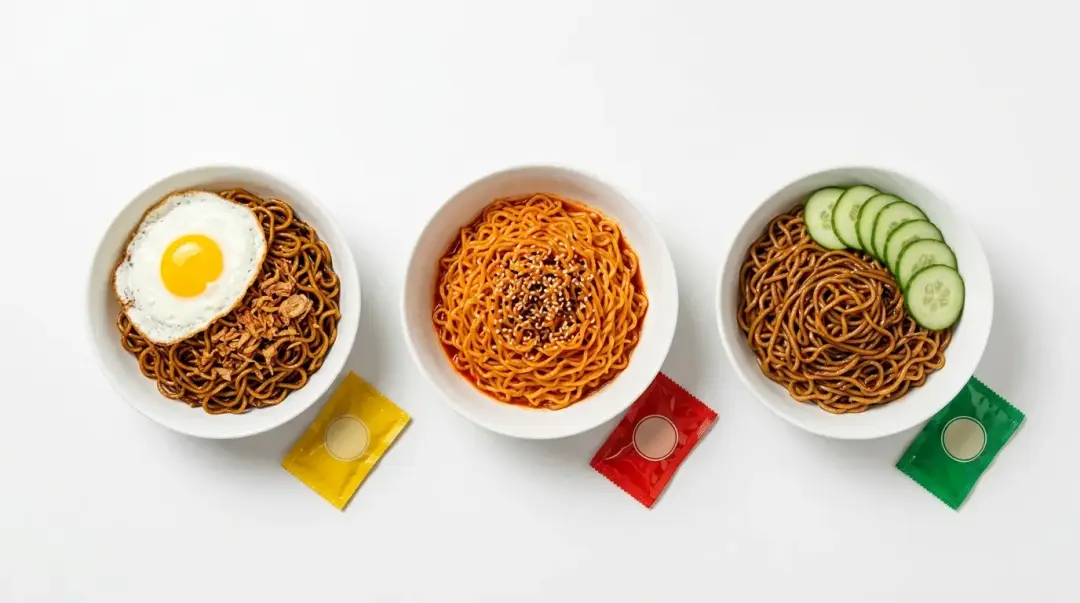
The Korean Style Spicy Chicken flavor is the reason to buy it. It's a drained fried noodle with Korean-style spicy chicken seasoning, at a heat Walmart's listing describes as mild to medium. That makes it a sensible middle step for a household that likes the idea of Buldak but not its 4,404 SHU burn. Walmart.com sells it as a Pack of 40 at 3.03 oz each, with "Halal Certified" in the title, and the same site lists the Mi Sedaap Mi Goreng Original in a Pack of 30 under the same wording.
If you want a closer Buldak imitation from a fully certified maker, Mi Sedaap also sells a Korean Cheese Buldak Spicy Chicken flavor through Walmart.com in 10- and 30-packs. Its listing title doesn't say halal, so read the pack, though the MUI claim covers Mi Sedaap's full line.

Mi Sedaap Instant Noodles
Wings Food certifies its full line with MUI
Best for Beginners: Indomie Mi Goreng BBQ Chicken
The BBQ Chicken flavor uses the same fried-noodle base and the same five-sachet build as the original, with a smokier, sweeter seasoning and less chili. It's made by Indofood in Indonesia under the same MUI certification as the rest of the brand. For a child, or for anyone who found the original's chili sachet too much, it's the easiest certified packet to start with.
Cook it exactly like the original: boil about 3 minutes, drain, mix the sachets in the empty pot, then toss the noodles back in. A fried egg on top turns it into a meal.

Indomie Mi Goreng BBQ Chicken Fried Noodles
Same MUI-certified Indofood production as the original
Halal Picks You'll Have to Hunt For
Three more certified noodles exist but don't make the main list because US availability is thin or unclear.
Nongshim Shin Ramyun, halal export version
Nongshim started making halal-certified Shin Ramyun at a dedicated line in Busan in 2011, according to Korea.net, and by October 2024 the Korea Herald counted about 40 halal products across 10 Nongshim brands. Certifiers vary by market; packs sold in Indonesia carry MUI. In the US, halal-labeled 120 g Shin Ramyun shows up mainly through third-party resellers on eBay. The red bag at Kroger or Costco is the US-market product, which we found no certification for. If you buy the import, the listing should show the back panel and a named seal.
Ottogi Jin Ramen
Ottogi received MUI certification for Jin Ramen and Cheese Ramen in December 2024 and began selling them in Indonesia in November 2025. We found no US retailer stocking that Indonesian-market version, and the Jin Ramen sold in the US is not certified as far as we can confirm.
Mama, from Thai President Foods
Mama makes an export line with "(Halal)" in the product name, such as Oriental Style Instant Noodles Chicken Flavour in 60 g packs printed in English and Arabic. Its product page doesn't name the certifier. The halal database Mustakshif lists a standard Mama Chicken Flavour pack as not halal (mushbooh, meaning doubtful), which shows the problem: the same flavor name exists in both versions, and only the word Halal on the front plus a named seal on the back separates them.
What to Look For
- A seal that names its certifier: MUI, Halal Indonesia (BPJPH), KMF, JAKIM (Jabatan Kemajuan Islam Malaysia, Malaysia's Department of Islamic Development), IFANCA (Islamic Food and Nutrition Council of America) or ISA (Islamic Services of America). JAKIM recognizes KMF, IFANCA and ISA, a handy cross-check when you meet an unfamiliar logo.
- That seal on the packet you'll actually cook. On a 5-pack, check the outer wrap and one inner packet.
- "Halal Certified" in an online listing title, backed by a photo of the back panel. The title is the seller's claim; the photo is the evidence.
- The manufacturer's name: PT Indofood Sukses Makmur on Indomie, Wings Food on Mi Sedaap, Samyang Foods on Buldak. Wikipedia's Buldak entry notes that some Chinese imitations print misleading "halal-certified" and "product of Korea" marks.
- If there's no seal, the seasoning panel. Pork extract rules a pack out. Unspecified "meat extract," mono- and diglycerides (E471, which can come from animal fat) and mirin or cooking wine in a sauce sachet all leave the question open.
Common Mistakes
- Buying a flavor name instead of a certification. "Buldak Hot Chicken" covers both certified and uncertified packs, and if neither the listing nor the packet names a certifier, you haven't bought halal Buldak yet.
- Assuming a Korean brand's halal line covers its US shelf stock. Nongshim and Ottogi both make halal noodles for Indonesia, Malaysia and the Gulf. Neither line is what sits in a US supermarket aisle.
- Reading "no pork" as halal. A chicken or beef seasoning without pork can still use extract from animals not slaughtered by Islamic rules, and the factory may run pork products on the same line. Many observant shoppers treat these packs as mushbooh.
- Doubting a box because the logo changed between packets. Indonesian packs printed this year may carry the old MUI circle or the new Halal Indonesia label, and both are valid. Pre-printed MUI packaging is allowed until October 17, 2026.
- Reaching for Maruchan or Top Ramen at the supermarket. Neither has US halal certification we could find, so head for the Indonesian section before the ramen aisle.
FAQ
What is the best halal instant noodle brand?
Indomie is the safest default. Its FAQ says every Indomie product is halal certified by MUI, the Indonesian Ulema Council, so there is no halal and non-halal version of the same flavor to mix up. Mi Sedaap, also Indonesian, makes the same full-line claim. For Korean-style heat, buy Samyang's halal-certified Buldak listing and check the seal on each pack.
Is all Buldak halal?
No. Samyang makes halal-certified runs of Buldak under KMF and, since September 2017 for Indonesia, MUI certification, but it also sells uncertified packs of the same flavors in near-identical packaging. Only a packet that shows a named halal seal counts. Online listings titled Halal Certified are the most reliable way to get the certified version in the US.
Is Shin Ramyun halal in the US?
The standard red Shin Ramyun bag on US supermarket shelves is not certified as far as we can confirm, and its soup base uses beef bone extract. Nongshim makes separate halal versions for export markets, and some third-party sellers import those packs. If you buy one, check the photographed back panel for a named certifier before ordering.
What halal logo should I look for on instant noodles?
Look for a seal that names its issuer. On Indonesian noodles that means the MUI logo or the newer Halal Indonesia label from BPJPH, the government agency that took over certificates in 2022. Korean halal packs usually carry KMF, the Korea Muslim Federation. A green crescent or the word halal with no organization name is not enough.
Where can I buy halal ramen in the US?
Asian supermarkets and Indonesian, South Asian or Middle Eastern grocers carry Indomie and Mi Sedaap, both fully MUI-certified. Walmart.com lists Mi Sedaap 30- and 40-packs with Halal Certified in the title, and Amazon carries Indomie and a Samyang 30-pack under the same wording. Halal Korean export packs mostly appear through online resellers.
Are Maruchan or Top Ramen halal?
Not as far as we can confirm. Maruchan's US consumer FAQ makes no halal claim, and halal product databases list its chicken, beef and shrimp ramen as not certified. Nissin's US Top Ramen also has no halal certification we could find, and Nissin's European arm states its products are not halal. Nissin's halal lines are separate products for Indonesia and Malaysia.