Spicy Ramen Around the World: Korea, Japan, China, US
· 10 min read · NoodleDex Editorial
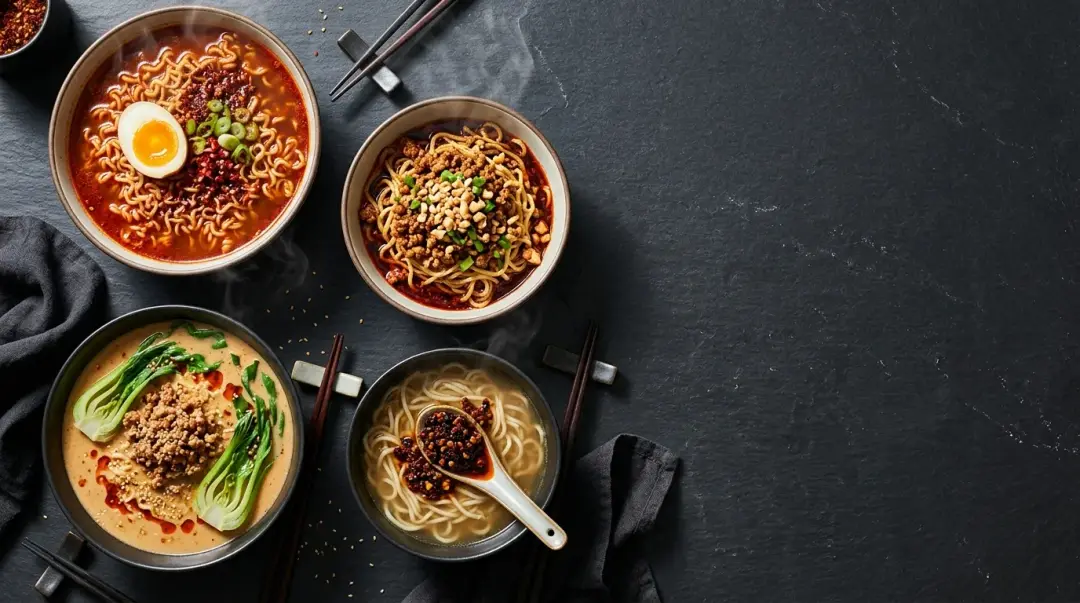
Spicy ramen around the world, by real heat: Buldak at 4,404 SHU, Shin Ramyun, Japanese tantanmen, mala dan dan noodles, and America's chili crisp era.
This page contains affiliate links. We may earn a commission at no extra cost to you. Disclosure
Start With the Thermometer
Before the bowls, the numbers. Scoville Heat Units (SHU) measure capsaicin, the compound that makes chilies burn, so everything below sits on one scale except the item at the bottom. Figures marked "brand" come from the company that makes the product; the rest are published reference ranges for the chili itself.
Spicy ramen and its heat sources, on the Scoville scale
| Item | Tradition | SHU | Where the figure comes from |
|---|---|---|---|
| Gochugaru (Korean chili flake) | Korea | 1,500–10,000 | Reference range, varies by variety |
| Huy Fong sriracha | United States | 2,200–2,500 | Published product rating |
| Jalapeño, fresh | Reference | 2,500–10,000 | Reference range |
| Shin Ramyun (original) | Korea | 3,400 | Brand (Nongshim, 2023) |
| Buldak Hot Chicken Ramen (original) | Korea | 4,404 | Brand (Samyang) |
| Shin Ramyun The Red | Korea | 7,500 | Brand (Nongshim, 2023) |
| Buldak 2x Spicy | Korea | ~10,000 | Widely reported retail figure |
| Serrano pepper | Reference | 10,000–25,000 | Reference range |
| Sichuan pepper | China | Not on the scale | Numbing compound, not capsaicin |
The table shows three patterns. First, the hottest bowls in this guide sit around serrano territory, nowhere near habanero (100,000 to 350,000 SHU). Second, the Korean instant noodles are the only bowls with a published number at all; restaurants don't publish Scoville ratings for a bowl of tantanmen or Chengdu dan dan. Third, the most intense sensation in the whole category, the electric buzz of Sichuan pepper, does not register on the scale.
A note on Shin Ramyun. When Nongshim launched Shin Ramyun The Red in Korea in 2023, the company rated it at 7,500 SHU and put the original at 3,400. Several independent lists, including older NoodleDex pages, cite a lower figure of about 2,700 for the original. The table uses the brand's number. Either way, the measurement itself is loose: Wikipedia's summary of the Scoville method notes that taste-panel results can vary by as much as 50% between labs, which is why modern figures come from HPLC (high-performance liquid chromatography) testing.
For a ranking of every hot retail noodle above Buldak, the spiciest noodles ranking covers that ground. This guide follows the four styles of heat instead.
Korea: Chili Flake, Then a Sauce Packet
Korean spicy ramen runs on gochugaru (go-choo-GAH-roo), Korean red chili flake. Pepperscale puts it between roughly 1,500 and 10,000 SHU and describes it as fruitier and slightly smoky compared with cayenne flake. That fruit-and-smoke note is the base flavor of most Korean instant ramyeon (RAH-myun), the Korean word for instant ramen.
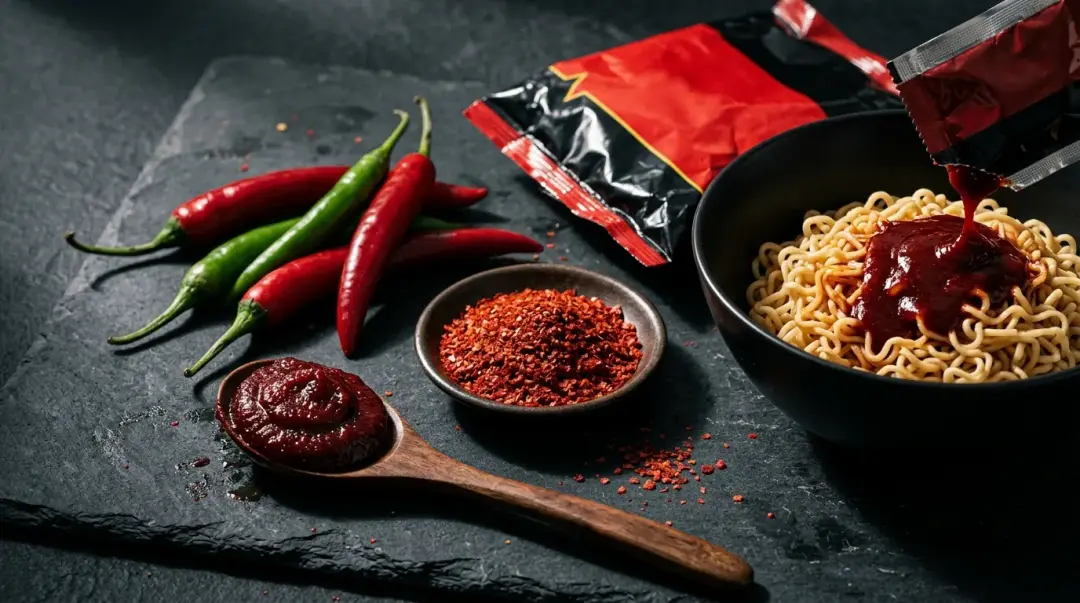
Two products define the category.
Shin Ramyun (sheen RAH-myun) launched on October 1, 1986. Its name is the heat warning: 辛 (shin) means spicy, and the character is printed large on the red packet. It is a soup. You keep the broth, and the chili spreads through roughly half a liter of liquid, so the heat builds slowly. At 3,400 SHU by Nongshim's count, it lands in the bottom of the jalapeño range.
Buldak (BOOL-dahk) means "fire chicken," the name of a Korean bar dish of chicken in chili sauce that Wikipedia dates to 2001 and that took off in South Korea around 2006. The dish's sauce leans on gochugaru, gochujang (fermented chili paste) and, for extra heat, chili powder from Cheongyang peppers. Samyang Foods turned the idea into an instant noodle in April 2012. Buldak Hot Chicken Ramen is a stir-fry: you drain the cooking water and toss the noodles in a thick sauce, which puts all 4,404 SHU directly on the strands.
The brand's global run started on YouTube. In 2014 the channel Korean Englishman filmed people trying to finish the noodles as fast as possible without drinking anything, and the "fire noodle challenge" spread from there. Wikipedia reports Buldak passed 6.6 billion packages sold worldwide by September 2024. For the flavor-by-flavor lineup, see every Buldak flavor explained; for the soup-versus-sauce matchup, Shin Ramyun vs Buldak.
Korean heat is front-loaded and easy to measure, because it ships in a packet.
Japan: Heat Wrapped in Sesame and Miso
Japanese spicy ramen almost always pairs chili with something that softens it. The clearest example is tantanmen (tahn-tahn-men), Japan's version of Sichuan dan dan noodles.
The adaptation is credited to Chen Kenmin, a chef born in Sichuan in 1912 who opened his restaurant Shisen Hanten in Japan in 1957. He also popularized mapo tofu there. Per Just One Cookbook, he made Chinese food more approachable for Japanese diners by toning down the heat and using Japanese ingredients. For dan dan noodles, that meant adding a full broth. The Chengdu original is nearly dry; Japanese tantanmen is a soup.
Three ingredients carry a tantanmen bowl:
- Rayu (RAH-yoo), Japanese chili oil, infused with garlic, ginger, scallion and often Sichuan pepper
- Neri goma (neh-ree GOH-mah), a toasted sesame paste similar to tahini, which turns the broth creamy and pale orange
- Doubanjiang (doe-bahn-jyahng), Sichuan fermented chili bean paste, cooked with ground pork for the topping
The sesame is what makes tantanmen Japanese. It coats the tongue and blunts the chili, so a bowl that looks red reads as warm and nutty. In Japan the result counts as chuka ryori (Japanese-Chinese cooking), the same family as Chen's mapo tofu.
The other Japanese route is spiced tonkotsu. Ippudo, the Hakata-born chain, sells a bowl called Karaka: its pork-bone broth with a house spice blend, thin noodles, pork belly chashu, cabbage and sesame-dressed wood ear mushrooms. The packaged version comes with a small mound of spicy miso and minced meat that you stir in as you eat, and The Ramen Rater gave it 5 out of 5 in 2023. Here the cushion is pork fat and miso instead of sesame.
China: Numbing First, Burning Second
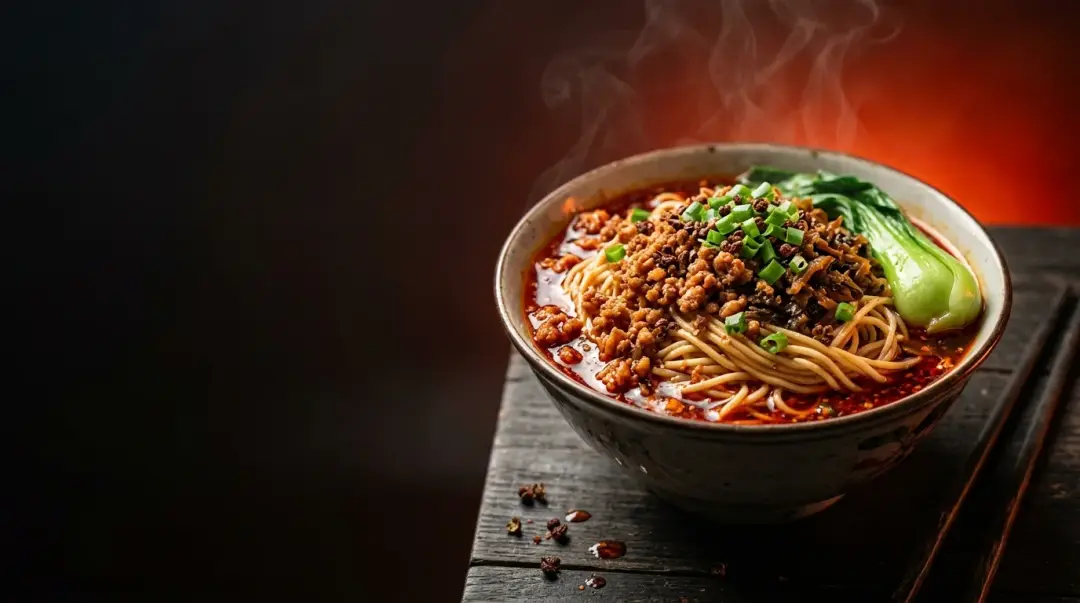
Dan dan noodles (dahn dahn) come from Chengdu, the capital of Sichuan. The name refers to the carrying pole street vendors balanced on one shoulder, with noodles in one basket and sauce in the other. The Chengdu bowl is small and served nearly dry: noodles over chili oil, Sichuan pepper, preserved mustard greens (ya cai or zha cai) and minced pork, topped with scallion and peanuts. The Hong Kong version comes with broth, and that soupier style is now the more common one outside China. Our dan dan noodle guide covers the dish in full.
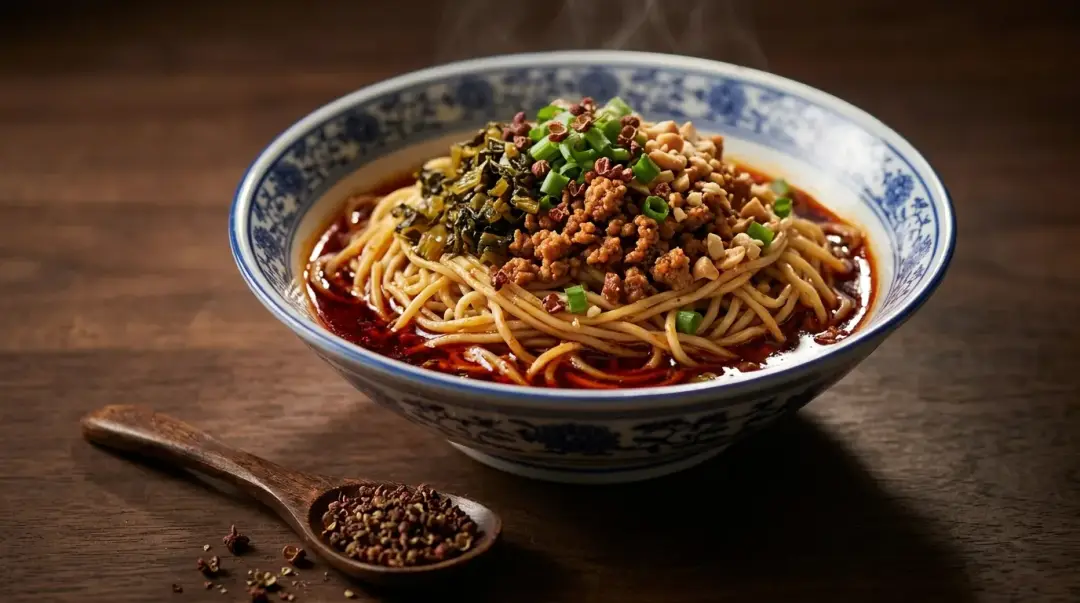
What separates Sichuan heat from every other tradition here is mala (mah-lah). The two characters are 麻, "numbing," and 辣, "spicy-hot." The 辣 comes from dried chilies. The 麻 comes from Sichuan pepper, which contains about 3% hydroxy-alpha-sanshool by Wikipedia's figure.
Sanshool works on a different nerve pathway from capsaicin. In 2013, researchers at University College London's Institute of Cognitive Neuroscience had 28 volunteers put ground Sichuan pepper on their lips and compare the tingle with a vibrating probe. The match landed at about 50 Hz. The team concluded the pepper activates the nerves that sense light touch, which is why mala reads as buzzing rather than burning, and why no Scoville number exists for it.
Mala as a seasoning took shape in the night markets of Chongqing, where a sauce of chilies, Sichuan pepper, broad bean paste, star anise, cinnamon and other spices simmered in beef tallow fed dock workers. That flavor base now runs through mala hot pot and mala noodle bowls across China and its diaspora.
Korean heat burns. Sichuan heat burns and buzzes, and only the burn shows up in a lab.
United States: Heat From the Bottle
American spicy ramen rarely starts in the broth. It starts on the table, with a squeeze bottle or a jar.
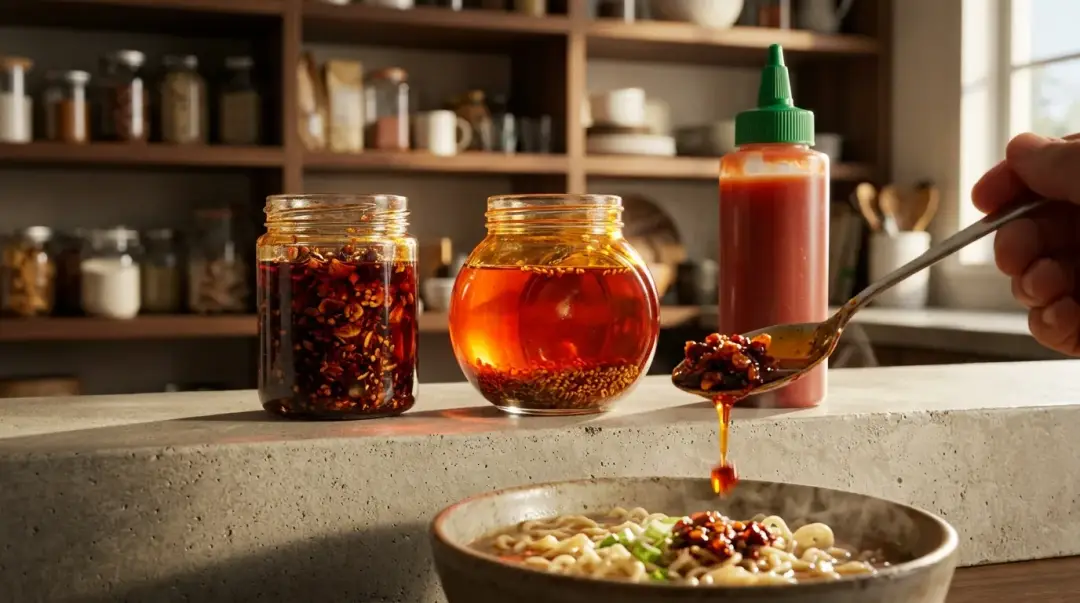
Sriracha. David Tran, who arrived in the US from Vietnam in 1979, founded Huy Fong Foods in 1980 and built its sriracha on fresh red jalapeños. The sauce rates about 2,200 to 2,500 SHU, a little below Nongshim's figure for Shin Ramyun. Its supply has wobbled since: Huy Fong halted production in June 2022 over a chili shortage tied to drought in Mexico, declared another shortage in April 2023, and paused again in 2024 because the harvest was too green.
Chili crisp. Chili crisp is chili oil loaded with fried, crunchy solids: chili flake, garlic, shallot, sometimes fermented black beans. The style comes from Guizhou province, and the brand that carried it worldwide is Lao Gan Ma, which Tao Huabi turned into a company in 1997 in Guiyang. Wikipedia reports $835.6 million in sales for 2020. In the US, chili crisp stayed niche until the late 2010s and then broke out during the pandemic; the New York Times called it a quarantine cooking need in 2020.
American brands followed. Jing Gao launched Fly By Jing on Kickstarter in 2018 with a Sichuan Chili Crisp made in Sichuan from erjingtiao chilies and Sichuan pepper, so it delivers the mala tingle that sriracha lacks. Momofuku released its Chili Crunch on September 28, 2020, built on three Mexican chilies (pulla, árbol and japonés) with shallot, garlic and sesame. In April 2024, after public backlash, Momofuku said it would stop enforcing its "chile crunch" trademark.
The result is a uniquely American spicy ramen habit: a mild instant packet, or a shop bowl of shoyu or tonkotsu, with a spoon of crisp on top. If you want to stock that shelf, the Chinese pantry essentials guide covers chili oils, doubanjiang and Sichuan pepper.
The Four Styles Side by Side
Spicy ramen by tradition: where the heat lives and what tames it
| Korea | Japan | China (Sichuan) | United States | |
|---|---|---|---|---|
| Heat source | Gochugaru, gochujang, Cheongyang chili | Rayu, doubanjiang | Dried chili plus Sichuan pepper | Sriracha, chili crisp |
| Where it lives | Seasoning packet or sauce | Broth and tare | Sauce at the bottom of the bowl | Added at the table |
| Sensation | Burn, front-loaded | Burn, softened | Burn plus numbing tingle | Burn, adjustable |
| What softens it | Egg, cheese, cream powder | Sesame paste, miso, pork fat | Peanut and scallion toppings | Using less |
| Signature bowl | Shin Ramyun, Buldak | Tantanmen, Ippudo Karaka | Dan dan noodles | Instant ramen plus chili crisp |
| Published SHU? | Yes, on brand releases | Rarely | Not for the numbing part | Sriracha yes, most crisps no |
Build Your Own Heat Ladder
You can taste all four traditions at home, one rung per dinner. Stop at the rung where you stop enjoying the food.
- Plain ramen plus chili crisp. Any instant packet or fresh ramen kit, a half-teaspoon of Fly By Jing or Lao Gan Ma stirred into the broth. This is the American rung, and with a Sichuan-made crisp you meet the mala tingle at low heat.
- Shin Ramyun, as a soup. 3,400 SHU by Nongshim's count. Crack an egg into the last minute of cooking. If this feels hot, stay here for a few bowls.
- Homemade tantanmen. Whisk sesame paste and a little doubanjiang into hot chicken stock, add rayu to taste, and top with browned ground pork. You control the chili, and the sesame shows how Japanese cooks cushion it.
- Dan dan noodles, Chengdu style. Nearly dry noodles over chili oil and ground Sichuan pepper. The heat is moderate; the numbing is the new variable.
- Buldak Original. 4,404 SHU concentrated on drained noodles. Use two-thirds of the sauce the first time.
- Shin Ramyun The Red or Buldak 2x Spicy. 7,500 and roughly 10,000 SHU. Past this point you are in the territory of the spiciest noodles ranking.
Many Korean cooks boil these packets in a shallow yellow aluminum pot, and our Korean noodle pots guide explains why the thin metal suits instant noodles. For the Japanese and Chinese soups, a deep bowl gives broth and toppings room. The Korean rungs are the easiest to stock, since H Mart, Walmart and Target all carry the core lines. Our Korean instant ramyeon buying guide lists the packs worth buying, from mild to hot.
FAQ
What is the spiciest ramen?
Among the bowls on this page, Buldak 2x Spicy is the hottest at roughly 10,000 SHU, followed by Nongshim's Shin Ramyun The Red at 7,500 SHU and Buldak Original at 4,404. For the full ranking, including Buldak 3x Spicy at about 13,200 SHU and the Carolina Reaper noodles that top reviewer lists, see the NoodleDex spiciest noodles ranking.
How spicy is Shin Ramyun compared to Buldak?
Nongshim put original Shin Ramyun at 3,400 SHU when it launched Shin Ramyun The Red in 2023. Samyang's Buldak Original is 4,404 SHU, so Buldak is roughly 30% hotter by that measure. Buldak also feels hotter than the gap suggests, because its chili sits in a thick sauce on drained noodles instead of spreading through a bowl of broth.
What is the difference between tantanmen and dan dan noodles?
Dan dan noodles come from Chengdu in Sichuan and are traditionally served nearly dry, with chili oil, Sichuan pepper, preserved mustard greens and minced pork. Tantanmen is the Japanese version credited to the Sichuan-born chef Chen Kenmin. It adds a full broth enriched with sesame paste, which softens the heat and turns the dish into a ramen-style soup.
Why does Sichuan pepper make my mouth numb?
Sichuan pepper contains hydroxy-alpha-sanshool, which acts on the nerves that sense light touch rather than heat. In a 2013 University College London study, 28 volunteers matched the tingle on their lips to a mechanical vibration of about 50 Hz. Because the compound is not capsaicin, the Scoville scale does not measure it.
Is sriracha or chili crisp hotter?
It depends on the jar. Huy Fong sriracha, made from red jalapeños, rates about 2,200 to 2,500 SHU. Chili crisp brands rarely publish a Scoville figure, and the heat varies by chili and recipe. Target lists Fly By Jing's Original Sichuan Chili Crisp as medium heat, and it adds Sichuan pepper tingle that sriracha does not have.
How do I make spicy ramen less spicy?
Use less of the sauce or seasoning packet first, since that is where the chili lives. Then add fat or creaminess: an egg yolk, a slice of cheese, a spoon of sesame paste or a splash of unsweetened soy milk. Japanese tantanmen uses sesame paste this way, and Buldak Carbonara uses a cream powder for the same reason.
Read Next
Products mentioned in this guide
This section contains affiliate links. We may earn a commission at no extra cost to you.

Nongshim Shin Ramyun Original (20-pack)
The everyday Korean spicy soup and the second rung of the heat ladder on this page. Nongshim rates the original at 3,400 SHU, warm enough to notice and easy to soften with an egg.
View on Amazon
Samyang Buldak Hot Chicken Ramen (10-pack)
Buldak Original is the sauce-coated Korean benchmark at 4,404 SHU. Buy it once you finish a bowl of Shin Ramyun without reaching for water.
View on Amazon
Fly By Jing Original Sichuan Chili Crisp, 6 oz
Made in Sichuan with erjingtiao chilies and Sichuan pepper, so it adds both burn and tingle. A spoonful turns any plain ramen or packet noodle into a mala-leaning bowl.
View on Amazon
SVRITE Korea Noodle Pot Korean Ramen Cooking Pot with Lid, Yellow Aluminum
Korean spicy ramyeon, Shin Ramyun and Buldak alike, is often cooked in a yellow aluminum pot. This listing is a yellow aluminum pot with a lid and side handles.
View on Amazon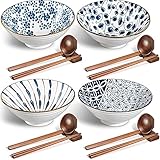
Geiserailie 40 oz Ceramic Japanese Ramen Bowls, Set of 4 with Chopsticks and Spoons
Tantanmen and Chinese chili-oil soups need a deep bowl that holds broth, noodles and toppings. This set is four ceramic bowls, 40 oz and 8 inches across, with chopsticks, spoons and rests.
View on Amazon
Browse more related items
Opens Amazon · affiliate links
Buying guides for this topic
- Buying guideBest Korean Instant Ramyeon Brands in 2026The best Korean instant ramen brands ranked — Shin, Buldak, Paldo, Ottogi compared by spice, flavor, and value.
- Buying guideBest Chinese Pantry Essentials in 2026Soy, oyster sauce, Sichuan peppercorn, chili crisp, fermented bean paste, Chinese sesame paste — the Chinese cooking foundation, ranked.
- Buying guideKorean Pantry Essentials: A Complete Guide (2026)The 10 Korean pantry items you actually need to cook Korean noodles at home — gochujang, gochugaru, sesame oil, dashi anchovies, and more.
- Buying guideBest Ramen Noodles & Kits in 2026The best fresh and dry ramen noodles, plus premium ramen kits, available on Amazon — Sun Noodle, Hakubaku, Marusan, and Maruchan Seimen ranked.