Shin Ramyun vs Buldak: Which Is Spicier?
· 9 min read · NoodleDex Editorial
Buldak is spicier than Shin Ramyun: 4,404 SHU vs 3,400 SHU. Compare heat, flavor, sodium and cook method, and see which to buy first.
This page contains affiliate links. We may earn a commission at no extra cost to you. Disclosure
On this page(13 sections)
At a Glance
Shin Ramyun vs Buldak Original — the five things that matter
| Shin Ramyun | Buldak Original | |
|---|---|---|
| Format | Soup, broth kept | Stir-fry, water drained |
| Heat | 3,400 SHU, slow build | 4,404 SHU, fast hit |
| Flavor | Beef, gochugaru, mushroom | Sweet, smoky chicken-chili |
| Sodium per packet | ~1,620 mg | ~1,230 mg |
| Best first buy | Yes, for beginners | Carbonara first, then Original |
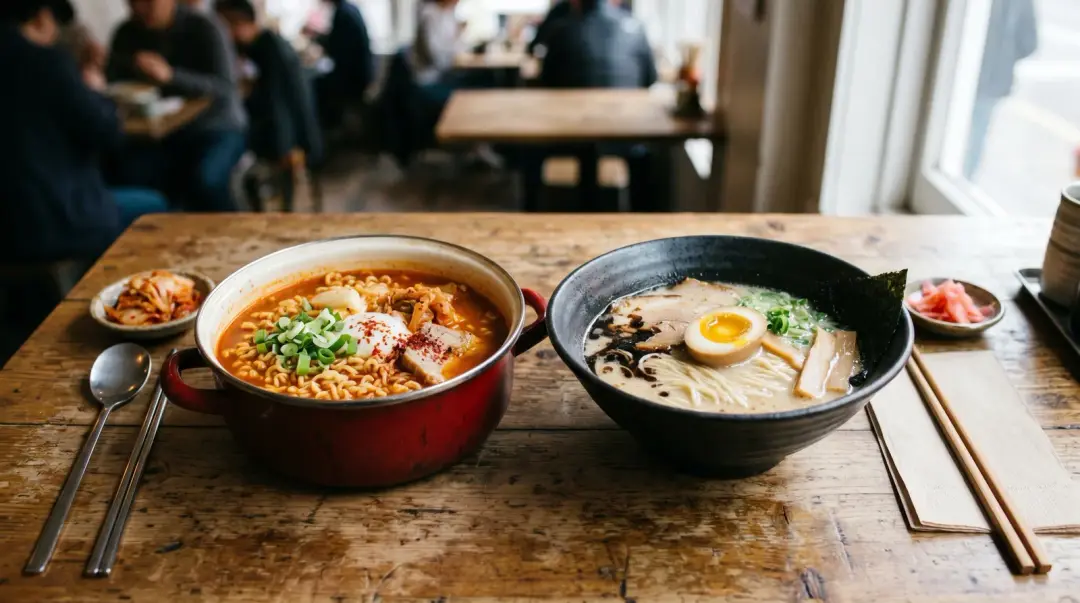
Shin Ramyun (Nongshim, 1986) and Buldak (Samyang, 2012) are the two best-known Korean instant noodles in the US, so "Nongshim vs Buldak" really means Nongshim's flagship against Samyang's. People keep comparing them as if they were two heat levels of the same thing. They aren't. One is a soup you eat with a spoon. The other is a sauced noodle you eat with chopsticks. Everything else, from heat to cook method to how you fix a bowl that's too hot, follows from that.
The Headline Difference
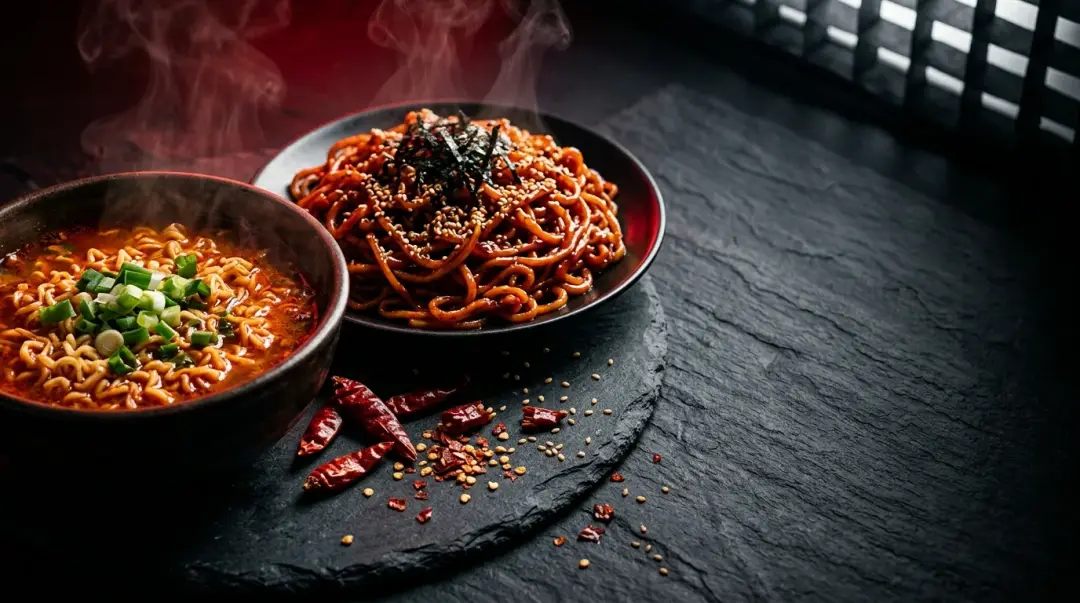
Shin Ramyun is soup. Buldak is sauce.
Shin Ramyun cooks in 550 ml of water for 4 minutes 30 seconds and you keep the broth. Buldak boils for 5 minutes in 600 ml, then you pour the water off (leave about 8 spoonfuls), squeeze in the sauce packet, and stir over low heat for 30 seconds until every strand is coated. No broth is left in the bowl. That one step changes how the heat lands: a broth dilutes capsaicin across a whole bowl of liquid, a sauce concentrates it on the noodle.
The heat gap is real but smaller than the reputation suggests. The Korea Times put Shin Ramyun at 3,400 SHU in its 2023 report on the launch of the hotter Shin Ramyun The Red; older listings cite about 2,700. Samyang's Buldak Original is 4,404 SHU, roughly 30% hotter. Buldak 2x Spicy goes to 10,000 SHU and the limited 3x to 13,200, which is where it stops being dinner and becomes a challenge video.
Heat, By the Numbers
Scoville Heat Units for every mainline Shin and Buldak you'll find in a US store. Samyang doesn't print SHU on packaging; the Buldak figures are the ones reported consistently across food-lab tests and retailer data, rounded. The Shin Ramyun and Shin Ramyun The Red figures come from The Korea Times' 2023 report on The Red's launch.
Scoville scale — Nongshim Shin line and Samyang Buldak line
| Product | Brand | SHU | Compared to Shin Ramyun |
|---|---|---|---|
| Buldak Jjajang | Samyang | ~1,920 | Milder |
| Buldak Cheese | Samyang | ~2,323 | Milder |
| Shin Ramyun Black | Nongshim | ~2,500 | Milder |
| Buldak Carbonara | Samyang | ~2,600 | Milder |
| Shin Ramyun Original | Nongshim | 3,400 | — |
| Buldak Curry | Samyang | ~3,810 | 1.1× hotter |
| Buldak Original | Samyang | 4,404 | 1.3× hotter |
| Buldak Stew Type | Samyang | ~4,705 | 1.4× hotter |
| Shin Ramyun The Red | Nongshim | ~7,500 | 2.2× hotter |
| Buldak 2x Spicy | Samyang | ~10,000 | 2.9× hotter |
| Buldak 3x Spicy (limited) | Samyang | ~13,200 | 3.9× hotter |
Two things people get wrong. First, several Buldak flavors are milder than Shin Ramyun, including Jjajang, Cheese and Carbonara. The cream and cheese powders don't just mask heat, the sauce itself carries less chili. Second, Nongshim has its own hot one. Shin Ramyun The Red (2023) is about 7,500 SHU, hotter than Buldak Original and hotter than most people expect from the red-bag brand.
For a jalapeño reference point: a fresh jalapeño runs 2,500 to 8,000 SHU. Shin Ramyun is a mild jalapeño. Buldak Original is a hot one. Buldak 2x is past jalapeño entirely, into serrano territory.
Side-by-Side Comparison
Shin Ramyun vs Buldak Original — feature-by-feature
| Feature | Shin Ramyun | Buldak Original |
|---|---|---|
| Brand | Nongshim (Korea, 1965) | Samyang (Korea, 1961) |
| Launch year | 1986 | 2012 |
| Format | Soup (broth retained) | Stir-fry (broth drained) |
| Scoville (SHU) | 3,400 | 4,404 |
| Noodle weight | 120g | 140g |
| Seasoning packets | 1 powder + 1 vegetable flake | 1 liquid sauce + 1 seaweed-sesame flake |
| Cooking time | 4 min 30 sec | 5 min boil + 30 sec sauce toss |
| Calories | ~520 | ~530 |
| Sodium | ~1,620 mg | ~1,230 mg |
| Halal certified | Yes (export versions) | Yes (KMF) |
| Cheese on top? | Optional | Common, it buffers the heat |
| Microwaveable | Yes (3 min) | Yes, but stovetop is better |
| US grocery reach | Walmart, Target, H Mart, 99 Ranch, Trader Joe's | H Mart, 99 Ranch, Amazon, some Walmarts |
When to Choose Shin Ramyun
Pick Shin Ramyun if you want:
- A bowl of soup, not a stir-fry. Broth, noodles, and a beef-and-chili flavor you'll recognize from any Korean restaurant's ramyeon. Nothing to drain, nothing to finish; the packet is the whole dish.
- Medium heat that won't ruin your evening. Comparable to a mid-level Sichuan dish. Most adults who handle Thai two-star finish the bowl without reaching for milk.
- The "Korean ramen" from K-dramas. Shin Ramyun is the cultural default, in Parasite, in K-dramas weekly, in every Korean grocery on earth. Nongshim passed 40 billion packets sold in 2024 by its own count.
- The classic upgrade pattern. Crack an egg in the last 90 seconds, drop a slice of American cheese on top off the heat, add scallion and a spoon of kimchi. Shin's broth is the vehicle this ritual was built around.
When to Choose Buldak
Pick Buldak if you want:
- Heat in a sauce format. This is bibim-style (sauced, no broth). The chili sauce coats every strand; there's no liquid to dilute it.
- The flavor the challenge videos are about. Buldak is the brand behind the "fire noodle challenge," and Samyang built the whole lineup (Carbonara, Cheese, 2x, Curry, Jjajang) on that attention. The sauce is sweet and smoky before it's hot, which is why people go back.
- A first bowl that doesn't punish you. Start with Buldak Carbonara (~2,600 SHU), not Original. The cream powder packet softens the sauce and the chili load is lower to begin with. Original is the unbuffered one. 2x and 3x exist for people who want to suffer on camera.
- Lower sodium per packet. No broth means Buldak Original carries about 1,230 mg of sodium against Shin's ~1,620 mg. Still a lot, but less.
For First-Timers: Start Here
If you have never had Korean ramyeon at all, start with Shin Ramyun:
- The soup format is familiar territory if you've eaten ramen or udon
- The heat is real but manageable
- The egg-cheese-kimchi upgrade works on the first try
- It costs less per packet
- Walmart and Target carry it; you don't need an Asian grocery
If you're an experienced spice eater who has never had Buldak, start with Buldak Carbonara. It teaches the format (drain, sauce, stir) without breaking you on day one.
Going from Shin to Buldak Carbonara is a small step. Going from Shin to Buldak Original is a real one. Keep cheese, butter or an egg within reach the first time, and see how to make Buldak less spicy for what else helps.
Common Mistakes
- Cooking Buldak like soup. It's a stir-fry. Drain the water, then toss the noodles in the sauce. Leaving the water in makes a thin chili broth that's both watery and hotter than it needs to be.
- Using the whole Buldak sauce packet on the first try. Use about two-thirds. The packet is calibrated for the maximum a Korean adult eats, not the minimum a first-timer can handle.
- Skipping the egg in Shin Ramyun. The yolk binds the broth and rounds off the gochugaru (Korean coarse chili flake) edge. Thirty seconds, big difference.
- Pouring cold milk into the bowl to fix the heat. Milk separates in hot, acidic broth. Use butter (1 tsp) or a slice of cheese; the casein binds capsaicin without curdling. Drink the milk on the side instead.
- Buying Buldak Original as your first Buldak. Carbonara first.
The Yangeun Naembi Pot Question
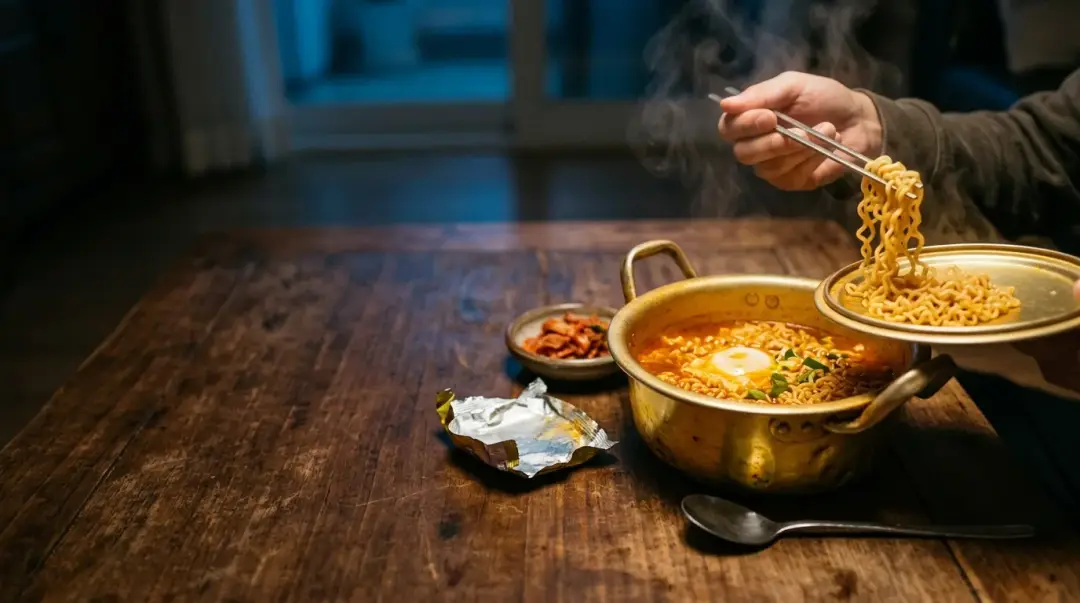
If you cook Korean ramyeon more than once a month, the yellow aluminum yangeun naembi pot (양은냄비, yangeun naembi) is a small upgrade that changes the bowl. Thin aluminum boils 550 ml in under three minutes, the pot's footprint matches a single serving, and eating straight from the pot with the lid as a side plate is half of the ritual.
It works for both. Buldak's sauce step is easier in a wide non-stick pan, but the naembi gets it done. A 2-quart saucepan with a straining lid also suits Buldak's boil-and-drain step. Our guide to Korean noodle pots compares the options, and a wide-mouth insulated jar carries either noodle to work.
Where to Buy in the US
Shin Ramyun (everywhere):
- Walmart: 5-pack in the international aisle.
- Target: 5-packs and singles in the Asian-foods section.
- H Mart: the full line, including Shin Black, Shin The Red, Shin Bowl and the 20-pack. Garden Grove and Palisades Park stock everything.
- Trader Joe's: single packets show up in some stores.
- Amazon US: 16- and 24-packs; Subscribe & Save applies.
Buldak Original (narrower):
- H Mart: the full Buldak line, including new flavors first. Most reliable source.
- 99 Ranch Market: Original, Carbonara, Cheese, 2x.
- Amazon US: 5-packs and 10-packs; Carbonara usually ships fastest.
- Regional Asian groceries: Hannam Chain (LA), Pacific East, Saigon Asian Market (NYC).
- Walmart Asian aisle: Original at most stores; Carbonara at select urban locations.
Chain-by-chain stock is in spicy instant noodles at US supermarkets. Our picks for both lines, with current links, are in the Korean instant ramyeon buying guide. For the sourced heat figure behind every brand, see the instant noodle Scoville chart, and if you are wondering about the Denmark recall headlines, read is Buldak safe to eat. Is Shin Ramyun spicy at all? See mild Korean noodles, or compare more packs in the best spicy instant noodles. New to the category? Start with ramyeon vs ramen, which explains why Korean instant noodles taste nothing like a Japanese ramen-shop bowl.
FAQ
Which is spicier, Shin Ramyun or Buldak?
Buldak. Buldak Original is 4,404 SHU per Samyang; The Korea Times reported Shin Ramyun at 3,400 SHU in 2023, so Buldak is roughly 30% hotter, and the heat hits faster because it's a sauce rather than a broth. Buldak 2x Spicy (10,000 SHU) is almost three times Shin.
Is Buldak hotter than Shin Ramyun?
Yes. Samyang's Buldak Original sits at 4,404 SHU versus 3,400 SHU for Shin Ramyun, as reported by The Korea Times. The 2x Spicy version reaches about 10,000 SHU and the 3x limited edition about 13,200. Some milder flavors land below Shin, including Buldak Jjajang (~1,920), Cheese (~2,323) and Carbonara (~2,600).
Which tastes better, Shin Ramyun or Buldak?
They're different dishes. Shin Ramyun is a beef-and-chili soup with a slow-building heat; Buldak is drained noodles in a sweet, smoky chicken-chili sauce with a sharp, fast heat. If you want a bowl of soup, Shin. If you want sauced noodles with a kick, Buldak. Most Korean households keep both.
Which is healthier, Shin Ramyun or Buldak?
Neither is health food, but Buldak Original carries less sodium per packet (about 1,230 mg) than Shin Ramyun (about 1,620 mg), because Shin's broth holds most of the salt. Calories are close: roughly 520 for Shin and 530 for Buldak. Drinking only half the Shin broth cuts its sodium sharply.
Can I make Buldak less spicy?
Yes. Use two-thirds of the sauce packet, add a slice of American cheese off the heat, stir in a teaspoon of butter, or top with a runny egg. Cheese, butter and egg together take Buldak Original from a 4/5 heat to about 2/5.
Which one should I try first?
Shin Ramyun if you're new to Korean instant noodles: medium heat, a complete bowl of soup, sold at Walmart and Target. If you already eat spicy food and want Buldak, start with Buldak Carbonara (~2,600 SHU), not Original.
Which one is the Korean ramen in K-dramas?
Shin Ramyun, almost always. It's the cultural default; Parasite features jjapaguri, made from two other Nongshim noodles (Chapagetti and Neoguri). Buldak shows up in newer K-content tied to younger characters and eating challenges.
Is Shin Ramyun healthier than Buldak?
Not really. Shin Ramyun carries more sodium per packet than Buldak Original because the salt sits in the broth, and calories are close. Label figures vary by market, so check the pack. Leaving some of the Shin broth in the bowl cuts the sodium you actually eat.
Is Shin Ramyun spicier than Buldak Carbonara?
Yes, slightly. Shin Ramyun is 3,400 SHU (The Korea Times, 2023) and Buldak Carbonara is about 2,600, so Shin is the hotter of the two. Carbonara's cream sauce makes the gap feel even bigger.
How many Scoville is Shin Ramyun?
Shin Ramyun is 3,400 SHU, the figure The Korea Times reported in 2023; older listings cite about 2,700. That is medium heat, below Buldak Original at 4,404 SHU and well below Buldak 2x Spicy at about 10,000 SHU.
Is Shin Ramyun spicy?
Moderately. At 3,400 SHU the heat builds slowly in the broth, and an egg or a slice of cheese rounds it off. Buldak Original is hotter at 4,404 SHU and hits faster because it is a sauce.
If You Only Remember One Thing
Shin Ramyun is the soup; Buldak is the sauce. Shin is the entry point: medium heat, a complete bowl, sold everywhere. Buldak is the second step: a sauce format, real heat, and a cheese-or-egg buffer for most first-timers. Start with Carbonara so Original doesn't put you off the whole line. They answer different cravings, which is why most Korean kitchens stock both.
Products mentioned in this guide
This section contains affiliate links. We may earn a commission at no extra cost to you.

Nongshim Shin Ramyun Original (20-pack)
Start here if you are new to Korean instant noodles. It is the soup side of this comparison, with a slow build of heat that an egg and cheese round off.
View on Amazon
Samyang Buldak Hot Chicken Ramen (10-pack)
Buldak Original is the unbuffered sauce noodle at 4,404 SHU. Use about two-thirds of the sauce packet the first time.
View on Amazon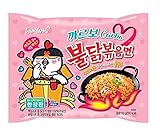
Samyang Carbo Buldak Hot Chicken Ramen
The Carbonara version is the recommended first Buldak on this page. The cream powder softens the sauce, and the heat lands near Shin's level.
View on Amazon
Korean Traditional Yellow Aluminum Ramyeon Pot (with Lid)
For anyone cooking ramyeon more than once a month, the thin yellow pot boils a single serving fast. Eat from it and use the lid as a plate.
View on Amazon
Ciwete 2 Qt Stainless Steel Saucepan with Glass Strainer Lid
Buldak is boiled, then drained and tossed in the sauce, so a lid that strains saves a trip to the sink. This listing is a 2-quart tri-ply stainless steel saucepan with a glass strainer lid and a pour spout, and it works on induction.
View on Amazon
THERMOS Stainless King Vacuum-Insulated Food Jar with Spoon, 16 Ounce
A wide-mouth insulated jar carries either noodle to work, broth-heavy Shin Ramyun or sauced Buldak. This listing is a 16-ounce double-wall vacuum-insulated stainless steel jar with a folding spoon.
View on Amazon
Browse more related items
Opens Amazon · affiliate links
Buying guides for this topic
- Buying guideBest Korean Instant Ramyeon Brands in 2026The best Korean instant ramen brands ranked — Shin, Buldak, Paldo, Ottogi compared by spice, flavor, and value.
- Buying guideBest Pots for Korean Noodles and RamyeonThe iconic yellow Korean ramyeon pot plus stoneware ddukbaegi for sundubu and stainless options — the best Korean noodle cookware on US Amazon.
- Buying guideKorean Pantry Essentials: A Complete Guide (2026)The 10 Korean pantry items you actually need to cook Korean noodles at home — gochujang, gochugaru, sesame oil, dashi anchovies, and more.
- Buying guideBest Korean Noodle Variety Packs & Boxes (2026)The best Korean instant noodle variety packs and subscription boxes on US Amazon — taste 10+ brands without committing to a 20-pack.