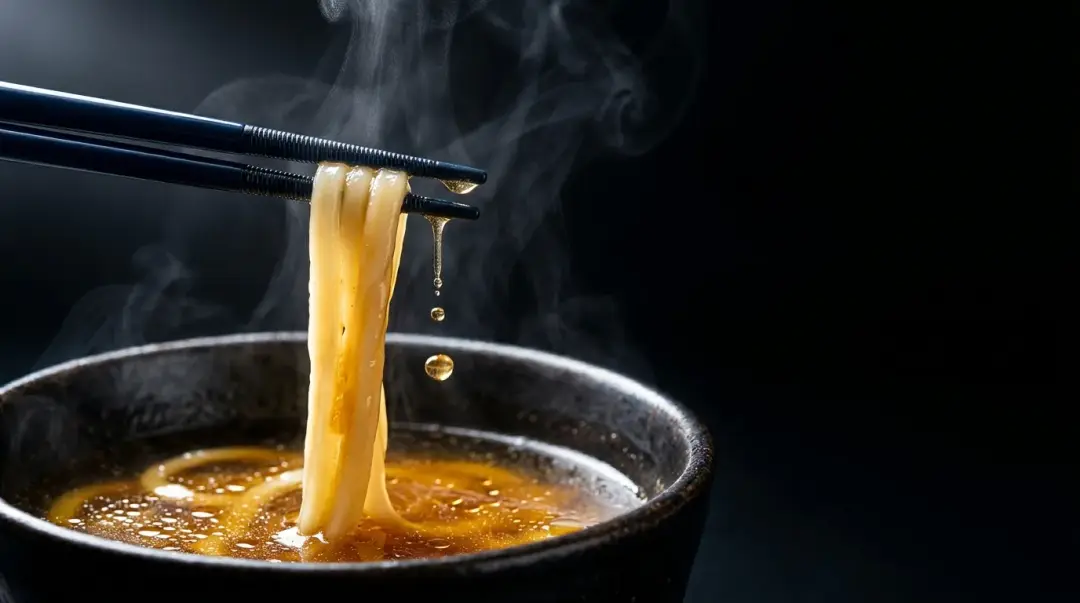


- Best overall: Ishida Wakasa Painted Chopsticks, Ebony, Nagamasa, made in Japan.
- Best budget: GLAMFIELDS 10 Pairs Fiberglass Chopsticks, 9.5 in.
- Best dishwasher-safe wood: 5 Pairs Japanese Wooden Chopsticks with Non-Slip Tip.
- Best metal: Flat Korean Chopsticks, stainless steel, 5 pairs.
- Best for beginners: Reusable Training Chopsticks Holder Attachment.
The Last Two Centimeters
Look closely at the eating end of a good pair of Japanese chopsticks. Many have rings cut around the tip. Wikipedia's chopsticks entry notes that Japanese chopsticks often carry these circumferential grooves at the eating end to keep food from slipping. Musubi Kiln, an online shop that sells Wakasa lacquerware from Obama in Fukui Prefecture, describes its noodle pair as having tips that "combine flat faces with fine channels" to catch smooth, slippery food.
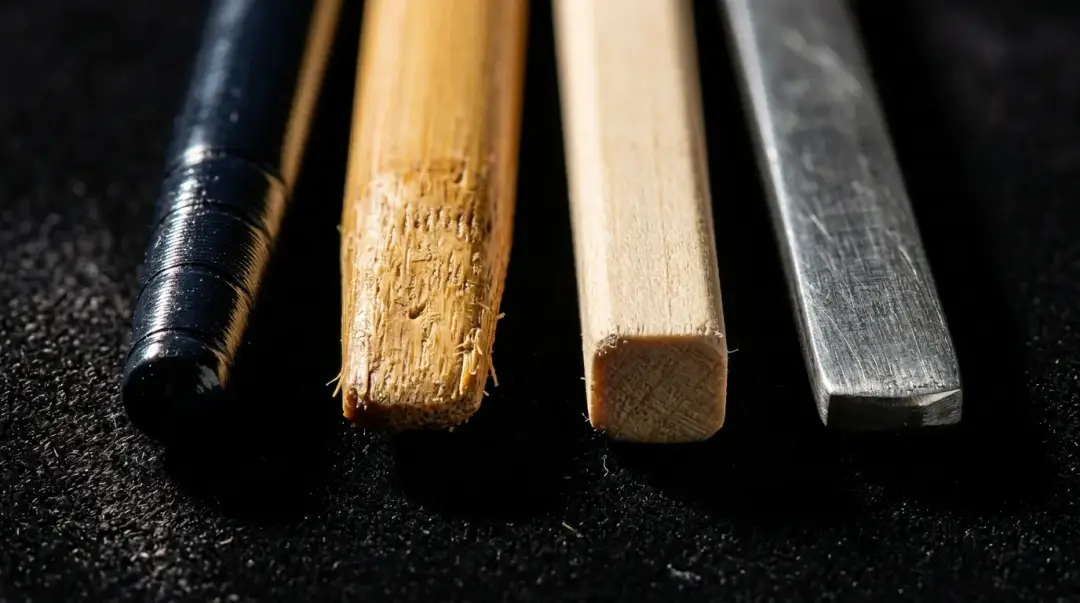
That texture matters more for noodles than for anything else on the table. A cooked udon noodle is thick, round and coated in starchy water. Pinch it between two polished, round tips and the contact patch is tiny, so it slides out and drops back into the broth. Grooves and flat faces increase the contact and give the surface something to catch on. A Kappabashi chopstick shop in Tokyo, Mikura, sells "noodle chopsticks" built on a related idea, with the corners of the tips touching each other when you hold them so slippery noodles grip firmly.
So the tip, more than the wood, the price or the pattern, decides whether a pair works for noodles. The same Wikipedia entry notes that plastic chopsticks are less effective than wood and bamboo because they tend to be slippery.
Chopsticks for noodles, by material and tip
| Pick | Material | Tip | Length | Dishwasher | Best for |
|---|---|---|---|---|---|
| Ishida Wakasa Painted | Lacquered wood | Not described | 23.5 cm | Not stated | Udon, ramen, a lasting everyday pair |
| GLAMFIELDS Fiberglass, 10 pairs | Fiberglass | Non-slip, per listing | 9.5 in (24.1 cm) | Yes, per listing | Big households, guests, takeout nights |
| 5 Pairs Japanese Wooden, Non-Slip | Wood | Non-slip tip | 9 in | Yes, per listing | Households that use the dishwasher |
| Flat Korean Stainless | Stainless steel | Smooth, flat | 22.5 cm | Yes | Ramyeon, naengmyeon, longevity |
| Training Holder Attachment | Clip-on | Uses your chopsticks | n/a | Washable | Learning the grip |
How We Picked
- This list is research-based; we did not test these pairs by hand. We compared tip design, material, length and care instructions from each seller's listing.
- Tip texture came first. A pick needed grooves, flat faces, a non-slip tip or a shape that stops round noodles from rolling.
- Every pick is available online, through a shop that prices in dollars or on Amazon, and each represents a distinct material family: lacquered wood, fiberglass, plain wood, Korean stainless and a training aid.
The Picks
Best Overall: Ishida Wakasa Painted Chopsticks, Ebony
This is the pair to reach for if you want a Wakasa-lacquer pair that is made in Japan and sold on Amazon. The listing gives the style as Ebony, Nagamasa, at 23.5 cm (9.3 inches); check it for how many pairs come in the box. It does not describe the tip texture, so look at the photos for grooves or flat faces before you count on grip with udon. Wakasa pairs are traditionally finished with urushi (oo-ROO-shee), Japanese lacquer made from tree sap.
Wakasa-nuri (wah-KAH-sah NOO-ree) is the lacquer tradition of Obama, Fukui. Musubi Kiln, an online shop that sells Wakasa lacquerware, says the craft dates to the early Edo period and accounts for over 80 percent of Japan's lacquerware chopstick production.
One unknown: the listing doesn't say whether they're dishwasher safe. Treat lacquer as hand-wash and you'll keep the finish.

Ishida Wakasa Painted Chopsticks
Wakasa lacquer finish, made in Japan
Best Budget: GLAMFIELDS 10 Pairs Fiberglass Chopsticks
Ten reusable pairs come as one set. The listing gives the length as 9.5 inches and describes them as non-slip and dishwasher safe, in a Japanese and Chinese style. For a household that needs a stack of everyday pairs for guests and stir-fried noodles, ten pairs in one box is hard to beat.
The catch is the material. Fiberglass has no wood or bamboo grain at the tip, and it is not a traditional craft pair. Check how far the non-slip texture runs up the tip in the listing photos.

GLAMFIELDS 10 Pairs Fiberglass Chopsticks
Ten reusable pairs in one set
Best Dishwasher-Safe Wood: 5 Pairs Japanese Wooden Chopsticks with Non-Slip Tip
This Amazon set targets noodle eaters directly: the title names ramen, udon, soba and pho, promises a non-slip tip, and lists the chopsticks as 9 inches, made in Japan and dishwasher safe. That last point separates it from the bamboo and lacquer picks. If chopsticks go in the dishwasher in your house no matter what, start here.
The listing gives little detail on the wood or the coating, and a non-slip tip on a coated wooden stick is usually a lighter texture than true grooved lacquer. Check the close-up photos for how far the texture runs up the tip.
Best Metal: Flat Korean Chopsticks, Stainless Steel
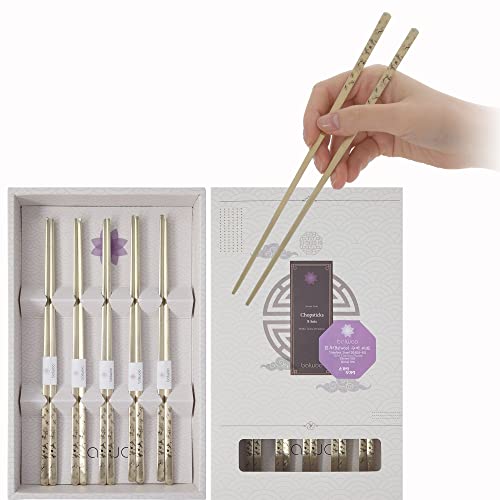
Korean chopsticks are their own category. Wikipedia describes them as metal, usually stainless steel today, flat and rectangular, and of medium length. The habit traces back to royal practice, when silver chopsticks were used to detect poison. This 5-pair set from Beautiful Chopsticks, a shop in Montebello, California, runs 22.5 cm (8.9 inches), is rust resistant and goes in the dishwasher.
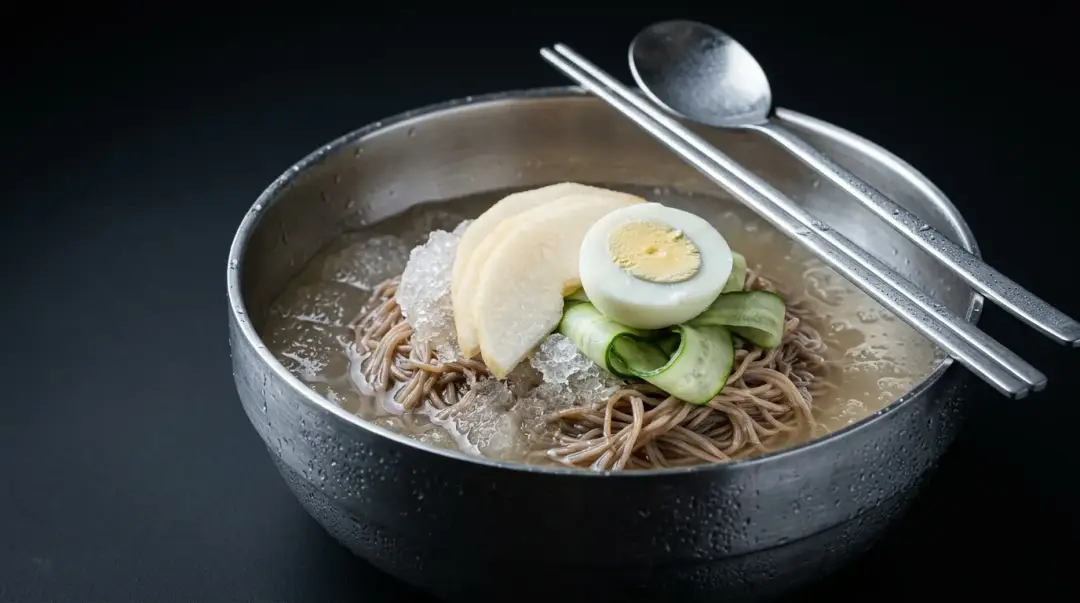
Metal is slicker than wood, which is the honest catch. The flat profile helps: a flat stick sits steady between your fingers and won't roll off the table, and Korean noodle dishes like ramyeon and naengmyeon are eaten with a long spoon alongside. Our Korean noodle bowls guide covers the matching spoon-and-chopstick sujeo (SOO-jeo) set. The listing doesn't give the steel grade or the country of manufacture.
Flat Korean Chopsticks
Flat profile that won't roll off the table
Best for Beginners: Reusable Training Chopsticks Holder Attachment
Training chopsticks join the two sticks with a spring or lever so the pinch motion comes more easily, according to Beautiful Chopsticks, which carries more than two dozen versions. Most are sized for kids. This six-piece attachment is the more flexible option for adults, because it clips onto chopsticks you already own, and the seller describes it as suitable for beginners of all ages. The same shop advises adults who buy one-piece trainers to choose longer versions, since kids' models are often too short.
The listing is vague on materials and how the clip attaches, so expect some trial and error. For children aged 3 to 5, Musubi Kiln's 6.5-inch Wakasa kids' chopsticks put the same grooved tips in small hands without any hinge at all.

Reusable Training Chopsticks Holder Attachment
Clips onto chopsticks you already own
What to Look For
- Tip texture. Grooves, flat faces or a squared tip, at least over the last couple of centimeters. Smooth, round tips are the main reason noodles slip.
- The right length. Japanese makers use the hitoata (hee-toh-AH-tah) rule: open your thumb and index finger to a right angle, measure tip to tip, and multiply by 1.5. The Tokyo shop Mikura sells its noodle chopsticks in 21 and 23 cm; Chinese chopsticks run about 27 cm according to Wikipedia.
- A cross-section that doesn't roll. Square, octagonal and flat chopsticks are easier to control than perfectly round ones, a point Musubi Kiln's guide makes for anyone struggling to line up thin tips.
- Care that matches your kitchen. Stainless and some coated woods go in the dishwasher. Bamboo and urushi lacquer last longer washed by hand.
- Weight. Dense woods like ebony feel solid; light woods and fiberglass are easier on the hand over a long meal.
Common Mistakes
- Buying chopsticks for the pattern. A beautiful pair with smooth, glossy tips will still drop udon.
- Learning on metal. Polished steel is the least forgiving surface for a beginner. Start on bamboo or grooved wood.
- Using plastic or melamine for noodles. They're cheap and dishwasher-proof, but Wikipedia notes they tend to be slippery.
- Ignoring the care label. Lacquer and bamboo last longer washed by hand, and the Wakasa listing makes no dishwasher claim. Rinse, wash quickly and let them air-dry.
- Eating soupy noodles with chopsticks alone. Ramen, pho and Korean noodle soups come with a spoon for a reason; pair your chopsticks with a renge or a long Korean spoon, and a bowl deep enough to hold the broth. Our ramen bowls guide covers sizing.
Match the Pair to the Noodle
Different noodles ask different things of a pair of chopsticks. Use this as a quick lookup.
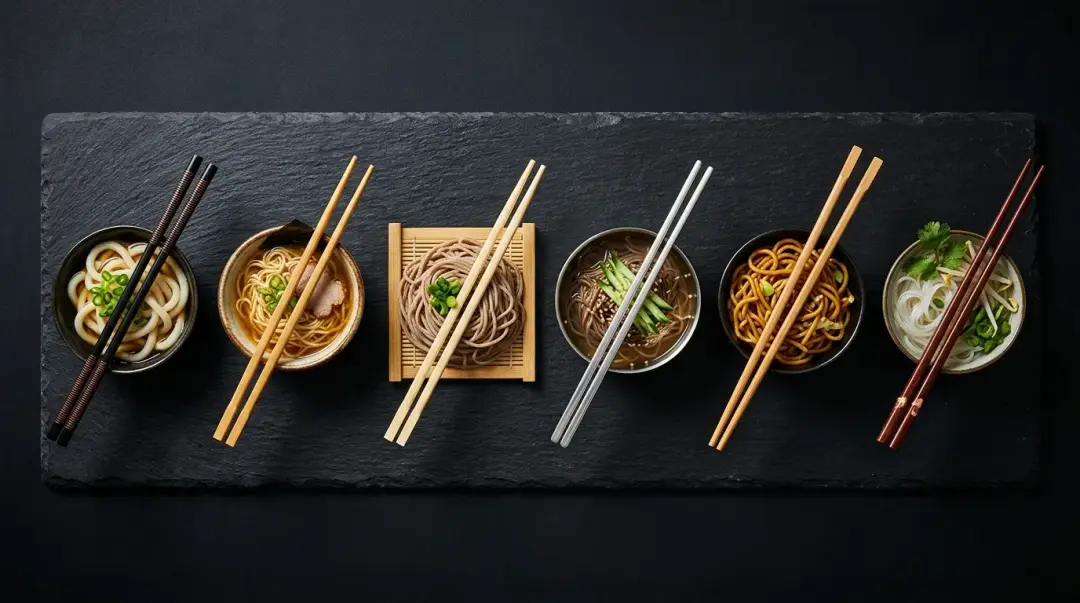
| Noodle | Challenge | Chopsticks to reach for |
|---|---|---|
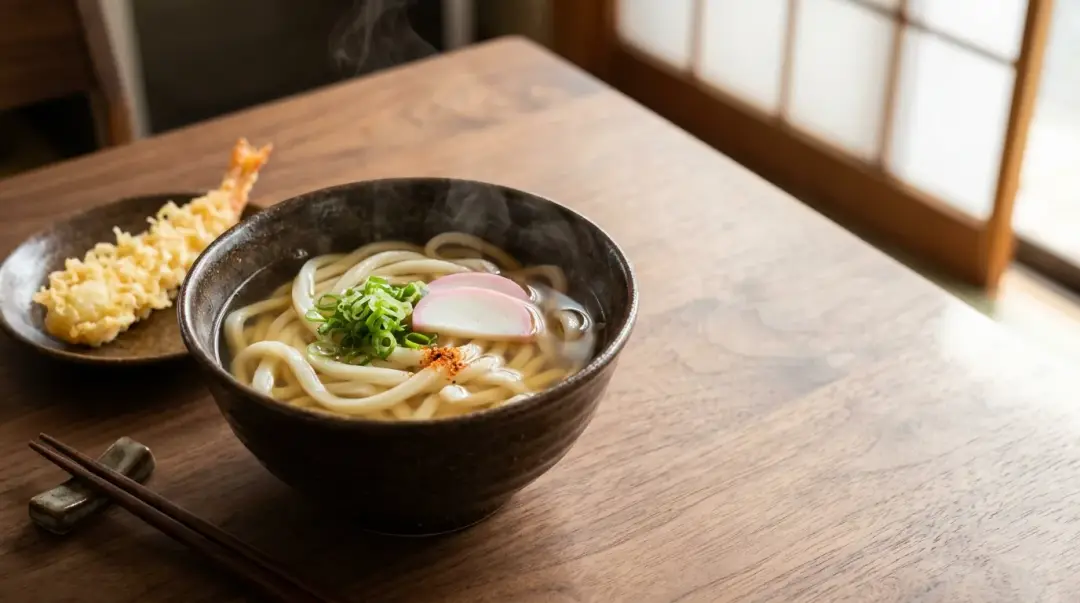
| Udon | Thick, round, slick with starch | Grooved-tip lacquer or square-tip wood |
| Ramen | Long strands lifted out of hot broth | Grooved-tip lacquer or textured wood, plus a renge |
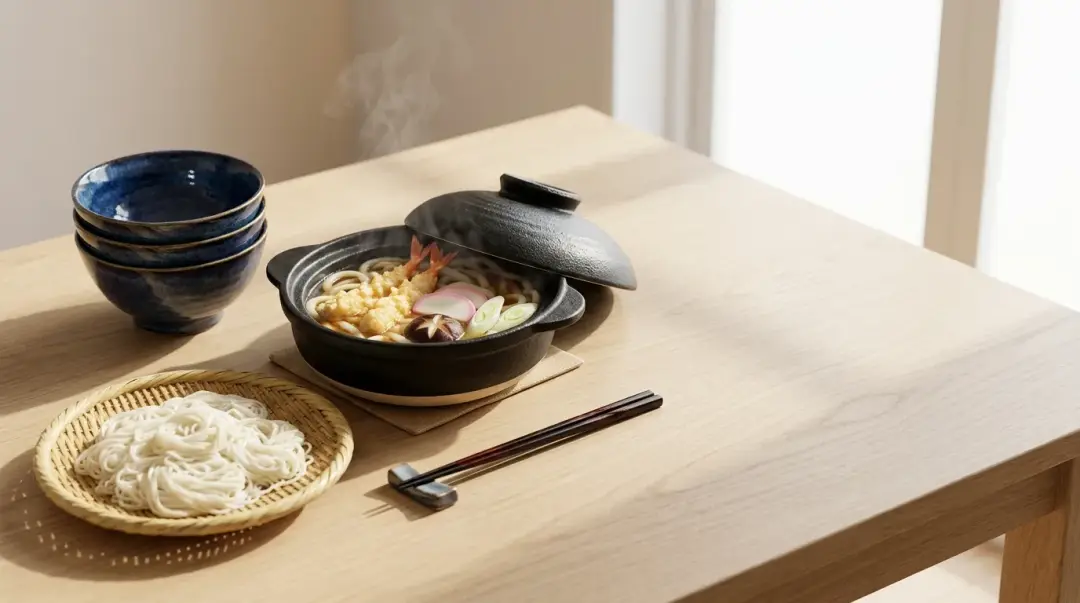
| Cold soba | Thin strands pulled from a dipping cup | Bamboo or plain wood, 21 to 23 cm |
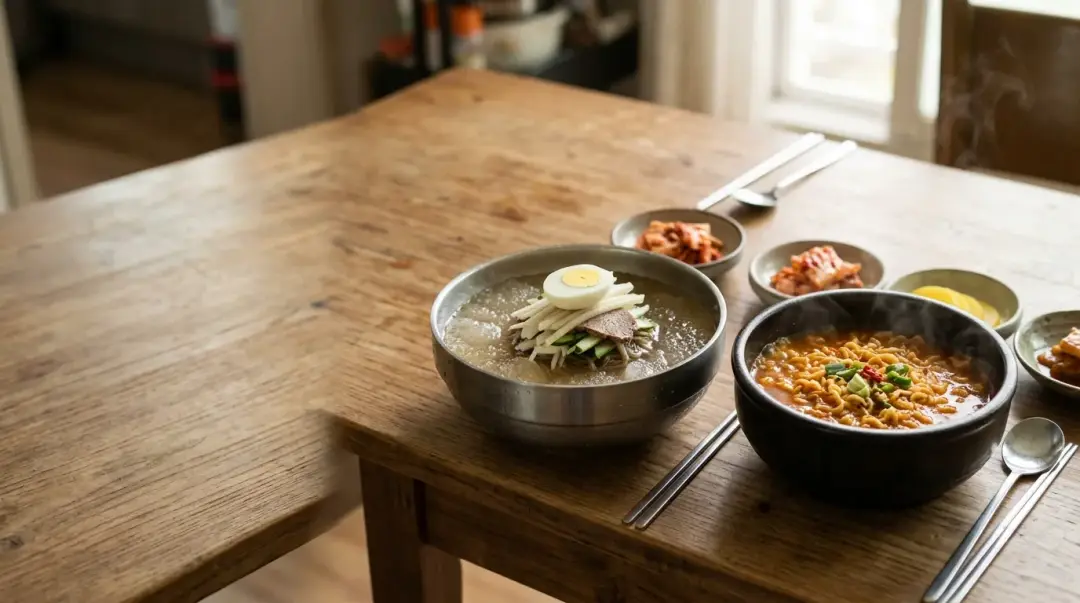
| Naengmyeon | Long, chewy noodles in icy broth | Korean flat stainless, plus a long spoon and table scissors |
| Lo mein and chow mein | Sauced noodles served from a shared plate | Longer Chinese-style chopsticks, about 27 cm |
| Pho | Rice noodles in a deep bowl of broth | Long, blunt-tipped chopsticks and a soup spoon |
| Instant ramyeon from the pot | Hot metal pot, noodles straight from the stove | Korean flat stainless, the standard Korean pairing |
If you only buy one pair, buy grooved-tip wood. It covers the top three rows, and the rest of the table is about matching a cuisine's table setting more than about grip.
FAQ
What chopsticks are best for slippery noodles like udon?
Chopsticks with textured or squared tips. Japanese grooved-tip chopsticks, like the Wakasa lacquerware pairs Musubi Kiln sells, cut fine channels into the last few centimeters so thick, wet noodles have something to catch on. Bamboo's natural ridges help too. Smooth plastic or polished metal tips are the hardest to use, because udon slides between them.
Are metal chopsticks harder to use for noodles?
Usually, yes, at first. Polished stainless steel has less friction than wood or bamboo, so slippery noodles slide more. Korean chopsticks offset that with a flat profile that gives your fingers a stable grip, and they last for years in the dishwasher. If you're new to chopsticks, learn on wood or bamboo and move to metal later.
What length chopsticks should I buy?
Use the Japanese hitoata rule. Hold your thumb and index finger at a right angle, measure the distance between the tips, and multiply by 1.5. Japanese noodle chopsticks are typically sold at 21 or 23 cm; Musubi Kiln's adult Wakasa pair is 23 cm. Chinese chopsticks run longer, about 27 cm, for reaching shared dishes.
Are bamboo chopsticks dishwasher safe?
Check the maker's label. Miya Company recommends hand washing its Japanese bamboo chopsticks, while some sets on Amazon, including wooden and fiberglass ones, are listed as dishwasher safe. Our Japanese cookware guide warns that bamboo splits as it dries in the machine, so a quick hand wash and air dry is the safer habit. Stainless steel is the material to buy if everything goes in the dishwasher.
Why are Korean chopsticks flat and made of metal?
Wikipedia traces the habit to royal practice, when silver chopsticks were used to detect poison in food. Stainless steel replaced silver for everyday use. The flat, rectangular shape keeps them from rolling and gives a firm grip despite the smooth metal. Korean meals pair them with a long-handled spoon, so noodles and broth are eaten with both.
Do training chopsticks work for adults?
They can. Training chopsticks join the two sticks with a spring, hinge or clip so the motion becomes easier, and retailers sell them for beginners of all ages. Adults should pick a longer model or a clip-on attachment for regular chopsticks, since children's versions are often too short. Most people switch to plain chopsticks once the pinch motion feels natural.